Order Jamie Glazov’s new book, ‘United in Hate: The Left’s Romance with Tyranny, Terror, and Hamas’: HERE.
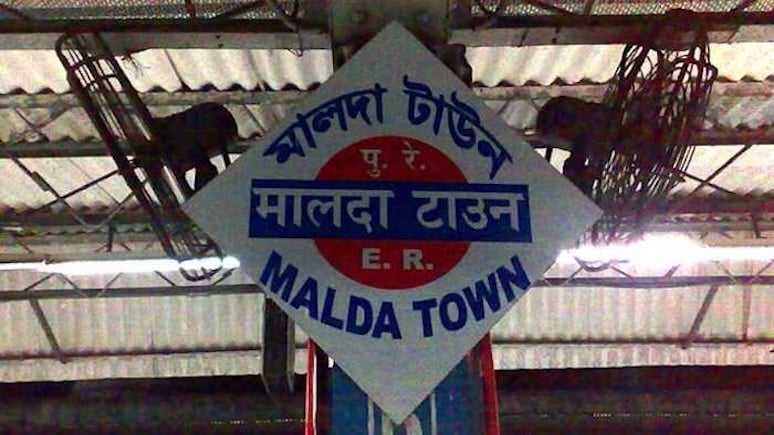
A routine election-related exercise in the Muslim-dominated district of Malda in West Bengal descended into chaos when a Muslim crowd in the Kaliachak area surrounded and confined seven judicial officers, including four women, for ten hours. Reportedly, these on-duty government officials were taken hostage after a Muslim advocate, Mofakkarul Islam, who has since been arrested., incited the mob. The incident has since drawn national attention for both the breakdown of law and order and its timing ahead of crucial elections.
The officials present at the site were engaged in the Special Intensive Revision (SIR) process, conducted by the Election Commission of India, to update and verify electoral rolls when the Muslim crowd gathered outside and began blocking exits. The SIR is important for the Indian democracy, owing to hundreds of thousands of Bangladeshis and Rohingya Muslims who have infiltrated Indian borders and have procured counterfeit IDs, including Aadhaar (a twelve-digit unique identity number) cards and voter ID cards. The Railway Protection Force in West Bengal recently conducted an operation that led to the arrest of fourteen Bangladeshi Muslims. Officials confirmed that the group of men, women, and children had entered India illegally, and were carrying fake Aadhaar cards and other forged Indian identity documents, including suspected voter-related IDs, underscoring the SIR’s critical role ahead of the election process.
The SIR is applicable to all Indians regardless of religion, region, or community. However, from the initial announcements, the activity had faced massive resistance from Muslims, which has now spiraled into a full-blown attack and abduction of government officials. What started as a protest soon escalated into a tense and volatile standoff. Authorities later described the situation as “hostage-like,” as repeated attempts to disperse the crowd and secure the officials’ exit were resisted.
As the situation intensified, clashes broke out between the frantic crowd and the police, and soon escalated into a familiar episode of throwing stones at security personnel trying to regain control, an almost everyday scene in any Muslim-majority area in India these days. Violent protestors also took to the surrounding roads, setting up roadblocks and halting traffic in and around the area. Security personnel faced resistance as they attempted to clear the path; their vehicles also sustained visible damage. Broken windows, dented panels, and scattered debris showed the ferocity of the attack. There were also reports of vandalism in and around the government office premises, including damage to barricades and nearby infrastructure, indicating that the protest had descended into complete mayhem.
In an audio clip of one of the female victims that has since gone viral on social media, one of the female judicial officers requests the Calcutta High Court to take care of her children in case something untoward happened to her, indicating the intensity of the escalation. Another official desperately seeking help can be heard saying, “Our car suffered an accident. Please communicate it to the registrar, sir… Our pilot car has been involved in an accident due to these hurdles… We are traveling alone.”
And at the center of it all was Mofakkarul Islam, a professional advocate accused of playing a key role in mobilizing the frenzied crowd and instigating the protest through speeches delivered before the gherao (a protest during which workers prevent their employers from leaving a workplace until their demands are met). He was detained at Bagdogra Airport while allegedly attempting to leave the region, and now faces multiple charges related to unlawful assembly, obstruction of public servants, and incitement. Authorities claim his actions contributed to the scale and intensity of the mobilization.
The aftermath of the incident has led to multiple criminal cases being registered and several arrests made as part of an ongoing investigation. With a dominant Muslim population, it surprises no one that an agitated crowd held a group of judicial officers hostage. This is not an isolated development. The region has a history of large-scale Muslim violence, most notably the anti-Hindu 2016 Kaliachak riots, where massive protests spiraled into arson, vandalism, and attacks on police stations and public property, bringing the district to a standstill due to an alleged blasphemy against Islamic religious sentiments. More recently, in 2025, neighboring Murshidabad, yet another Muslim-majority district in West Bengal, witnessed violent communal clashes linked to the Waqf (Amendment) Act, with stone-throwing, arson, and displacement of Hindu families, many of whom took shelter in Malda, further heightening tensions in the region.
The state government, which a political party known for its unabashed Muslim-pandering runs, has failed to contain the rise of violent elements springing from Islam in these districts, despite a series of riots and anarchy. The inaction and selective enforcement have created an environment in which figures such as Mofakkarul Islam have been able to mobilize and incite crowds with relative impunity. Following the Kaliachak incident, the Supreme Court of India took cognizance of the situation, expressing serious concern over what it described as a “complete breakdown of law and order,” and emphasizing that such lapses pose a direct threat to institutional authority and the safety of officials carrying out their duties.
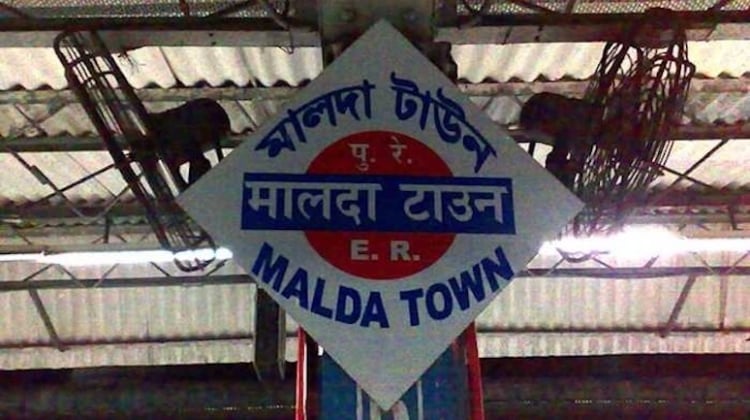
Photo Credit: Creative Commons.