Order Jamie Glazov’s new book, ‘United in Hate: The Left’s Romance with Tyranny, Terror, and Hamas’: HERE.
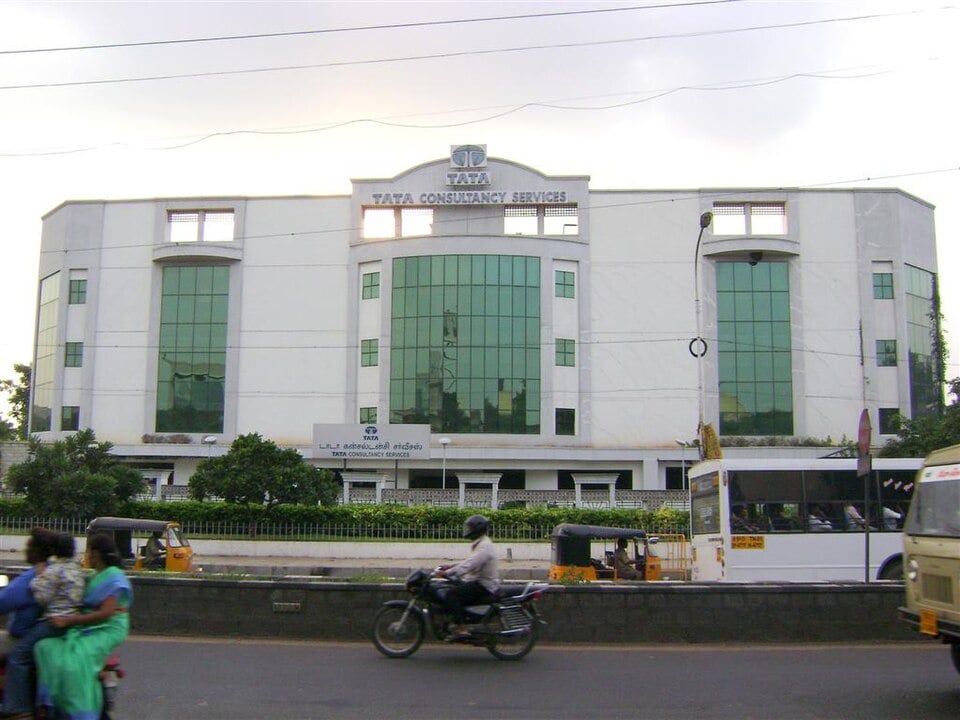
Tata Consultancy Services (TCS) is a major Indian IT and BPO company with offices worldwide. But now the leading IT giant has found itself in a major controversy after multiple Muslim employees, including the HR manager, were arrested for forcing subordinates into religious conversion and sexual harassment in TCS’s BPO wing in Nashik, Maharashtra. The developments, which came to light recently, have triggered widespread outrage and raised serious questions about how jihadist elements have now made inroads into the professional setup of the corporate sector.
The accused, identified as Asif Ansari, Shafi Sheik, Shah Rukh Qureshi, Raza Memon, Tausif Attar, and Danish Sheik, mostly designated as team leaders, allegedly operated a structured and prolonged network spanning nearly four years, targeting young Hindu employees, primarily women between the ages of 18 and 25, who were identified during recruitment as financially backward and could be manipulated or pressured. The complaints, covering the instances from 2022 to early 2026, reveal a pattern of calculated targeting, with at least nine victims, including eight women and one man, coming forward so far.
The group, reportedly, attempted to force their vulnerable juniors into converting to Islam through psychological pressure, inducements, intimidation, and sexual abuse. Several women have accused the men of making explicit remarks and engaging in inappropriate physical contact, resulting in agonizing mental harassment. According to a female victim’s complaint, the accused, despite being married, repeatedly exploited her at a location on Trimbak Road. Another woman alleges she was taken to a resort under the pretext of a holiday, where she was allegedly sexually assaulted.
Victims have also said that they were forced to participate in Islamic practices, including offering namaz, observing Ramadan fasts, and wearing a burqa. The male complainant described that he was repeatedly humiliated for his Hindu faith and pressured to abandon his religious identity. Victims were reportedly also forced to consume beef. Force-feeding beef to Hindus is one of the favorite tactics of jihadists across India, as it breaks the Hindus psychologically and emotionally, because consuming beef is against the Hindu religious ideology.
The investigation gained momentum after a covert operation conducted by Nashik Police, in which seven female officers entered TCS’s premises disguised as employees. During an internal meeting, they reportedly witnessed inappropriate conduct firsthand, leading to one of the accused being caught in the act. This operation provided critical corroboration of the victims’ testimonies, and resulted in multiple arrests. Authorities are now analyzing over 40 CCTV footage clips from inside the office to strengthen the case.
Police have invoked stringent provisions of the Maharashtra Control of Organized Crime Act (MCOCA), pointing to the seriousness and organized nature of the offenses. Leading the probe is a Special Investigation Team under ACP (Crime) Sandeep Mitke, following directives from Police Commissioner Sandeep Karnik, who supervised the operation based on intelligence information.
A particularly alarming dimension of the case is the alleged failure and possible complicity of the company’s HR department. According to police officials, when one victim reported sexual harassment, HR reportedly advised her to “stay cool,” with her concerns dismissed as routine behavior in multinational workplaces. Such responses may have emboldened the accused and allowed the misconduct to continue unchecked. There are also allegations that a female HR Manager, Nida Khan, may have actively assisted the accused. She has since been arrested.
Maharashtra minister Nitesh Rane publicly termed the incident “corporate jihad,” arguing that if coercive religious conversion and harassment had entered corporate spaces, it would be dealt with strictly under the law. He also questioned the company’s internal response and called for accountability, especially given the fact that multiple women had reportedly complained without timely action.
So far, nine First Information Reports have been registered at Mumbai Naka Police Station, encompassing charges of sexual exploitation, mental harassment, and hurting religious sentiments. Authorities have also circulated a WhatsApp helpline encouraging additional victims to come forward, and officials have indicated that more complaints are likely while the investigation progresses. Maharashtra Chief Minister Devendra Fadnavis has condemned the incidents and assured strict action against those found guilty.
The revelations have triggered protests outside the TCS Nashik office, with demonstrators demanding swift justice and accountability. While TCS has been named openly and investigations are underway, it is not the only organization in the Indian corporate landscape facing serious questions. The work culture in India’s private sector is often sinfully toxic. Call center agents, for instance, struggle to get even a two-minute washroom break. Sick leave and casual leave are difficult to secure, even in pressing situations. Employees are routinely pushed to work 10 to 12 hours a day, even though the standard shift is 9 hours. But the stringencies apply only to regular staff.
Muslim employees, on the other hand, are often given leeway to perform multiple prayers during office hours. In fact, several workers allege that meetings are frequently rescheduled to allow for these prayer breaks. Business priorities and urgency can easily take a backseat. Many large corporations have even set up designated prayer areas. During Ramadan, many large multinationals organize free iftar meals for Muslim employees, while no comparable arrangements are made during festivals of non-Muslim communities.
Photo credit: Tata Consultancy Services, L. Vivian Richard at Wikimedia Commons.