Candidates from all walks of life run for Congress each election cycle, from backgrounds in politics and government to adjacent fields such as law or public policy, but some hopefuls are leveraging their public profile as media personalities to help drive their campaigns.
Pennsylvania voters saw this with Dr. Mehmet Oz, who leaned into his television-doctor persona during his failed 2022 Senate run. Before entering Congress in 2009, former Minnesota Sen. Al Franken was quite a popular public figure known for his time on Saturday Night Live and his stint as a liberal radio host on the now-defunct Air America.
Beyond television hosts and radio commentators, the list of media personalities running for Congress includes YouTubers.
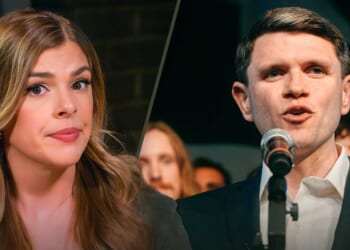
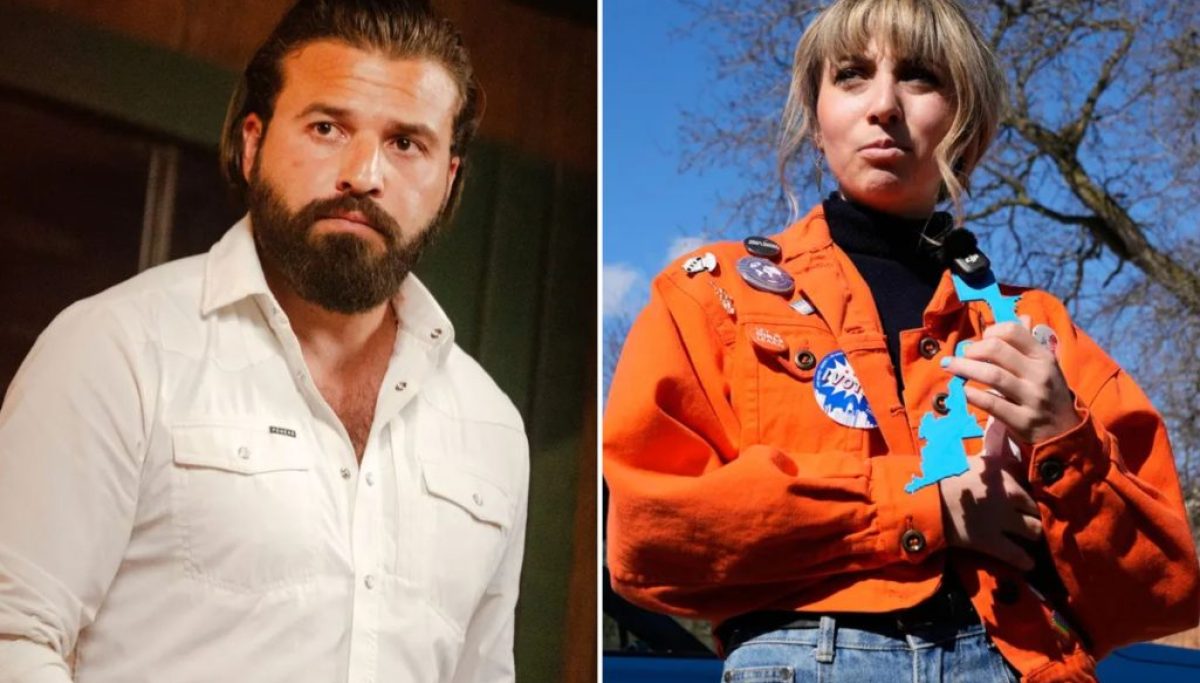
There is a small but growing trend of content creators launching congressional campaigns. The most obvious examples in the 2026 elections are Brandon Herrera, who outperformed Rep. Tony Gonzales (R-TX) in the Texas Republican primary on March 3, and Kat Abughazaleh, who lost the Illinois Democratic primary on March 17.
Herrera, known by his moniker “The AK Guy” for firing AK-47 rifles in YouTube videos, arguably benefited in part from his online name recognition in his second bid for Texas’s 23rd Congressional District. He ran for the same deep-red district in 2024 but lost to Gonzales at the time.
Adding to Herrera’s favor, the incumbent Gonzales became mired in controversy involving a sexual affair with one of his staffers who later died by suicide. Gonzales repeatedly denied the relationship throughout his reelection campaign and didn’t admit to it until one day after the primary. By then, it was already too late. He dropped his campaign shortly thereafter, letting Herrera win the runoff election by default.
Whether the gun-toting influencer can successfully leverage his online presence in the remaining months before the general election remains to be seen.
In November, he is set to face Democratic nominee Katy Padilla Stout, who comes from a more traditional background in law and education.
Compared to Stout, Herrera may be a more controversial choice for moderate voters. The Democratic-aligned House Majority PAC pointed to his ownership of Hitler’s Mein Kampf as proof that he’s a Nazi — the community note under the group’s post notes that the video clip was taken out of context — but he nonetheless has the support of President Donald Trump and House GOP leadership.
Dennis Lennox, a Republican strategist from Michigan, says the YouTube-to-Congress pipeline isn’t that much different from congressional candidates with prior experience in radio. It’s just easier for controversial comments to resurface and be used for political weaponization.
“This really isn’t new. We’ve seen this before with talk radio hosts like Tom Emmer, Blake Farenthold, and Mike Pence running for office,” Lennox told the Washington Examiner. “The difference is that what used to require finding and then digging through dusty old tapes can now be surfaced in seconds.”
“In the past, a controversial comment on some radio station in market number 200 might have never surfaced because the cassette was effectively buried,” he said. “Today, if you said it on a stream three years ago, AI is going to transcribe it in seconds and the resulting clip becomes an issue overnight.”
While there are many benefits to a candidate having an active online presence, such as greater outreach or higher fundraising, the risks of polarizing voters and harming the campaign’s reputation are even greater.
An example of a polarizing candidate is right-wing activist and former YouTuber Laura Loomer, who lost both of her Florida House races in 2020 and 2022. She is known for her provocative stance on Islam and restrictionist views on immigration. In this case, Loomer’s digital footprint was a liability.
“When I was coming up, everything was tightly scripted. You spoke in short soundbites for a 90-second local TV news story or a seven-minute radio segment,” Lennox said. “Now candidates or future candidates are sitting for one-hour podcasts and just talking freely. That can build a base and drive donations, but it also creates a massive, easily exploitable record.”
Abughazaleh was a progressive candidate who frequently rants about Trump and Immigration and Customs Enforcement in her videos. No attack ads seemed to directly cite her YouTube content, but one framed her as ideologically inconsistent for once supporting then-Sen. Marco Rubio in a 2016 article for her high school newspaper. Abughazaleh rebutted that attack.
“I was never behind Trump, and so I was like, ‘Maybe Marco Rubio is the solution,’” she said in a video. “But like many things that 16-year-olds say, that’s idiotic.”
The attack ad was funded by Chicago Progressive Partnership, a super PAC with apparent links to the American Israel Public Affairs Committee. Over the course of her campaign, Abughazaleh responded to AIPAC’s attack ads while releasing her own ads that were primarily targeted toward younger voters.
She ultimately lost to Evanston Mayor Daniel Biss in the primary for Illinois’s 9th District. In her concession speech, she went on a profanity-laced tirade about Trump and ICE.
“When I said I would spend every single waking moment of the rest of my life to hold this administration accountable, win or lose, I f***ing meant it,” she told her supporters. “I’m sorry that this sucks. But f*** Trump, f*** ICE, free Palestine, and I love you all.”
By contrast, her victorious opponent has similarly criticized Trump and ICE over the past year but has done so in more measured language. Biss’s win likely benefited from his prior political experience.
While YouTubers with an in-built audience may get their campaign messaging out there more easily than others, Lennox argues that doesn’t always translate to votes. The YouTuber-turned-candidate still has to stand on their own two feet.
“A big online presence can give you instant name recognition and fundraising, but it also creates more opportunities for mistakes,” the political consultant said. “Fundamentals still matter. Campaigns are won on candidate quality, message discipline, and local dynamics.”
Regarding social media influencers more generally, Rep. Anna Paulina Luna (R-FL) is an example of a candidate who used her digital footprint to her advantage. Her large following helped raise her profile in 2022, leading to nearly $3 million in total contributions that election cycle. Luna is considered the first true social media influencer to leverage their online audience to win a seat in Congress.
Social media was also a central part of Rep. Alexandria Ocasio-Cortez’s (D-NY) successful 2018 campaign, but she was not considered an influencer before running for Congress.
So far, many social media influencers have not been successful in their congressional races. Deja Foxx, a Generation Z TikToker who lost to Rep. Adelita Grijalva (D-AZ) in a special Democratic primary last year, comes to mind. Another is Isaiah Martin, who did not make it past a 2025 special general election despite having a robust online presence.
There may be more YouTubers or social media influencers who run for Congress in the near future. Trisha Paytas, a multifaceted YouTuber who creates lifestyle vlogs and music videos, said she is exploring a run for a California House seat this year.
CAMPAIGNS REACH FOR INFLUENCER MEGAPHONES FOR ‘ORGANIC’ MEDIA STRATEGY
Regardless of their audience size, YouTubers must be wary of the content they post or risk alienating the very voters they’re trying to reach.
“Being very online is an asset until it isn’t,” Lennox told the Washington Examiner. “The difference usually comes down to whether the candidate is disciplined about what they put out or just hitting record and talking.”