Leaders across the world are asking their citizens to use less energy in response to the disruptions and price spikes caused by the war in Iran.
The monthlong war in Iran has caused energy prices to soar, as a key trading route has effectively remained closed and natural gas facilities have been attacked.
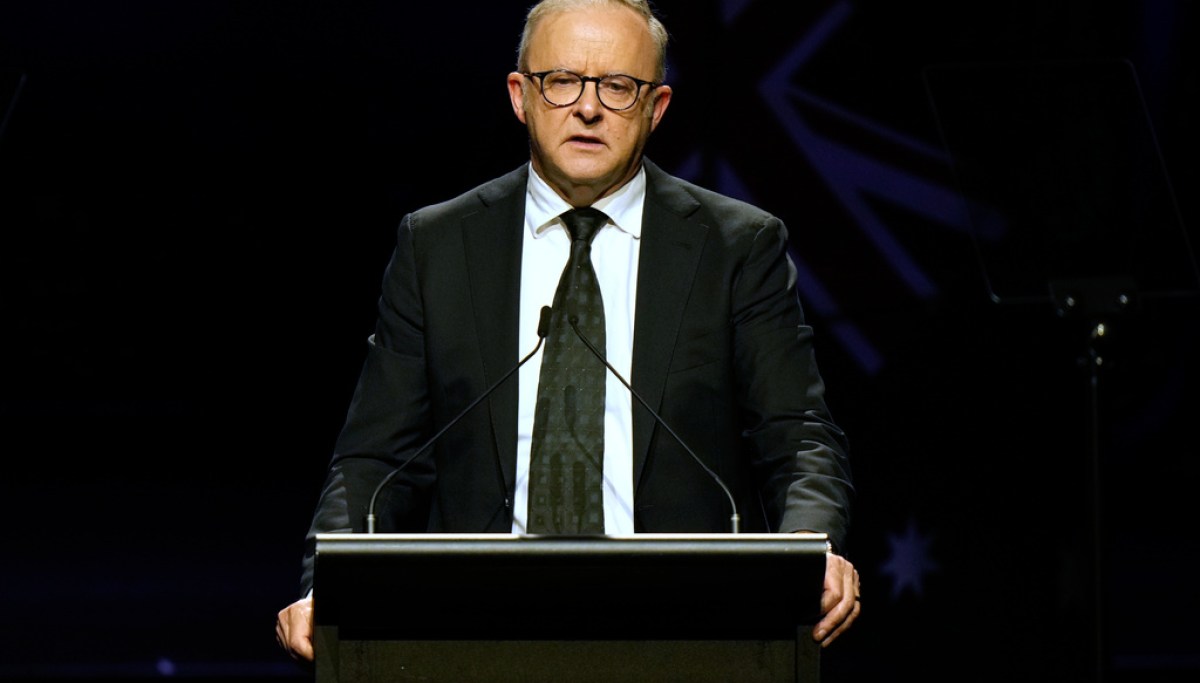
Australian Prime Minister Anthony Albanese addressed his nation on Wednesday, warning that the economic shocks caused by the war in the Middle East could be felt for months, noting that it has increased gasoline and diesel prices.
“If you’re hitting the road, don’t take more fuel than you need,” Albanese said. “Just fill up like you normally would. Think of others in your community.”
He added that Australia is looking to lower prices by producing more fuel and working with trading partners to obtain additional gasoline and fertilizer.
“The months ahead may not be easy,” he added. “I want to be upfront about that: No government can promise to eliminate the pressures that this war is causing.”
Australia last year imported more than 80% of its refined fuel from Asia, according to Bloomberg, which noted that fuel from the continent is refined using crude sourced in the Middle East.
The war in Iran has caused the effective closure of the Strait of Hormuz, a key trading route that normally sees the transit of 20 million barrels of crude oil and petroleum products a day, about a fifth of the global supply.
The average U.S. price for a gallon of regular gas rose to $4.02 on Tuesday, up from $2.98 a month ago. On the campaign trail, President Donald Trump vowed to lower gas prices for Americans.
Key natural gas infrastructure in Qatar has also been attacked. The country is a key exporter of liquified natural gas, sending more than 70% of its production to Asia and 25% to Europe.
Democrats in Congress are increasing pressure on Republicans, arguing that Americans are paying for the war in Iran through high energy costs.
“Donald Trump’s failures are the Republican Party’s failures. Every day we see more American workers out of jobs, higher energy prices, and costs rising across the board for American families,” Senate Minority Leader Chuck Schumer (D-NY) said. “Americans are tired of the high costs, inescapable chaos, and blatant corruption.”
Meanwhile, European Union energy chief Dan Jørgensen said on Monday that since the start of the war, gas prices in the EU have risen by 70% and oil prices by 60%.
“While there are no immediate oil and gas supply shortages … in the European Union, we see tightening in certain product markets, notably diesel and jet fuel, as well as increasing constraints in [the] global gas market and its spill-over effects into electricity prices,” Jørgensen said.
Jørgensen told Politico on Tuesday that Europe is facing a “very serious situation” with no signs of easing. He added that even if the war were to end immediately, “we will not go back to normal in the foreseeable future.”
He said member countries should follow the International Energy Agency’s advice, which is to “work from home where possible, reduce highway speed limits by ten kilometers [an hour], encourage public transport, alternate private car access … increase car sharing and adopt efficient driving practices.”
Jørgensen also noted that member countries should expand their renewable energy capabilities.
TRUMP ADMINISTRATION LIFTS ENDANGERED SPECIES PROTECTIONS IN GULF OF AMERICA TO BOOST DRILLING
In the U.S., asking voters to practice energy austerity has been a political loser.
In 1979, President Jimmy Carter asked people to reduce energy consumption to address an energy crisis and rising inflation. A few days after Carter’s infamous “Malaise Speech,” he fired several Cabinet members. The fiasco contributed to his landslide loss to Ronald Reagan a year later.