- “Our warnings were not listened to” says Lord Sewell five years on from the Commission on Race and Ethnic Disparities report
- White working‑class boys “the forgotten demographic” as new research uncovers terrible school outcomes compared to other groups
- Westminster panel event to debate long-term implications of the report for Britain in 2026
White working‑class boys are stuck at the bottom of the class, a new analysis warns, published to mark the fifth anniversary of the Sewell Commission on Race and Ethnic Disparities.
The pupils the Commission highlighted as being “left behind” in 2021 remain among the worst‑performing in England according to the Centre for Social Justice (CSJ), despite years of debate about race and gender equality.
Disadvantaged white British boys continue to record some of the lowest results in key exams, even as many poorer pupils from ethnic minority backgrounds now pull ahead.
Just 36 per cent of white British boys on free school meals reached the expected standard in GCSE maths and English last year, analysis of the latest Department for Education figures finds.
This compares to 65 per cent of all pupils, 39 per cent of Black Caribbean boys on free school meals, and 82 per cent of Chinese boys on free school meals. Among Black African boys on free school meals the figure rises to 58 per cent, for Bangladeshi boys 68 per cent.
Researchers argue that family stability is playing a “woefully underappreciated” role shaping children’s life chances.
Just two in ten poor white children live with married parents today, compared to almost six in ten among poor children in non‑white families, analysts found looking at official data.
Growing up in a stable two‑parent home is a stronger predictor of positive outcomes than many of the characteristics that dominate official equalities discussions, the think tank says, such as sexuality or ethnic group.
At an event on Tuesday [24 March] to mark the fifth anniversary of the report, Lord Sewell is expected to say: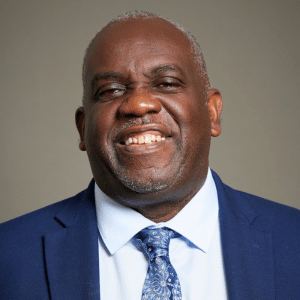
“Five years ago, we were told by the woke left and liberal right that the evidence on class and family was uncomfortable. Since then, this evidence has only hardened.
“Our report set out clearly that racism still persists, and we should confront it wherever it is found. But we also said something else: the main drivers of unequal outcomes are class, geography and family stability, not race alone.
“White working-class boys from the poorest homes are still stuck at the bottom of the class. Our warnings were not listened to.
“If we are serious about opportunity, we have to stop arguing about language and start delivering change in the places that need it most.”
The CSJ’s Lost Boys report found boys underperforming across the system, with lower grades at school, higher rates of being not in education, employment or training (NEET), and accounting for 83 per cent of permanent exclusions.
White working-class boys on free school meals are among the least likely to remain in education after 16.
The CSJ says ministers have failed to tackle the root causes of poor outcomes for disadvantaged pupils including family breakdown and weak local economies in the areas where white working‑class boys are most likely to fall behind.
It is calling for a renewed focus on family policy, backing stable relationships, and directing the best teaching and tutoring towards the lowest‑performing boys.
Mercy Muroki, former Commissioner for the report and Development Director at the CSJ, said:
“Family stability, class, and aspiration matter far more for children’s life chances than many of the issues that dominated identity politics culture wars in 2020.
Five years on from Sewell’s report, the evidence is clear: family breakdown, deprivation and low expectations for young people, not ethnicity, are the main drivers of disadvantage in Britain.”
The research comes after Education Secretary Bridget Phillipson called the outcomes of white working class pupils a “national disgrace”.