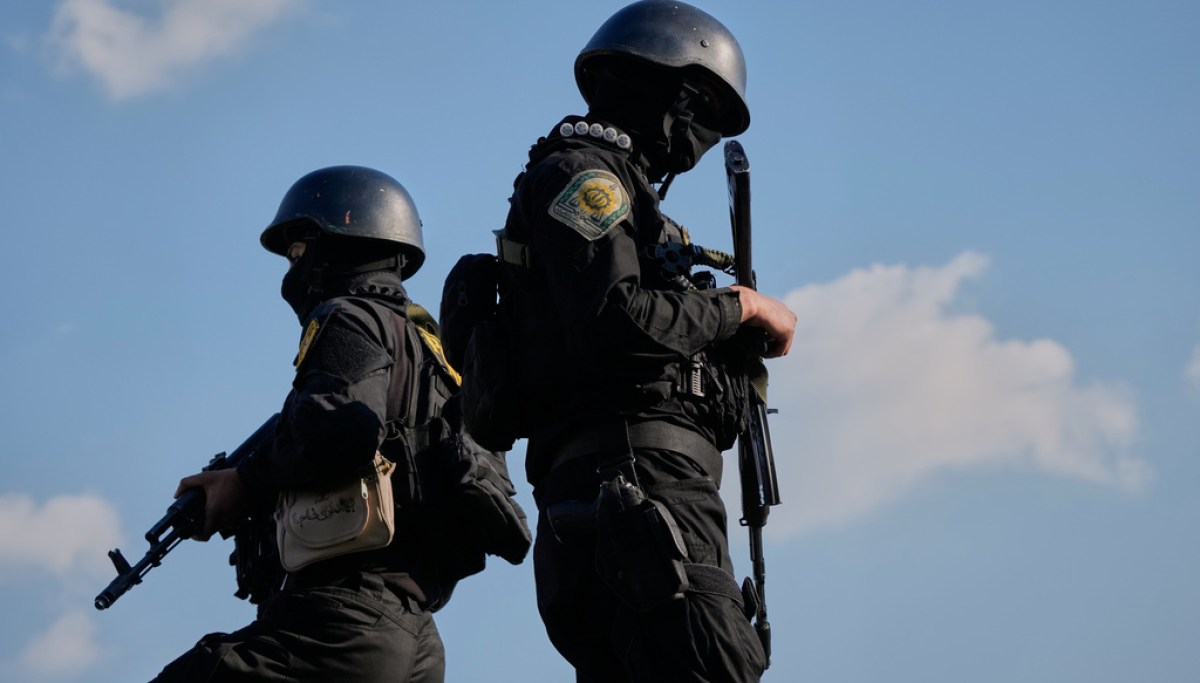
Iran’s energy grid is set to face the full fury of the United States’s military power on Tuesday if it does not make a deal with President Donald Trump.
The country could also face a revolt from civilian protesters supplied with U.S. weapons, the president suggested Sunday.
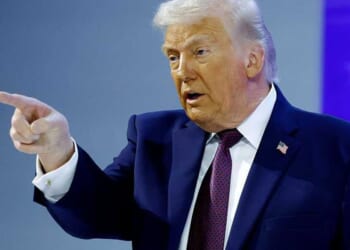
Over the weekend, Trump said Iran had 48 hours to strike a deal with the U.S. before “all Hell will reign down,” marking the president’s reiteration of the 10-day time frame he has given Iran. Trump’s original deadline was Monday at 8 p.m., but he indicated on Sunday that the deadline had been pushed back a day, vowing that the U.S. would begin sweeping strikes targeting Iran’s power plants and bridges at 8 p.m. Tuesday if it does not meet Washington’s demands, particularly regarding opening the Strait of Hormuz.
The president previously pledged to “completely obliterate” Iran’s oil wells and blow up vital energy infrastructure on Kharg Island, the distribution point for 90% of Iran’s oil, if it does not make a deal.
On Sunday, the president said there was “a good chance” Iran would make a deal on Monday, in comments to Fox News’s Trey Yingst. “They’re negotiating it now,” Trump said. If it doesn’t make the deal, the U.S. will likely take over Iran’s oil industry, the president said, raising an option he has floated before, similar to Washington’s takeover of Venezuela’s energy sector.
“If they don’t make a deal and fast, I’m considering blowing everything up and taking over the oil,” Trump told Yingst. “You’re going to see bridges and power plants dropping all over their country.”
The president suggested that, should Iran decline to make a deal, the regime would face the fury of armed protesters rising up against Tehran. Trump has said Iran has already slaughtered 45,000 civilians who tried to revolt against the radical Islamic regime. He revealed on Sunday that the U.S. has sent “a lot” of weapons and guns to remaining Iranian protesters, including the Kurds, who are an Iranian ethnic minority exiled abroad.
Iran has been involved in peace talks with the U.S. since around March 21. Trump said over the weekend that Iranian officials involved in the negotiations are being granted amnesty so that talks can continue.
The president has repeatedly threatened to devastate Iran’s energy grid and other critical infrastructure if it refuses to open the Strait of Hormuz. The strategic waterway that connects to the Persian Gulf is essential to facilitating the global oil supply. Its essential closure during the Iran war has devastated international energy markets, causing sweeping oil and gas shortages, particularly in Asian countries heavily reliant on energy from the Middle East.
Trump has adjusted deadlines for Iran to comply multiple times. His latest deadline was set on March 26, at which time the White House said it would grant Iran 10 days of relief, before the extension expires on Tuesday evening. Trump reiterated the deadline on Saturday, previewing “hell” that would fall on Iran if it does not make a deal in the next 48 hours.
In a Wednesday prime-time address to U.S. citizens, Trump said the war against Iran could continue another three weeks, sending Iran “back to the Stone Ages, where they belong.” The U.S. and Israel intially launched strikes against Iran on Feb. 28, citing long-standing concerns about the regime’s nuclear program. The decision was made after the U.S. was told by Iranian leadership that it had enough enriched uranium to make 11 nuclear bombs within a week to 10 days, according to Trump’s team.
The president could face blowback for his threatened looming attacks, with human rights groups cautioning that taking out Iran’s energy grid would violate international law restricting warfare on civilian infrastructure, constituting a war crime.
TRUMP SAYS ‘MANY’ IRAN MILITARY LEADERS KILLED IN ‘MASSIVE’ STRIKE
The crippling of Iran’s power plants would be “devastating to the Iranian people” by cutting off electricity to hospitals, water supply, and other vital civilian needs, Sarah Yager, the Washington director of Human Rights Watch, told France 24.
“The US military has protocols designed to constrain that kind of harm to the civilian population, but when the president speaks this way, it risks signaling that those constraints are optional, and that is what makes this moment so dangerous,” she said.