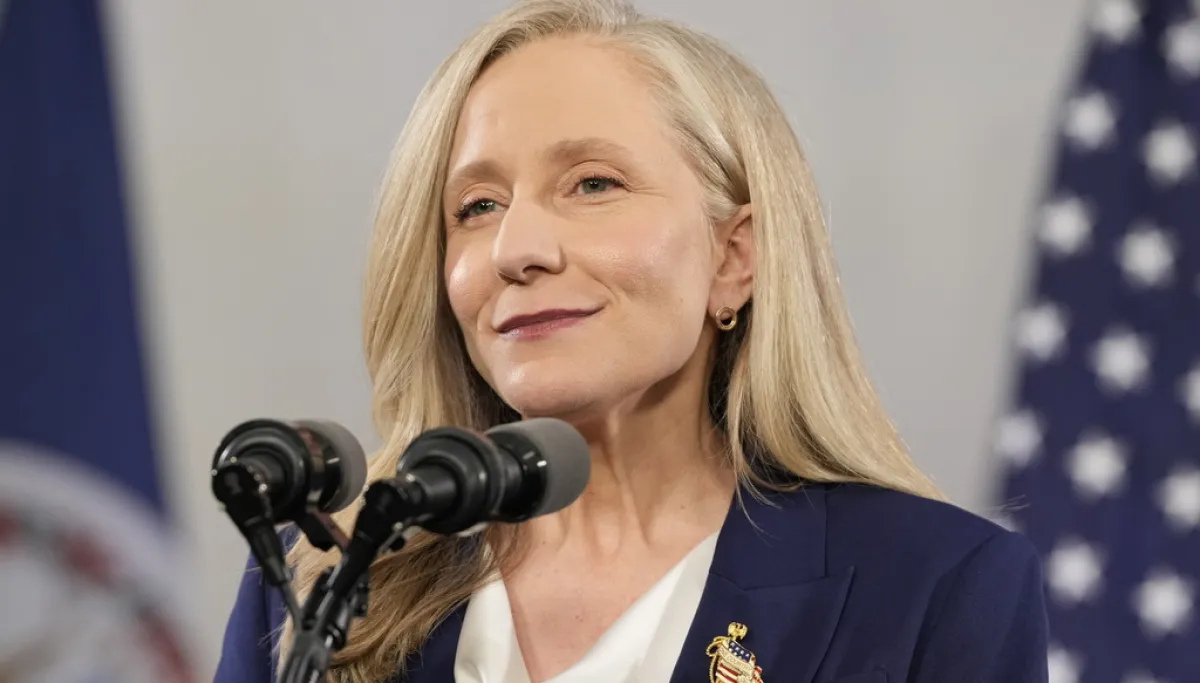
Virginia will guarantee nearly its entire workforce “the right” to paid family and medical leave, pending Gov. Abigail Spanberger’s (D-VA) signature on new legislation that would establish a costly worker assistance program open to almost all state residents — including, potentially, illegal immigrants.
With complete Democratic control of the state government, the Virginia legislature voted on March 13 to send the program, introduced as S.B.2 and H.B. 1207, to Spanberger’s desk. But the state agency that will be tasked with implementing the paid leave program told the Washington Examiner that it can’t determine whether illegal immigrants will reap the benefits of it until after Spanberger signs the law.
The companion measures passed over the objections of Republican lawmakers seeking carve-outs for small businesses that would be forced to honor weeks of paid time off for a broad range of legally acceptable reasons defined by the law.
On the 2025 gubernatorial campaign trail, Spanberger vowed to sign paid family and medical leave legislation after her predecessor, former Gov. Glenn Youngkin (R-VA), vetoed two past proposals out of concern that smaller companies might struggle to take on administrative burdens associated with accommodating lengthy periods of paid leave.
Spanberger has since renewed support for the revived effort as it advanced through the General Assembly, declaring in her State of the Commonwealth speech, “We will create a statewide paid family and medical leave program.”
Absent a veto from Spanberger, who has 30 days to act, Virginia will become the country’s 14th state to adopt a mandatory paid family and medical leave program, following Minnesota’s own rollout earlier this year.
If Spanberger were to sign the legislation into law, it would make Virginia’s version of paid family and medical leave one of the most expensive and expansive paid leave programs in the nation.
Who’s paying for the program?
Wage replacement for paid leave claims will be offered at 80% of a worker’s average weekly wage, capped at the state’s average weekly wage, which is $1,507 in early 2026.
The program, providing up to 12 weeks of paid leave starting in December 2028, will be financed through payroll contributions. Employers and employees will both begin paying into the program on April 1, 2028.
But the cost of implementing the program comes with a hefty price tag.
The program is projected to spend more than $117 million in startup costs from fiscal 2027 to 2028, according to an analysis by the state’s Department of Planning and Budget.
Until enough revenue can be generated to offset the upfront expenses, the Virginia Employment Commission will require a line of credit, treasury loan, or general fund appropriation to get the program up and running.
By 2031, the program is expected to expend over $2.1 billion in benefits each year.
Statute suggests illegal immigrants can tap benefits
The proposed legislation contains a brief subsection suggesting that illegal immigrant laborers are able to access the program’s benefits. The state, however, declined to say how it would interpret that language for illegal immigrants.
Under a portion of the legislative proposal prohibiting “retaliatory personnel action,” the law says that employers are strictly forbidden from taking action “or otherwise discriminating against” a claimant whose rights to receive such benefits are statutorily protected.
Prohibited acts of retaliation include “reporting or threatening to report a covered individual’s suspected citizenship or immigration status or the suspected citizenship or immigration status of a family member of the covered individual to a federal, state, or local agency.”
In February, Spanberger issued an executive order directing local law enforcement departments across the state not to cooperate with federal immigration authorities for deportation purposes.
SPANBERGER ORDERS TERMINATION OF VIRGINIA COOPERATION WITH ICE
Spanberger faced intense criticism later that month when illegal immigrant Abdul Jalloh, who was subject to multiple immigration detention requests lodged with local officials over the last decade, allegedly murdered a Virginia mother. In response to requests for Jalloh’s removal, Spanberger’s office said that Immigration and Customs Enforcement would still need to obtain a judicial warrant “to ensure this violent criminal is deported.”
The Virginia Employment Commission, the state agency assigned to administer the paid leave program, would not confirm whether illegal immigrants will be eligible to collect benefits from the program.
“At this time, the legislation you referenced has not been signed into law. As such, no final determinations have been made regarding the program,” a spokeswoman for VEC told the Washington Examiner.
The spokeswoman said that the commission, once the legislation is enacted, will initiate a formal rulemaking process to establish program regulations and operational guidance that provide the framework for eligibility requirements and benefit administration.
“Until that rulemaking process occurs, it would be premature to interpret how specific provisions such as those related to immigration status would be implemented in practice,” the VEC spokeswoman said. “We are closely monitoring the legislation and will provide clear, public-facing guidance if and when the program is established.”
Virginia state Sen. Jennifer Boysko and Del. Briana Sewell, the Democrats who introduced the bills, did not respond to requests for comment about whether lawmakers intended the program to cover illegal immigrants.
VEC, per program specifications, will have to conduct a community awareness campaign to inform workers of the program’s availability. Outreach information must be translated in Spanish and other languages spoken by more than 5% of the state’s population.
As of 2023, data from the Migration Policy Institute puts the number of illegal immigrants living in Virginia, including visa overstayers, at approximately 361,000.
Close companions qualify as covered family members
Some state policy experts are warning that Virginia’s generous paid leave program will invite fraud and abuse.
“The bill should be renamed the Paid Extended Family and Like-Family, Medical, Military, Domestic Violence Leave Act — but that would require this administration to tell the truth,” Derrick Max, president of the Virginia-based Thomas Jefferson Institute for Public Policy, told the Washington Examiner.
The program’s statutory language defines “family” to mean any familial relationship, whether blood-related or by adoption or through marriage, including relatives outside one’s immediate household.
In fact, the definition of applicable family is so broad that the program considers almost anyone a family member, irrespective of actual familial ties, even encompassing, “Any individual whose close association with a covered individual is the equivalent of a family relationship.”
“This means, your neighbor, best friend, close work colleague, or anyone you deem an ‘equivalent of a family relationship,’” Max said. “You can drive a truck through that definition, and many employees seeking a break with 80% pay surely will.”
As written, the legislation does not limit the number of employees claiming paid leave for the care of a single sick family member, or the so-called equivalent of, either. Multiple caretakers can claim to be taking care of the same person and receive months of paid time off from work.
Generously acceptable reasons for taking paid time off
Virginia’s paid leave program accounts for a wide range of conceivable scenarios, not just injuries or illnesses.
Beyond caring for an ailing loved one, the program lets claimants take “exigency leave,” which is time allotted to manage their affairs prior to a family member’s call to active-duty military service. Claimants can also spend time with that military member during a paid rest and recuperation period or upon their return from deployment.
While noble-sounding in nature, the program’s military consideration may inadvertently discourage employers from employing military families, many of whom live in northern Virginia near the Pentagon.
“In Virginia, where 130,000 military families are stationed, this could be a huge cost and could actually chill local businesses from hiring spouses and family of military [members],” Max told the Washington Examiner.
Workers welcoming a child into their home, including newborns, adopted children, or foster care placements, would also be able to claim paid leave within the first year of the child’s arrival.
Additionally, the program allows self-attesting victims of domestic violence, sexual assault, stalking, or harassment to take paid time off to pursue “safety services,” such as mental health counseling, legal preparation in court proceedings, relocation, and the installment of a home security system.
“Again, important,” Max said of the safety measures, “but [they come at] a significant cost to businesses who would not be able to individually determine the real needs or validity of the claims.”
Certification of such claims simply requires a signed statement from the claimant. Workers can also file for paid leave to take care of a close friend or family member in need of “safety services.”
A doctor’s note is all that is required for approval of medical leave. Claimants must provide supporting documentation from a physician or a healthcare provider as proof of the “serious health condition that makes the covered individual unable to perform the functions of the position of such individual’s employment.”
Program applicants would be able to take a total of 12 weeks paid time off per calendar year for any combination of covered needs.
Qualification for benefits relies on earnings, rather than tenure.
To qualify for paid leave, workers will need to have earned at least the amount eligible for unemployment insurance in Virginia, currently $3,000, over the two highest-earning quarters in a base period.
Benefits are also portable, meaning income earned across all jobs worked in a base period counts toward the total when determining if a worker has met the minimum earnings amount.
So if someone has just changed jobs, for example, that claimant can count earnings from his or her past job as well as the current one. A claimant currently working two jobs can count income from both.
This mechanism allows applicants to still maintain eligibility despite a change in employers and be able to claim benefits effectively from the first day of employment. On the other end of the arrangement, employers will have to contend with extended absences as soon as a new hire starts before they can recoup the cost of hiring that worker.
Small businesses hamstrung by program obligations
Benefit payouts will be available to almost all employees, including public, private, and part-time workers, regardless of their employer’s size.
Most states with paid leave laws exempt teachers, who already enjoy summers off, but Virginia’s would not.
“Teachers would basically be able to use their leave during the school year, and thus leave their students with a long-term, less-qualified sub for over half of the instructional days in a school year,” Max said. “In struggling school districts where subs and teacher vacancies are big issues, especially in math and science, the learning loss will be significant.”
Though companies with 10 or fewer employees would be exempt from paying the employer share of the payroll contributions, small businesses will still have to handle the hiring, as well as training, of replacement workers to temporarily fill in for the lack of labor and simultaneously guarantee that the employees on leave will get their jobs back.
When a worker is absent, an employer may alternatively offer overtime pay for current staff.
These administrative burdens can exceed the cost of payroll contributions. One study on the financial impact of employee absences found that the total direct cost of paid time off, accounting for overtime costs and replacement worker wages, amounted to 15.4% of the payroll.
Youngkin vetoed a pair of paid leave laws in 2025 that similarly imposed civil penalties against businesses accused of violating protocols by refusing or failing to abide by the program’s obligations.
At the time, Youngkin urged against the establishment of a state-mandated, government-run benefits program, as opposed to voluntary coverage plans offered via the private sector.
“Employers must have the flexibility to design leave and benefit policies that fit their workforce rather than be subject to a one-size-fits-all government mandate,” Youngkin’s statement accompanying one of the vetoes said.
Youngkin noted that small businesses unable to comply with the program’s obligations may have to cut back on their number of employees or close down altogether, in effect curbing the state’s job creation and deterring economic growth overall.
Funding escalation clause
The paid leave legislation sitting on Spanberger’s desk would codify a solvency threshold that triggers an adjustment of the contribution rate.
That rate will be adjusted automatically to ensure that the projected balance of the trust fund, as a percentage of total program expenditures, does not fall below 40%.
In practice, if utilization outpaces projections, the state will raise payroll taxes — without a vote of the General Assembly — to cover the cost of demand.
Minnesota, which launched its paid family and leave program in January, has already had to hike payroll taxes to 0.88% from the initial 0.7% originally proposed two years ago.
Thousands of applicants filed to take advantage of the program before benefits even went into effect after officials started accepting submissions late last year, encouraging prospective participants to “get a jumpstart” on claiming eligible life events in 2026.
Minnesota’s program is explicitly open to “undocumented workers” and similarly uses an open-ended standard for who the state recognizes as family.