Order Jamie Glazov’s new book, ‘United in Hate: The Left’s Romance with Tyranny, Terror, and Hamas’: HERE.
As Easter dawns this weekend, Christians across the globe will gather to celebrate the resurrection of Jesus Christ — a singular event that overthrew the dominion of death and offered instead the hope of salvation. It is the beating heart of a faith that has shaped the moral and cultural architecture of the West for two millennia.
The spiritual significance of Easter is its radical claim that Christ’s resurrection is the ultimate victory over our sin and mortality. This is not a mere metaphor or myth but an historical and metaphysical reality. The empty tomb testifies to a God who personally entered human suffering, conquered it, and continues to offer redemption to a fallen world. In our nihilistic age, when many replace real meaning with political activism and an idolization of the self, Easter’s message proclaims that our lives have purpose, that our sacrifices are not in vain, and that love triumphs over despair. It is a reorientation of the soul toward eternity.
Culturally, Easter has been a cornerstone of Western civilization, its themes of renewal and redemption woven into our art, literature, and moral imagination. From Dante’s Divine Comedy to Bach’s St. Matthew Passion, the resurrection infuses us with humility but has also inspired our highest aspirations. It has fueled the creation of hospitals, the abolition of slavery, the rise of charity, and the concept of inalienable human rights—ideas rooted in the revelation that every soul is made in God’s image, that all lives matter.
Yet, in our time, Easter’s message is threatened by enemies increasingly hostile to it. Christians are tested in a crucible of unprecedented persecution globally. Addressing diplomats and international officials gathered for a “Standing with Persecuted Christians: Defending the Faith and Christian Values” event at the United Nations in Geneva on March 3, Vatican representative Archbishop Ettore Balestrero said the scale of persecution of Christians was stark and ongoing, and required urgent attention from governments and international institutions responsible for protecting fundamental rights.
The numbers are staggering. “Almost 400 million Christians worldwide face persecution or violence, making them the most persecuted religious community in the world,” he said, noting that “one in seven Christians is affected.” Nearly 5,000 Christians were martyred in 2025 alone – roughly 13 deaths every day. The Open Doors organization notes that that number has already been surpassed so far in 2026. In Nigeria, Boko Haram and Fulani militants slaughter Christian villagers with impunity, their churches reduced to ash. In China, the Communist Party demolishes crosses and jails pastors, replacing the Gospel with state-sanctioned propaganda. In the Middle East, ancient Christian communities—descendants of the faith’s earliest witnesses—are being erased by jihadist violence and systemic discrimination.
This persecution is ideological as well as corporeal. In the West, cultural Marxists have waged a relentless and largely successful campaign to secularize the public square, purging Christian symbols and values from cultural institutions. The neo-Marxist aim is a society unmoored from transcendence, in which the State, not God, defines morality. The Left understands that to remake society, it must dismantle its spiritual foundations. By marginalizing Christianity, they aim to sever the West from this moral compass, leaving it adrift in a sea of relativism.
This secularizing zeal has birthed a culture of grievance and division, in which identity politics intentionally negates the universal brotherhood that Easter affirms. The result is a civilization in decline: spiritually hollow, culturally fragmented, and increasingly authoritarian. Schools, once grounded in Judeo-Christian ethics, now inculcate ideologies that promote moral relativism over the True, the Good, and the Beautiful. Universities, media, and even many churches have embraced a progressive orthodoxy that recasts Christian virtues as relics of oppression and intolerance. The rise of cancel culture, the suppression of free speech, and the weaponization of institutions against dissenters are symptoms of a society that has rejected Easter’s call to truth and grace.
Easter, with its humble yet glorious affirmation of divine authority, is an affront to the Left’s worldly designs. It reminds us that no earthly power can command our ultimate allegiance. The resurrection is both a personal promise and a cosmic one, a hope that has sustained the West through its darkest hours — Roman persecution, barbarian invasions, world wars. It is a rallying cry for those of us who refuse to submit to the spirit of our decadent age. It calls Christians to stand firm with the courage of conviction.
This means defending the faith in the public square. It means rebuilding cultural institutions — schools, churches, families — that reflect the values of truth, beauty, and sacrifice. It means bearing witness to the Gospel in a world that despises it, knowing that the God who raised Christ from the dead can also raise a civilization from its ashes.
Easter assures us that no persecution, no ideology, no earthly power can extinguish the truth. This is not blind optimism; history is replete with examples of Christianity’s resilience, from the early martyrs to the medieval monks who nurtured civilization for a thousand years after the collapse of Rome, to the dissidents who defied communist tyranny with the cross. Today’s persecuted, from Nigerian villagers to Chinese house churches, embody this same indomitable spirit. Their witness shames the complacency of the comfortable West.
This weekend, as churches fill with hymns of triumph, let us remember what is at stake. Historically, spiritually, and civilizationally, Easter is a revolutionary act. It declares that death is not the end, that evil will not have the last word, and that a broken world can be made whole. In a time of chaos and re-paganizing decay, this is the message the West desperately needs. The question is whether we will have the courage to carry it. Will we return to the faith that birthed our greatness, or will we surrender to a secular dystopia where power, not principle, reigns?
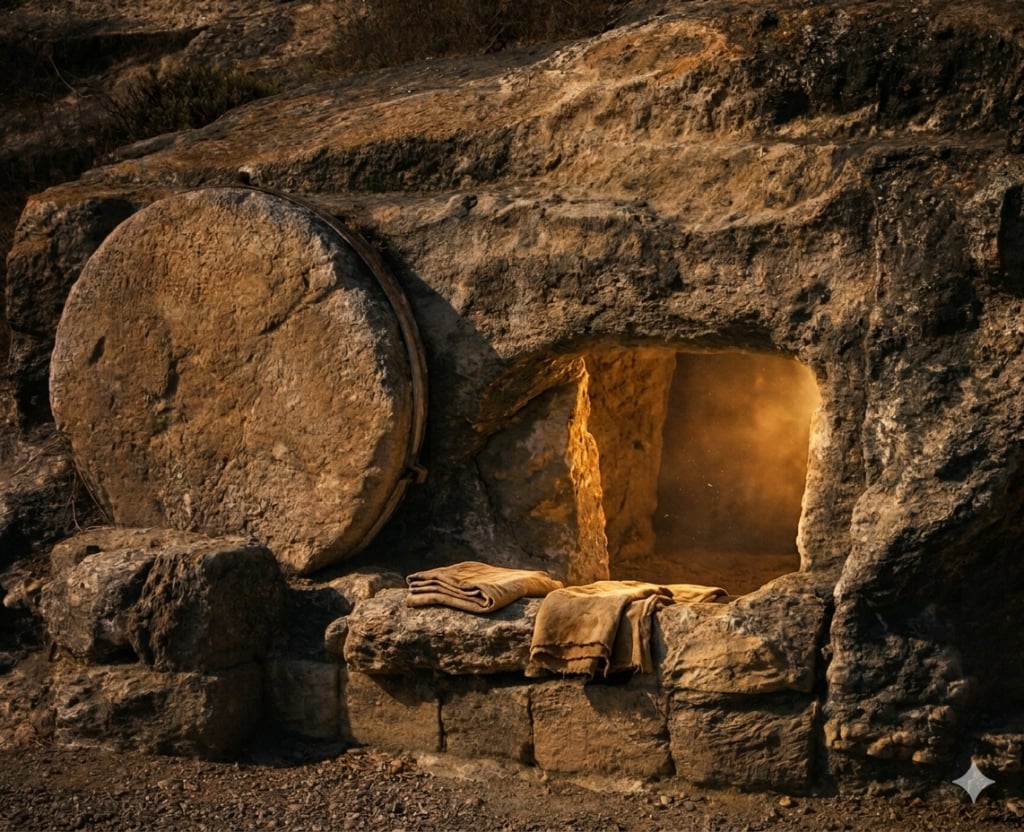
The tomb is empty. Christ is risen. And the future belongs to those who dare to believe it.
Follow Mark Tapson at Culture Warrior