Democrats in Virginia passed a bill Friday that directs state agencies to discriminate against businesses owned by white men when considering which companies receive discretionary government contracts under $200,000.
The bill, introduced by Democrat Del. Jeion Ward, establishes the “Small SWaM Business Procurement Enhancement Program.” (SWaM stands for “small women-owned, small minority-owned, or small service disabled veteran-owned”). The measure sets a race or sex quota for such businesses to receive 42 percent of the state’s discretionary spending on “procurement orders, prime contracts, and subcontracts.”
“The bill provides that executive branch agencies and covered institutions are required to increase their small SWaM business utilization rates by three percent per year until reaching the 42-percent target or, if unable to do so, to implement achievable goals to increase their utilization rates,” a summary states. The legislative text dictates that “purchases between $10,000 and $200,000 shall be set aside for award to small SWaM businesses.”
According to the bill, if agencies are unable to increase their use of such businesses by 3 percent per year, they will need to develop an improvement plan in order to get it to start phasing out businesses owned by able-bodied white males from their current discretionary contracting.
The $200,000 price point is actually an increase from the bill’s original threshold, which was set at $100,000. The original bill was also marginally less radical, as it included a clause allowing white men to compete in the contract bids, so long as “fewer than two certified small SWaM businesses are available for competition” or “where bids or offers do not result in a fair and reasonable price.” But that clause was removed in the final version of the bill.
Whether the threshold is $100,000 or $200,000, the purchases may appear small relative to the size of the government budget. As of November 2015, however, about 80 percent of all Virginia government procurement purchases were at or below the $100,000 threshold, meaning increasing it to $200,000 and requiring that those purchases not be made from white males could effectively shut out huge swaths of business for white male-owned enterprises.
Government agencies are also allowed to spend up to 5 percent more on contracts for adhering to the diversity, equity, and inclusion (DEI) ideology behind the bill. In other words, even if white male-owned businesses can give a more competitive offer, they can still get shut out based on their race and sex alone.
In order to get a grasp on how much racial rigging state agencies need to participate in, the bill orders the director of the “Department of Small Business and Supplier Diversity” — someone named Willis Morris — to conduct a “disparity study” every five years.
“The study shall evaluate the need for enhancement and remedial measures to address the disparity between the availability and the utilization of women-owned and minority-owned businesses,” the bill states. The department will then evidently use the study to make recommendations on how to reduce the number of white males getting government contracts.
Ironically, the bill has a disclaimer at the bottom stating, “In the solicitation or awarding of contracts, no public body shall discriminate against a bidder or offeror because of race, religion, color, sex, sexual orientation, gender identity, national origin, age, disability, status as a service disabled veteran, status as a military family, or any other basis prohibited by state law relating to discrimination in employment,” which directly contradicts the rest of the bill.
It is possible, however, that boilerplate language was put in so as to throw off a legal challenge, which is sure to arise as a result of the bill’s discriminatory policies.
The bill passed the Senate 21-19 and the House 62-36, almost entirely along party lines.
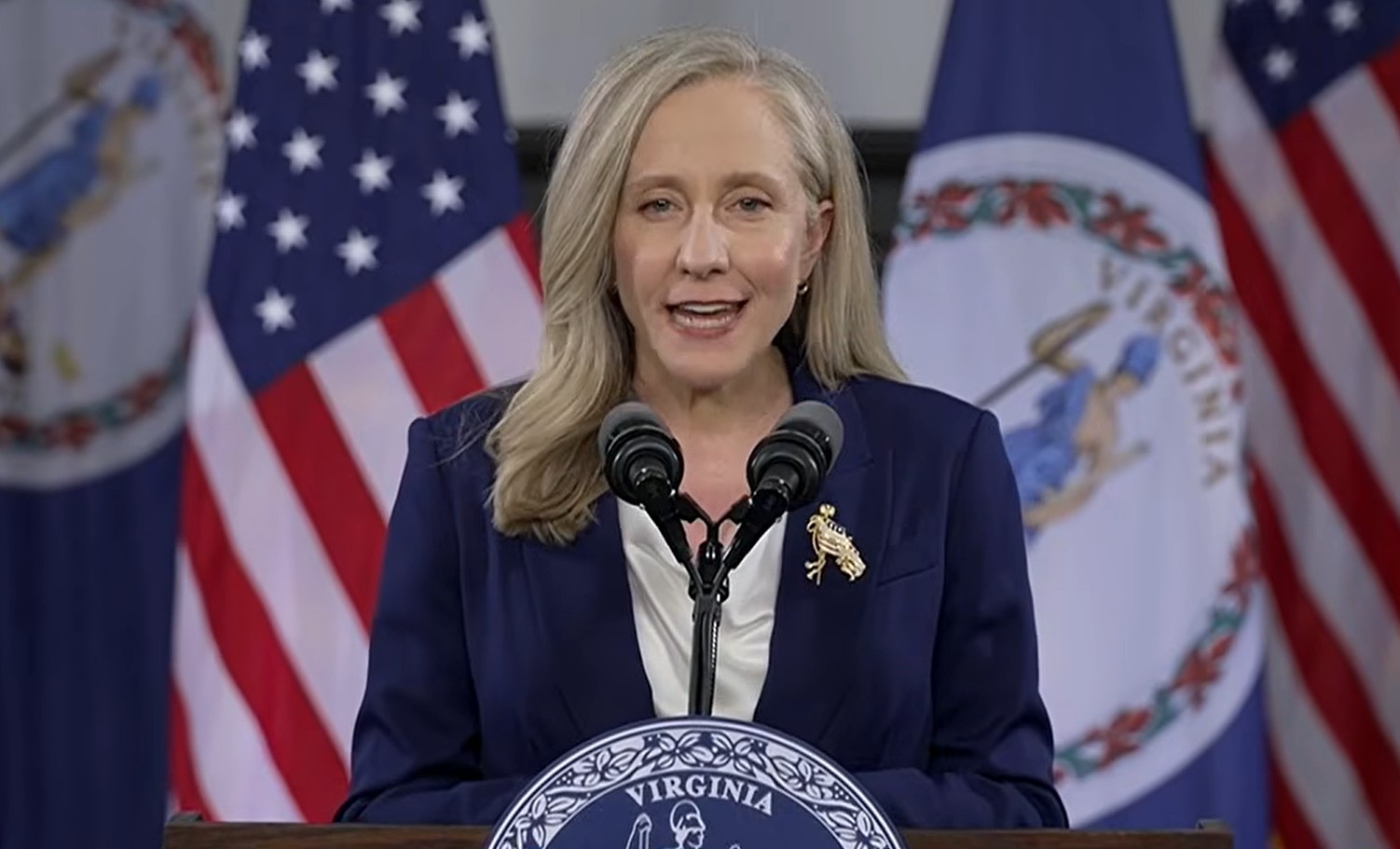
It will now head to the desk of Gov. Abigail Spanberger, D-Va., who has continued to prove herself a far-left radical, despite running as a moderate.
Breccan F. Thies is the White House correspondent for The Federalist. He is a co-recipient of the 2025 Dao Prize for Excellence in Investigative Journalism. As an investigative journalist, he previously covered education and culture issues for the Washington Examiner and Breitbart News. He holds a degree from the University of Virginia and is a 2022 Claremont Institute Publius Fellow. You can follow him on X: @BreccanFThies.