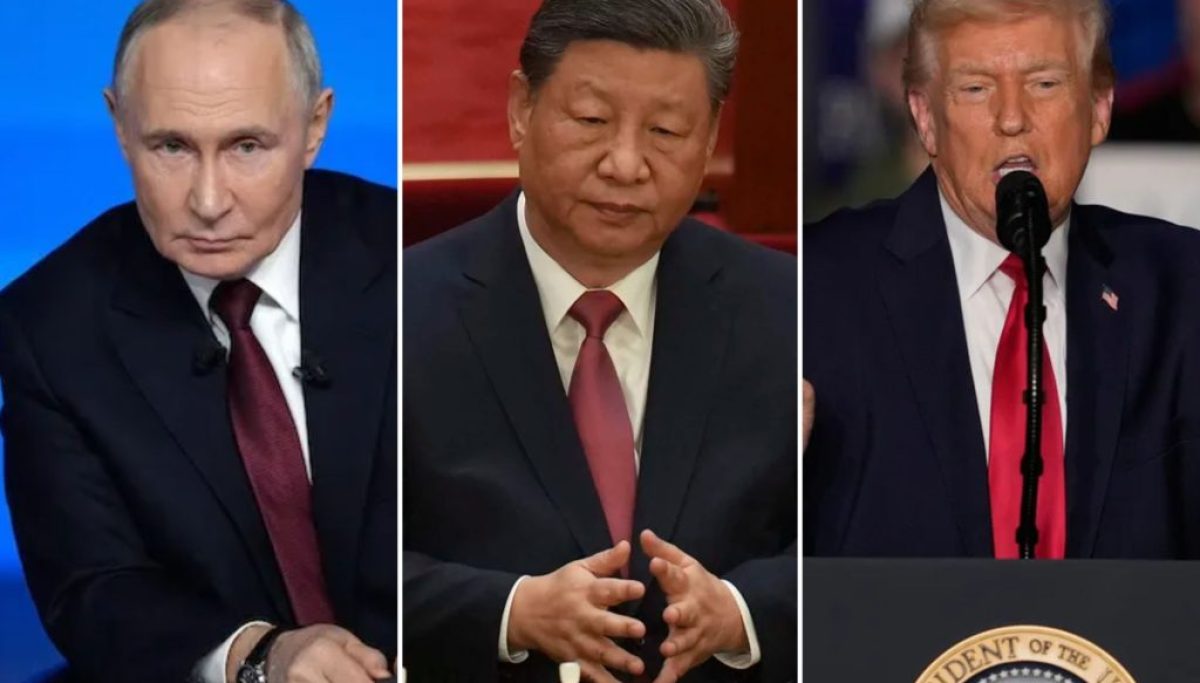
The United States and Russia have agreed to restart high-level military-to-military communications, which had been suspended in the fall of 2021, the same day the last remaining nuclear limitation treaty between them expired.
The reestablishment of the military-to-military communications channel, which U.S. European Command announced on Thursday, came after the U.S.-Russia-Ukrainian trilateral talks in Abu Dhabi this week.
“Maintaining dialogue between militaries is an important factor in global stability and peace, which can only be achieved through strength, and provides a means for increased transparency and de-escalation,” EUCOM said in a statement. “This channel will provide a consistent military-to-military contact as the parties continue to work towards a lasting peace.”
Thursday also marks the expiration of the New START Treaty, the latest in a series of U.S.-Russian nuclear weapons treaties that date back more than 50 years. Russia suspended its participation in the treaty in 2023 after agreeing to a five-year extension in 2021, which predated Russia’s invasion of Ukraine, though Russia said it would voluntarily maintain its commitment to the requirements set by the agreement.
The two sides are working on a deal to continue to observe the contours of the treaty, though the drafts still need to be approved by both presidents, according to Axios.
Russian President Vladimir Putin had publicly discussed extending the deal for one year, but nothing came to fruition before its expiration. The Russian Foreign Ministry said in a statement that there was no “formal official response from the United States with regard to the Russian initiative.”
“In the current circumstances, we assume that the parties to the New START Treaty are no longer bound by any obligations or symmetrical declaration in the context of the Treaty, including its core provisions, are in principle free to choose their next steps,” the ministry’s statement added, noting that it still intends “to act responsibly.”
The U.S. and Russia hold an overwhelming majority of the world’s nuclear weapons, but China’s recent nuclear buildup and military modernization have become a major component of America’s perspective on nuclear arms control.
US-RUSSIA NUCLEAR TREATY TO EXPIRE AS ATTENTION TURNS TO CHINA’S EXPANDING ARSENAL
“Obviously, the president’s been clear in the past that in order to have true arms control in the 21st century, it’s impossible to do something that doesn’t include China because of their vast and rapidly growing stockpile,” Secretary of State Marco Rubio said on Wednesday.
For the U.S., there are concerns about putting caps on its nuclear stockpiles if Beijing is not similarly constrained and about the possibility of a coordinated attack on U.S. interests from both China and Moscow.