Order Michael Finch’s new book, A Time to Stand: HERE. Prof. Jason Hill calls it “an aesthetic and political tour de force.”
The United Nations is closing out 2025 with another sorry record on key issues in which it has involved itself. The UN has been sidelined in efforts to bring peace in Gaza and Ukraine. And, once again, the UN has embarrassed itself with apocalyptic pronouncements and another useless conference regarding climate change.
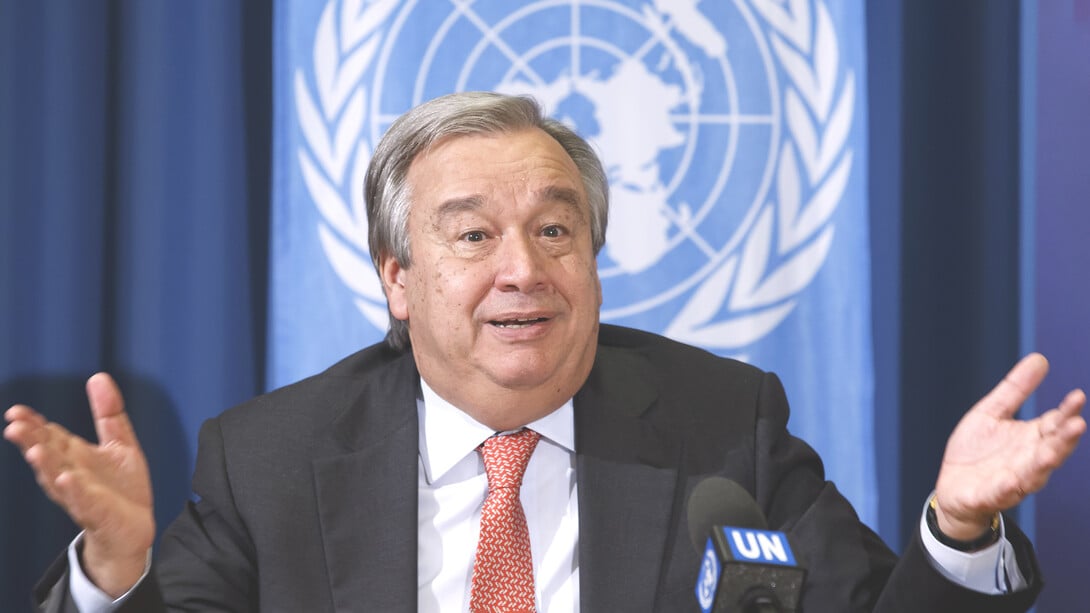
Day after day, through resolutions and statements from high-level UN officials including Secretary General Antonio Guterres, we have heard calls for a permanent ceasefire in Gaza and a release of the hostages held by Hamas and other Iran-backed Palestinian terrorists. We heard no calls, however, from UN officials that all the hostages must be released first before implementation of any ceasefire or that Hamas must disarm as part of any negotiated post-conflict peace settlement. Israel received virtually all the blame for the humanitarian crisis in Gaza resulting from the conflict that Hamas initiated with its horrific October 7, 2023 attack on Israel.
The Trump administration put together a broad coalition of Arab, Muslim, and Western countries and led the negotiations that resulted in the current ceasefire. The details of Phase 2 of the Trump administration’s 27-point peace plan are now being negotiated, which calls for Hamas to completely disarm and to have no role in the post-war governance of Gaza. The UN is taking no part in the negotiations, although it is helping to facilitate the delivery of humanitarian aid to Gazans made possible by the Trump peace plan that the UN Security Council has endorsed.
The United Nations is not expected to have a representative on the proposed International Stabilization Force, or the Board of Peace. The world’s largest multilateral intergovernmental organization with the self-proclaimed central mission to maintain international peace and security is largely a passive observer of the Gazan peace process. Given the UN’s horrendous anti-Israel record, that is a good thing.
The same holds true in Ukraine. All the negotiations to end the nearly four-year war in Ukraine are currently taking place without UN involvement. Indeed, the UN has been useless in this regard.
UN officials routinely call for a ceasefire and recite that the sovereignty and territorial integrity of Ukraine within its internationally recognized borders must be respected. However, given the real facts on the ground, some degree of compromise by Ukraine and Russia will be necessary for there to be any chance of achieving a viable peaceful end to the conflict. Two key issues involve security guarantees and territorial concessions that both Ukraine and Russia can accept.
Fruitful negotiations are a tough slog. They require strategic maneuvering and thinking outside of the box to be successful, not the UN’s useless repetition of cliches. The discussions going on among the United States, European nations, and Ukraine to craft a common negotiating position to present to Russia are making progress. “In recent days, we have seen significant diplomatic momentum, perhaps the most since the war began on Feb. 24, 2022,” said Chancellor Friedrich Merz of Germany, who was standing beside Ukraine’s President Volodymyr Zelensky during a news conference on December 15th. “We now have the opportunity for a genuine peace process for Ukraine.”
No thanks to the United Nations!
Finally, there are the many dire climate change prophecies delivered by Secretary General Antonio Guterres and other senior UN officials who insist on ending new fossil fuel exploration and production to the detriment of the global economy. They want a complete transition to green energy as soon as possible.
Back in 2022, Secretary General Guterres said, for example, that “our planet is fast approaching tipping points that will make climate chaos irreversible. We are on a highway to climate hell with our foot on the accelerator.”
At the Climate Action Summit in Belém, Brazil on November 6, 2025, Mr. Guterres delivered more over-the-top warnings. He forecast that even a temporary overshoot of the goal to keep average global temperatures from increasing above 1.5 degrees centigrade from pre-industrial levels will have “dramatic consequences. It could push ecosystems past irreversible tipping points, expose billions to unlivable conditions, and amplify threats to peace and security.”
Secretary General Guterres is a longtime critic of the fossil fuel industry. He noted that he has “consistently advocated against more coal plants or fossil fuel exploration and expansion.” Moreover, he urged halting and reversing deforestation by 2030.
The Secretary General also called for massive wealth redistribution from developed countries to less developed countries to achieve so-called “climate justice.” He said that “we must demonstrate a clear and credible path to reaching the 1.3 trillion US dollars a year in climate finance for developing countries by 2035.” In the nearer term, he added that “Developed countries must take the lead in mobilizing 300 billion dollars annually,” including “40 billion US dollars adaptation finance by the end of this year.”
Leading up to and during the formal United Nations Climate Change Conference, known as COP30, what emerged was a farce and a gross demonstration of hypocrisy. President Luiz Inácio Lula da Silva of Brazil, the host country for COP30, is a strong advocate for zero carbon emissions. Yet his government had approved plans for offshore drilling near the mouth of the Amazon prior to the conference. And to build a new highway to Belém to ease traffic in advance of COP30, thousands of acres of protected Amazon rainforest were cleared.
COP30 was attended by over 56,000 delegates. Some attendees arrived by carbon-emitting private planes. Among those invited to attend were about 1,600 fossil fuel industry lobbyists.
In a typical demonstration of leftwing, progressive virtue signaling, the conference organizers decried the past exclusion of indigenous peoples from participating in climate policy decisions. This year, according to the official COP30 website, things would be different by aiming “to ensure the largest Indigenous participation in the history of the UN Climate Conferences.” That did not stop indigenous activists from trying to storm the conference venue anyway.
The final agreement coming out of COP30 was so watered down in an effort to reach consensus at the lowest common denominator that it did not even include the words “fossil fuels.” Despite his own oft-expressed concerns about the dangerous effect of fossil fuel emissions on the climate, Secretary General Guterres said that the agreement demonstrated that “multilateralism is alive” and that “COP30 has delivered progress.” And Mr. Guterres’ spokesperson avoided clarifying the Secretary General’s reaction to clearing thousands of acres of protected Amazon rainforest to build a new highway to the COP30 venue site in Belém, which undercuts his call to halt deforestation.
The so-called “progress” that COP30 did deliver was more commitments to redistribute wealth from developed countries to developing countries. And COP30 moved forward with a plan to counter “climate disinformation” – i.e., suppress information on social media platforms that runs counter to the politically correct climate narrative.
In short, the United Nations is ending 2025 with more fruitless pronouncements and conferences, but it has held true to its leftwing, progressive agenda.