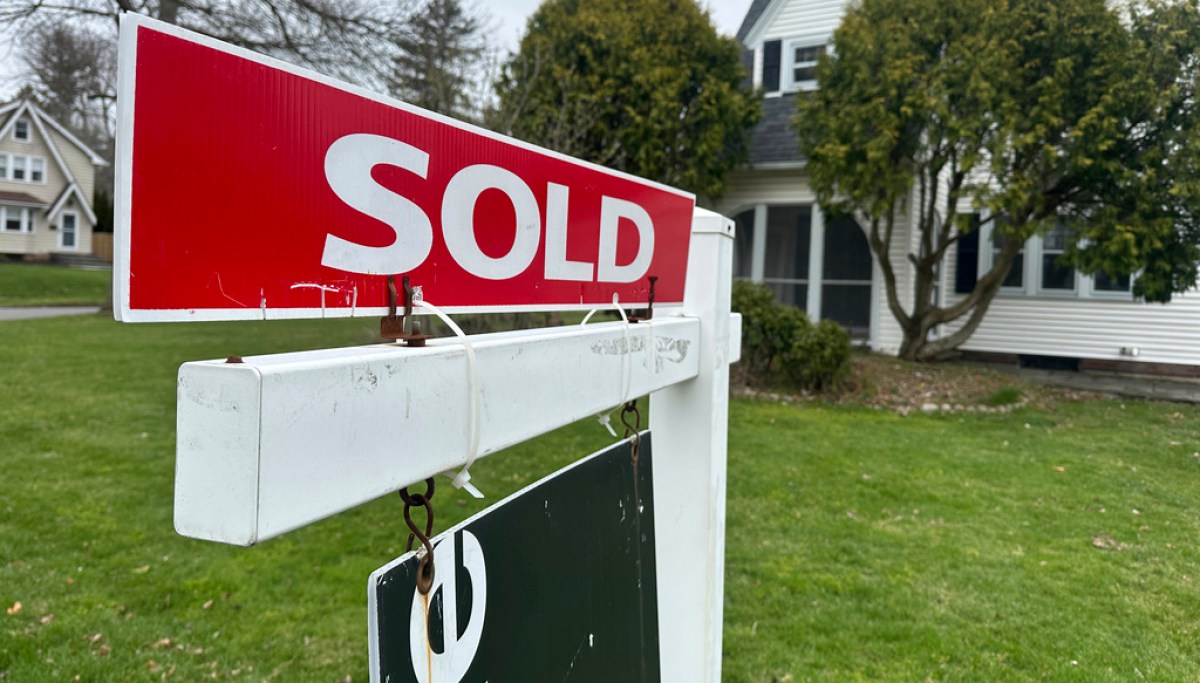
You wouldn’t know it if you only listened to the mainstream media, but over the past year, the Trump administration has made significant strides in making housing more affordable.
Look no further than the fact that this week, mortgage rates slid to one of their lowest levels in years. Interest rates are down, rental prices are collapsing, and wages are up.
This stunning transition didn’t come by adopting the inflationary, tax-and-spend policies of the Biden years, but by rejecting them.
Typically, President Donald Trump would take credit on Truth Social and remind voters that he is keeping his promises. But for some reason, he is instead touting a Sen. Bernie Sanders (I-VT)-style plan to prohibit large investors from purchasing single-family homes instead.
Don’t get me wrong. This isn’t your grandma’s Republican Party. Conservatives in 2026 should have no problem opposing Wall Street when it makes political sense to do so. But this one doesn’t — and it will hurt the president’s base more than anyone else.
First, private sector investors were never responsible for the high housing costs seen during Joe Biden’s presidency.
It makes sense that the Biden administration, Sanders, and leading liberal voices in Congress made this argument. They needed every scapegoat they could find to justify the 27% jump in median home prices and the 41% increase in rent prices across America’s 50 largest cities. So they did what they always do — blame the private sector.
Recent data from Ed Pinto, co-director of the American Enterprise Institute Housing Center, found that U.S. cities with the largest housing price increases have relatively fewer institutional buyers.
The fact that these investors bought only about 2% of all single-family homes on the market in 2024 proves they were not the reason for the high prices we saw before Trump took office. Even if they wanted to price-gouge, they simply didn’t own enough of the market to have that kind of power.
And if they were really the cause of soaring costs, then why have prices begun to fall so dramatically ever since Trump took office? Austin, Texas, for example, saw price drops of up to 21% from its pandemic peak. Minneapolis: 6%. Denver: 5%. Birmingham: more than 4%. A Yahoo Finance headline says it all: “Rents are falling nationwide.”
The problem was never these investors. The problem was the inflationary, big-government housing policies that Trump has slowly begun to revoke. As a builder, Trump should know that institutional investors lower home prices — they don’t increase them.
They do this by adding tens of thousands of new housing units each year. More homes on the marketplace mean lower prices. If we kick investors out of the industry, the housing shortage will get worse, and prices will become higher than they otherwise would have been.
The president’s track record has shown that the further you move away from the socialist wing of the Democratic Party, the better off the public will be. With mortgage rates down, rents falling across major markets, and household wealth surging, the data speak for themselves: free-market policies are working.
And recent free-market policy actions and proposals from the president are poised to soon make housing even more affordable. Trump recently directed the purchase of $200 billion in mortgage-backed securities using liquidity from Fannie Mae and Freddie Mac. He also changed tax law to allow the use of retirement or college savings accounts for home down payments and issued executive orders to increase housing supply and lower red tape.
These are all great ideas.
RESTORING AMERICA: HEALTHCARE ISN’T BROKEN. HEALTH INSURANCE IS
Rather than borrowing from Sanders’s playbook by restricting private capital that actually increases housing supply, the president should stay the course and take a victory lap.
He deserves it.
Alex Tokarev is an associate professor of economics at Northwood University.