History wants to remember the Covid era as the genesis of mail-in voting, spurred on by the need for social distancing. But Democrats and a little-known nonprofit — the National Vote at Home Institute — were pushing for mail voting years before the pandemic, and Covid in the middle of the 2020 presidential election presented the perfect crisis for them to advance the cause.
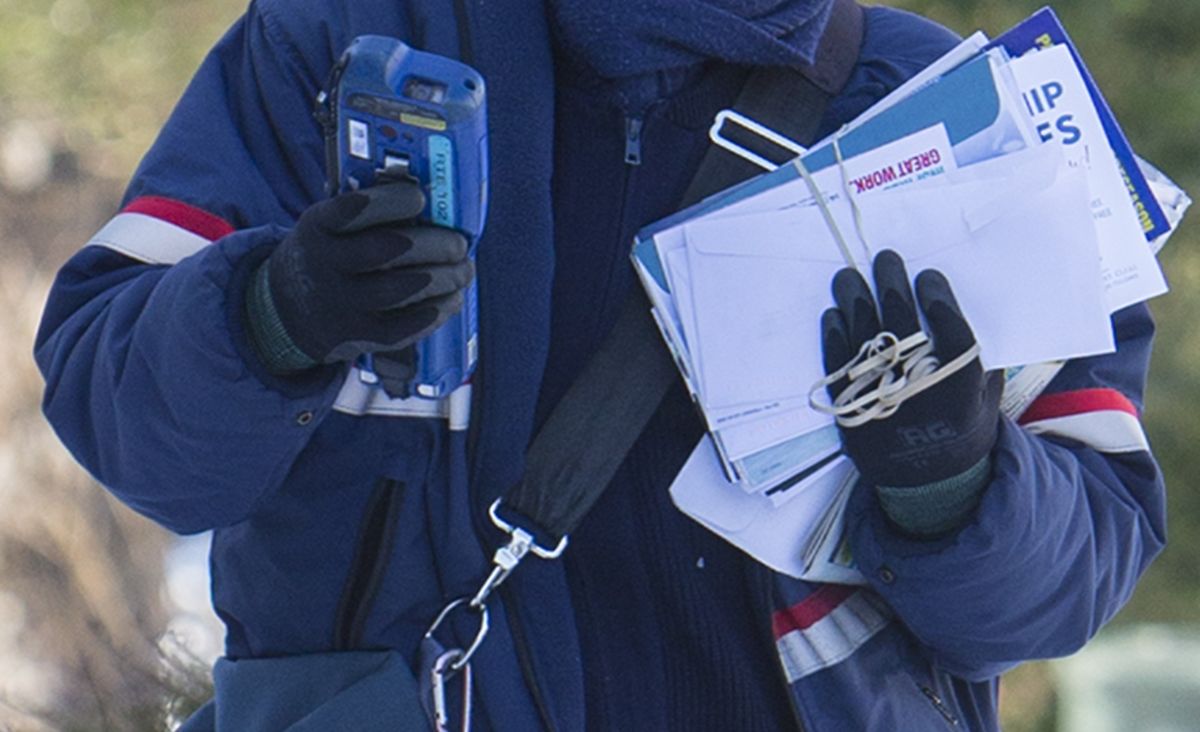
The U.S. Postal Service (USPS) processed and delivered 135 million ballots in 2020, including blank ballots sent out from election officers and completed ballots from voters, according to USPS data. In a way, that makes USPS the largest “precinct” in federal elections. It is a precinct with no citizens acting as judges of elections or conducting other oversight, in a system lacking chain of custody securities to prevent ballot tampering or loss.
This gives leadership at USPS a vital role in guarding election integrity. Or it is an incredible opportunity to put a fox in charge of the henhouse.
USPS Board of Governors Vacancies
Shortly after the 2020 election, Amber F. McReynolds, founder of the National Vote at Home Institute, was appointed to the 11-member Postal Service Board of Governors by Joe “Autopen” Biden. McReynolds was confirmed by the Senate on May 13, 2021. In 2023, she became chairman of the board. Biden appointed other board members too.
The board has nine seats for presidential appointment, and it always includes the postmaster general, currently David Steiner, who was appointed by the board in May, and the Deputy Postmaster, currently Doug Tulino, an independent.
In his first term, President Donald Trump made appointments to the board, but the term of the last Trump appointee, Roman Martinez IV, ended Dec. 8.
The USPS board will most likely start 2026 with five vacant seats, and a majority of the rest of the board was appointed by Democrat. With no Republicans remaining, last month McReynolds was picked by the board to serve another term as its chair. McReynolds has called herself an independent, but she advocates for and keeps company with Democrats.
Trump nominated Anthony Lomangino and John LaValle to the board in June, but a month later he withdrew LaValle’s nomination. Lomangino must be confirmed by the Senate Homeland Security and Government Affairs Committee, but there has been no movement on the confirmation.
Lomangino leads a trash and recycling company. Trump also appointed his wife, Lynda Lomangino, to the board at the Kennedy Center.
Trump must make more nominations to fill the board, and Congress must swiftly confirm the nominees, otherwise, we will go into the midterm election with an activist-led USPS managing millions of mail ballots, and no Republican voice to balance any policy changes or decisions.
Nonprofit Takes Key Role in 2020 Election
The National Vote at Home Institute was formed in Washington, D.C. in 2018 with $226,000 in “grants and contributions” according to its nonprofit, no-tax IRS 990 form. Before McReynolds founded the nonprofit, she worked as the director of elections for the city and county of Denver, Colorado from 2005 to 2018.
McReynolds took the title of vice-chair, director and executive director at the Institute in 2018, and working 20 hours a week, earned $54,000 as the only paid employee at her little nonprofit.
McReynolds got a huge pay bump under the same title in 2019, when she worked 33 hours a week and was paid nearly $207,000. That year, the institute shows gross receipts of $1.1 million.
The nonprofit’s mission is to:
Educate the citizens of the United States of the benefits of voting at home policies such as found in Colorado, Oregon, and Washington state. Vote at home policies ensure the integrity of elections by increasing voter turnout, reducing administrative costs, and protecting against outside meddling. NVAHI seeks to achieve this goal through a combination of educational, research, and communications activities and through sustained collaboration with election experts and key stakeholders throughout the country with an interest in enhancing the integrity of elections.
By 2020, the National Vote at Home Institute’s gross receipts, funded by grants and contributions, ballooned to $8 million. McReynolds was chief executive officer, putting in 33 hours a week and earning $173,796. That year, the National Vote at Home Institute spent almost a half million dollars on lobbying, and paid the well-known Washington, D.C. based Democratic political fundraising firm, The Bonner Group, to raise money for its mission.
The National Vote at Home Institute received funding from various foundations starting in 2018. In 2020, it received $1 million from Mark Zuckerberg’s Silicon Valley Community Foundation, so it is not surprising that the institute’s name is mentioned in Federalist stories about so-called Zuckbucks.
The National Vote at Home Institute did something new in 2020: it handed out grants to government election offices, mostly under the label “election implementation & support.” For example, the Cuyahoga Board of Elections in Cleveland, Ohio received nearly $70,000. A complete list of grants can be found below. 2020 is the only year of its existence that it handed out such grants, 990 forms from 2018 to2023 show.
The nonprofit also added this notation to its 2020 990 form:
During 2020, National Vote at Home Institute (NVAHI) helped facilitate innovation of vote at home systems around the country by offering policy and implementation recommendations, research, and trend reporting to various public stakeholders. NVAHI continued to develop organizational frameworks for research, educational and communications activities and continued to develop a team of election experts to assist in the organization’s educational efforts. The organization provided training to local election officials to meet the growing demand for technical and other assistance on policy system design and implementation of best practices by a range of election stakeholders across the states. NVAHI also tracked state law and policy changes related to vote by mail across the country and provided testimony and other resources for policymakers in the crafting a vote by mail policy.
It means as local and state governments moved to allow the public to vote by mail, McReynolds and her left leaning nonprofit were writing the policies for the governments to adopt.
During the Covid pandemic, nationwide shutdowns started on March 16, 2020. By May, the National Vote at Home Institute had published “A Comprehensive Analysis Of Existing Vote At Home State Policy & Urgent Policy Changes Necessary To Support Safe Voting In 2020.” The report was written with the help of left leaning organizations Ideas42, a nonprofit that aims to solve societal problems by changing human behavior and Common Cause, well known for its anti-Trump fight for “Democracy.”
Mail Voting Compromise Election Integrity
Ned Jones, deputy director of the Election Integrity Network, told The Federalist he would like to be considered for nomination to the USPS Board of Governors. Jones has been investigating the role of USPS in elections since 2020, and in 2023 he started the USPS/Vote-By-Mail National Working Group at the Election Integrity Network. It is a group representing around 20 states that meets regularly to discuss election vulnerabilities and other issues within the USPS. The group includes postal employees who offer insight into the internal USPS workings, including elections and general operations.
With mail-in voting, Jones says, there’s no way to know who filled out the ballot. Anyone can advise the voter, or fill the ballot out for the voter. Even with signature verification, there is no way to tell who actually cast the vote.
“It’s very susceptible to fraud,” Jones said. Another problem is that USPS has no chain of custody on the ballots.
“The election officials deliver blank ballots to the post office, and there’s no system that tells us exactly how many are delivered, and how many are not delivered, and then how many are returned — because the return happens as the voter completes them and sends them back or not,” Jones said. “There’s a huge problem with undeliverable ballots because of the bad addresses in the voter rolls, or people of have moved and are no longer at their address.”
The USPS can track a ballot only to a point, Jones said. They can tell if it left the building, but no home has a tracker indicating the ballot arrived at the correct address. Inside the USPS building, ballots are placed in trays with barcodes, so if it left the tray, they say the ballot has been delivered. But it’s final destination is not a guarantee, and that is a vulnerability that is hard to catch.
Then there is the mail intercept and redirect program, where, with a barcode, you can intercept the mail online and send it to a different address, leaving no record that it happened, Jones said.
“A lot of states did [mail voting] because of Covid you know, that really opened it up. It’s been five years. There’s really no need for this anymore.”
LIST: 2020 Grants From National Vote at Home Institute to Local Election Officials
For “Election Implementation & Support”
Buena Vista Township, Saginaw, Mich. $7,620
Battle Creek, Mich. $16,112
Cuyahoga Board of Elections, Clevland, Ohio $69,920
Milwaukee County Office of County Clerk $128,000
Miami County Board of Election, Troy, Ohio $35,045
Kentucky State Board of Elections $200,000
New Jersey Department of State $250,000
Georgia Secretary of State $35,104
Source: 2020 National Vote at Home Institute 990 form
Beth Brelje is an elections correspondent for The Federalist. She is an award-winning investigative journalist with decades of media experience.