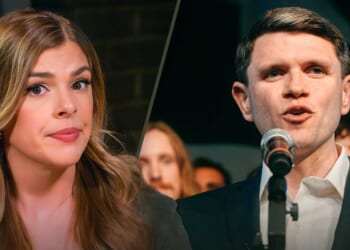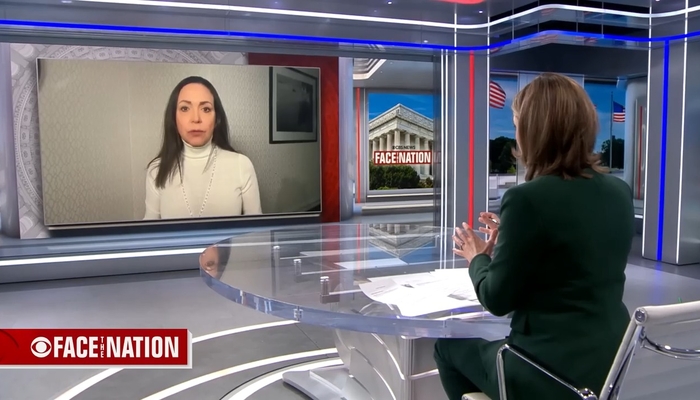
CBS’s Margaret Brennan scored an exclusive interview of Nobel Peace Prize winner and Venezuelan Vice President-Designate María Corina Machado subsequent to her arrival in Oslo. The interview, however, was a wasted opportunity as Brennan displayed how Trump Derangement Syndrome taints coverage of the potential end of decades of Venezuela’s suffering under a socialist dictatorship most charitably described as evil.
The unedited interview, streamed on CBS’s website as well as on YouTube, ran about 21 minutes- just under 17 of which ran on Face the Nation. The broadcast version opens with Brennan whining about Machado’s refusal to discuss details of the operation that extracted her from Venezuela and got her to Oslo:
Brennan took two passes at getting Machado to jeopardize her reinsertion into Venezuela, which by necessity will be as intricate, if not more so, than the original extraction operation. The broadcast version only aired the final refusal, omitting the first two questions and first refusal.
The most notable exchange on sanctions and seizures of oil tankers had Brennan suggesting that support for these is akin to supporting hurting the “already impoverished Venezuelan people.” Machado had to calmly walk Brennan through why this is not the case, only for Brennan to reask the question.
Further along in the interview, Brennan tries to press Machado into disavowing military action by the United States, asking how she could reconcile that with her winning a peace prize. Here, Machado takes Brennan to school:
Interestingly and as a sort of last word against Machado, Brennan echoes the Maduro regime’s claims. I’ve watched a lot of interviews of Ukraine’s Volodymyr Zelensky and don’t remember any of them being bracketed with anything said by the Russian Ministry of Foreign Affairs. Why do so here?
First, it’s Trump derangement. Pressure on Venezuela’s Cartel of the Suns dictatorship as part of a strategic foreign policy shift must be intrinsically bad because it is initiated by Donald Trump. That’s how it is covered, hence the media insistence on pushing the War Crimes Hoax, for example.
Second, current Venezuela policy further exposes the failures of the Obama administration, which did nothing as the illegitimate Maduro stole the 2013 presidential and 2015 midterms. The Obama administration, with the media’s assent, did nothing as Maduro brutally repressed protesters: running some over with light tanks, and throwing others into dungeons where they would never be seen again. All of this, in the interest of Obama traveling to Cuba and offering his limp wrist to dictator Raul Castro- an awful “deal” that the media hailed as transformative diplomacy.
Now that you have an actual freedom fighter trying to throw off a brutal dictatorship that is co-occupied by Russia, China, Iran and needs American help to do so? The American is Donald Trump, so that’s (D)ifferent.
Click “expand” to view the full transcript of the aforementioned interview as uploaded to YouTube on Sunday, December 14th, 2025:
MARGARET BRENNAN: We go now to María Corina Machado, Venezuelan opposition leader who joins us from Norway where she just received the Nobel Peace Prize. Welcome to ‘Face the Nation.’
MARÍA CORINA MACHADO: Thank you very much, Margaret. It’s my pleasure.
BRENNAN: You face arrest by the Maduro regime. I know you went through extraordinary difficulty just getting out of the country and to Norway. You said you got support from the United States government to do so. Can you tell us what type of support?
MACHADO: Actually, I prefer not to give away any details, because I do not want to increase the risk on men and women that helped me to be here. And the regime has been, you know, very cruel against those that in the past have helped other Venezuelans flee the country when they were persecuted. So in this case, I do prefer to protect them as much as possible.
BRENNAN: I understand that. The head of the private rescue organization, who said he helped you come out of Venezuela, spoke to my CBS colleague, Lilia Luciano, and said smuggling you out was very high risk because you are so well known. You traveled by land, by sea, by air. He said multiple donors paid for it. Do you know why it was so important to them for you to make it to Norway and receive that prize?
MACHADO: Well, I frankly have no idea. And as I say, I am not going to give more information regarding my trip to Norway. But what am I going to say- how important it is for the Venezuelan people. This is a recognition to a nation that has fought tirelessly, courageously against a criminal, narcoterrorist structure and- and I came to receive that prize, that award, and I’m going to bring it back home to the Venezuelan people as soon as possible.
BRENNAN: You say you’re going back home. I know you sent your own children out of Venezuelan territory in order to protect them, your sons, your daughter. I read you hadn’t even seen your daughter in 16 months. That’s an incredible sacrifice for anyone. Are they concerned that you plan to return to Venezuela? When are you going?
MACHADO: Of course, they are concerned as any other Venezuelan child that has their parents or relatives back in our country, because the regime, as I said, has persecuted, tortured, killed, disappeared, thousands of Venezuelans, and recently it has turned even more violent because, you know when, when a criminal regime is falling apart and they know their days are numbered, they turn even more aggressive, even more violent. Just a couple of weeks ago, a 16 year old girl was kidnapped and taken away to prison just because they were looking for her brother, and since they couldn’t find her brother, they took Samantha. So this is the kinds of actions that are currently happening in my country. So yes, my family is concerned, but they know I have said that I will be where I am more useful to our cause, and that’s exactly what I’m going to do.
BRENNAN: You believe it’s important to help the cause from inside the country right now. Can you help us understand what is going on, because we are seeing here in the US an increase in the pressure campaign. More sanctions on Venezuelan individuals and vessels. We saw an armed seizure of a vessel carrying oil out of Venezuela. Selling oil on the black market is really important money for the Maduro regime. Do you endorse this idea of more seizures and possibly even a blockade?
MACHADO: Look, I absolutely support President Trump’s strategy, and we, the Venezuelan people, are very grateful to him and to his administration, because I believe he is a champion of freedom in this hemisphere. And that’s why, and I say this from Oslo right now, I had dedicated this award to him because I think that he finally has put Venezuela in where it should be, in terms of a priority for the United States national security. And we do support these actions, because, Margaret, we are facing, not a conventional dictatorship. This is a very complex criminal structure that has turned Venezuela into a safe haven of international crime and terrorist activities, starting with Russia, Iran, Cuba, Hezbollah, Hamas, the Colombian guerrilla, the drug cartels operating freely and directed in partnership with Maduro and his regime. And as every criminal structure is- suffers, is when the inflows from their criminal activities are cut. And these, in the case of Maduro regime, comes from the oil black market, to drug trafficking, gold smuggling, arms smuggling, even human smuggling and trafficking. So that’s what we believe, it was so important to apply, you know, law enforcement, and we have been asking this for years, so it’s finally happening. That’s why I believe the regime has its days numbered.
BRENNAN: It sounds like you support more sanctions and possibly more seizures of oil, but isn’t there a risk that cutting off money will further hurt the already impoverished people of Venezuela? Isn’t that a risk?
MACHADO: Of course. What we’re doing is for the well being of the Venezuelan people. What we want to do is to save lives, but Maduro was the one who declared a war on the Venezuelan people. A war we didn’t want. A war we are suffering with hundreds of thousands of killings and forced executions in the last years. And right now, I want to be very clear with the international community, the resources Maduro gets are not going to schools or hospitals. In Venezuela, a teacher earns $1 a day. Pensions are less than $1 a month. Our children go twice a week to school. The sources, the cash the regime gets from these illegal activities goes to buy arms, to pay gang members to spy and infiltrate and to even further increase their illegal narcotics activities and so on. So these resources are not going for, to- towards the people. They’re going for corruption and crime.
BRENNAN: So it sounds like you want even more seizures and a blockade. Is that correct?
MACHADO: We want every legal action through law enforcement a- approach, not only from the United States, also from other Caribbean, Latin American and European countries that further block the illegal activities of the regime. Why? Because we need to increase the cost of staying in power by force. Once you arrive to that point in which the cost of staying in power is higher than the cost of leaving power, the regime will fall apart, and it’s the moment where we, you know, advance into a negotiated transition. Which is what in the beginning we offered Maduro when we won the presidential election by landslide last year, but he not only refused that option, but he, as you know, unleashed the worst, most brutal repression wave we’ve seen in our history.
BRENNAN: And 8 million Venezuelans have fled–
MACHADO: That’s correct.
BRENNAN: –since he came to power during that time, but in terms of the diplomacy, President Trump spoke with Maduro himself last month. We haven’t seen any evidence though, that diplomacy, a negotiated exit like you mentioned, is happening. Are you seeing diplomatic success?
MACHADO: Well, in the last years, Venezuela has seen 17 dialogue initiatives, not once, not twice, 17. Every single time the opposition or our allies or the United States have complied with every single thing we offered, the regime of the country has violated every single thing they offered on their own part. What did they get? They got time, they got legitimacy, they got money, and that’s precisely what they think they can get again, once again. But certainly, things have changed very much in the last months, Venezuela is total different country. I mean, Maduro is weaker than ever. The Armed Forces, police are certainly divided and fractured, and our country is united, cohesive, and we finally have the administration, in this case, President Trump with a clear strategy that truly represents a credible threat for the regime. So if we had ever had a chance to finally move ahead into, towards democracy in our country, it’s today.
BRENNAN: What evidence do you have that the military is weaker than ever? Was your escape proof of that?
MACHADO: Well, first of all, we have the evidence that the wide majority of the military want change, and that was- we saw that on July 28, 2024, that the military were ordered to expel our electoral witnesses from the polling stations and to deny our right to the original tally sheets and they disobeyed that order. Even in those polling stations where we know there is a high participation of military, we won by a landslide. More recently, we’ve seen more and more members of the military finding ways to connect with us, to send messages to, to, to show that they are feeling the same of what the rest of the country is feeling. When, when they, this military go back home, they find their children, their mother, their partners, saying that they are hungry, that they are persecuted, that their families have been divided. They are scared. Yes, they are scared, because repression and persecution in the military is even tougher than on civilians.
BRENNAN: So President Trump said that land strikes to stop drug trafficking specifically will start soon. He has been saying that for weeks. Do you know what he is talking about? Has he promised you anything?
MACHADO: No, I don’t know. And well, if I knew, I wouldn’t say it, of course. But it’s not the case. We are not involved, and we will not get involved into another nation’s policy for their own national security.
BRENNAN: But would you welcome U.S. military action?
MACHADO: I will welcome more and more pressure so that Maduro understands that he has to go, that his time is over. And I will insist something that I’ve said several times before, this is not conventional regime change. This cannot be compared to other cases, like countries in the Middle East, we had an election. Regime change was already mandated by over 70% of the population, and what we need is support to enforce that decision.
BRENNAN: How do you square military action with receiving a peace prize? Are we at the point it’s necessary?
MACHADO: What we’re fighting for is precisely freedom in order to have democracy and democracy, in order to have peace. And in order to maintain freedom and to achieve freedom, you do need strength. The contrary would be the peace of the dead, in which you have a country under absolute oppression and simply given in. And that’s not the case. It’s absolutely absurd that you see a regime, a criminal regime like Maduro, that gets support from Russia or from Iran and then as a benefit to unknown people, not to ask support from democratic countries and democratic leaders, that’s absolute, absurd. We do not have arms. We have our will. We have the power of organization and the power of love, which at the end, I have to say that peace is ultimately an act of love.
BRENNAN: The regime itself has done a number of things. They have revoked TV licenses for journalists to broadcast, broadcast truthfully. He has jailed journalists. The United Nations says the National Guard targeted political opponents, committed sexual violence, tortured people and committed other crimes against humanity. So from where you sit is Maduro stepping down enough? Or do you need the entire regime dismantled? In which case, that sounds like a country in collapse.
MACHADO: That’s a very good question, because certainly Maduro is the head of the structure, but it’s like any other mafia system. You have families or groups that operate and sometimes even compete among each other. There are different degrees in the crimes they have committed, certainly those that have committed crimes against humanity that have been reported by the fact-finding missions of the United Nations should face justice, local justice and international justice. There are other members of the regime or the armed forces that have committed lesser crimes. And certainly we will search for justice, not revenge. But this, I’m going to insist, what we’re living right now is chaos. Maduro represent chaos. We’re going to put order. And this whole idea, you know, people talking about a risk of a civil war and so on. Whoever says that has no idea at all about what Venezuela is. I mean, we are certainly the most cohesive society in the region, I would dare to say, perhaps in the world. I mean, Venezuelan society has no religious, social, regional, racial confrontations or tensions on the country. 90% of our population want the same, want the regime to go immediately, and we want to work hard to live with freedom. We want no more socialism, but most of all, we want our children back home.
BRENNAN: Understood, but respectfully, you also have acknowledged that the drug cartels are exploiting your country, that Russia is exploiting your country, Iran, Cuba, China. Just yesterday, Vladimir Putin spoke with Maduro and said their strategic partnership is growing. Are you concerned here that Russia is going to shore up support for the military and intelligence?
MACHADO: Well, I’m, I’m absolutely convinced that Putin wants the world to think that, especially wants President Trump to think that, about that. But I would ask you a question, do you think Putin has resources to spare at this time? Or does he has-something that’s more urgent for him to invest those resources. I mean helping a regime that it’s going to fall apart anyway, regardless of what he does. I don’t think it’s a priority for him. Nonetheless, I do not underestimate what the residual actors of Chavismo might be planning to do once we are in a transition to democracy. And that will require very efficient actions to isolate and neutralize those threats. And you know, we’ve work very hard to understand what’s the true nature of our armed forces right now, identifying those military which we believe could be supportive of a tran- transition to democracy and the new gov–
BRENNAN: –Have they pledged that to you?
MACHADO: Some of them, yes, and we believe that over 80% of our armed forces would join and support the democratic movement once the transition is in place.
BRENNAN: So tell me about that transition. I- we checked and when Secretary Rubio was sworn into office, you were one of the very first phone calls that he made. On day two.
MACHADO: Me and President-elect Edmundo González, it was the two of us–
BRENNAN: –That’s right, that’s right, he’s deeply interested. So I’m interested in what has been promised to you if and when Maduro and his regime leave, what kind of support do you need to keep the country together to prevent another refugee crisis? And do you have that pledge from the American government now?
MACHADO: We will need a lot of support, advice, information, technology, not only from the United States, also from multilateral organizations, some of which we are already working together. Not only in security issues but power supply, food supply. How do we bring, you know, put order in our financial accounts? How do we restructure our debt? How we open markets for international investment and give security to international investment in oil, in gas, in infrastructure, critical minerals? I mean, Venezuela is unique in terms of the amount of the natural endowments we have. And you know, we’re located at three hours by plane from Florida. So it’s hard to think, you know, in this shortening of the supply chains that is in the near-shoring process taking place a better ally in the region than Venezuela. And at the same time, you know, turning Venezuela from the criminal hub of the Americas into a security shield for the United States and for the rest of the region, is a top priority for all. So, you know, we have the plans ready. We have the teams ready. We know what we have to do the first 100 hours and the next 100 days. But most importantly, and I want to insist on this, we have the people. I mean, this is something that it’s- I’ve heard once, over and over again all analysis leave the people on the side, when that’s the most important force that we have right now. That’s why we are where we are right now. And the Venezuelan people want to move ahead once we conquered democracy back, would have cost- has cost us so many lives, so many- so much pain, that you will see the country taking care of it. The people will be the main source of stability. But certainly we look forward for- to cooperation with our main allies. And of course, our main ally will be the United States of America.
BRENNAN: Would that include US peacekeeping troops or other troops on the ground?
MACHADO: I cannot answer that question right now. I don’t think that’s the case. There are other countries that have offered support as well in order to strengthen democratic institutions once the government-elect is in place, but that we will have to address that once we have the, you know, the government-elect in place and put in order, bringing order back to our country. And one thing that you mentioned before about the, you know, the refugee crisis, it’s going to be exactly the country. The day Maduro goes, you will see 10s of 1000s, hundreds of 1000s of Venezuelan migrants coming back home from the United States and all over the world. I mean, our diaspora is desperate to go back to Venezuela. So even from that perspective, it is a win, win situation to have democracy in Venezuela.
BRENNAN: Do you think it is safe for those Venezuelans in America to go back there now? Some temporary protected status was just revoked by the president for more than half a million Venezuelans here. Is it safe for them?
MACHADO: Absolutely not. It will be safe once Maduro is gone, and every single citizen will be, you know, leaving freedom and respect in- towards the law. We will bring back rule of law. We will liberate our political prisoners, and everybody will be free to speak out what they feel, what they think, what they want for the future, of- for their own future and their families.
BRENNAN: María Corina Machado, we thank you for your time today, and we’ll be watching.
MACHADO: I thank you, Margaret, for this great opportunity, and God bless Venezuela. Venezuela will be free.
BRENNAN: We’ll be right back.