This is true in technology, finance, and national security. But nowhere has it been more evident than in how Chinese companies have taken advantage of weaknesses in our trade laws to undermine the United States economically, flooding our borders with cheap goods while undercutting honest businesses.
After a bipartisan congressional investigation exposed how Chinese-linked platforms were exploiting U.S. trade rules, lawmakers acted. They worked with the Trump administration to shut down one of the most glaring of these trade loopholes — China’s abuse of “de minimis” shipping.
SO FAR, CHINA IS WINNING THE IRAN WAR
De minimis was designed so the public could receive the occasional low-cost item from abroad — a gift, a small purchase, something incidental — duty-free and without the hassle of customs inspections. Instead, China turned it into a high-volume business pipeline.
By shipping millions of individual packages directly to American consumers, each small enough to qualify for duty-free treatment, China has avoided tariffs, bypassed customs scrutiny, and undercut businesses that actually follow the rules.
The scale of this scam is staggering. What was intended to be a narrow trade exception has become a dominant channel for foreign goods entering the U.S. — often with less oversight, less accountability, and fewer safeguards than traditional imports.
This loophole greatly weakens America’s hand at the negotiating table with the Chinese Communist Party.
Tariffs and trade enforcement are supposed to put real pressure on Beijing to change its behavior. But when Chinese companies find ways to game the system, that pressure doesn’t get applied.
In other words, this loophole allows the Chinese regime to keep doing what it’s been doing for years — subsidizing industries, exploiting workers, and undercutting American businesses — while still cashing in on access to our market.
So when Congress and President Donald Trump moved to close the loophole, they were just restoring basic fairness. But eliminating the de minimis workaround didn’t completely solve the problem.
Without broader enforcement and accountability, Chinese companies and platforms will continue to find new ways to bypass U.S. rules, and American businesses will remain at a disadvantage.
This is why the next step is critical. The U.S. must identify and target high-volume foreign shippers operating at an industrial scale, strengthening Customs and Border Protection oversight to track bulk shipping patterns, penalizing repeat offenders, and holding online marketplaces legally responsible when they facilitate large-scale abuse.
These measures will ensure that enforcement affects only those exploiting the system, not ordinary consumers.
Of course, there is nothing wrong with Americans buying things online. Parents shopping for their children, collectors looking for rare baseball cards, small resellers building side businesses — these people are not the problem. Online marketplaces have expanded choice, lowered costs, and created opportunities for millions of people. We should be protecting consumer choice, not restricting it.
Lawmakers’ goal is to crack down on bad actors. They can do that without harming a single American consumer.
All they need to do is enforce the law where the abuse is actually occurring — staying tough on China without making life harder for families.
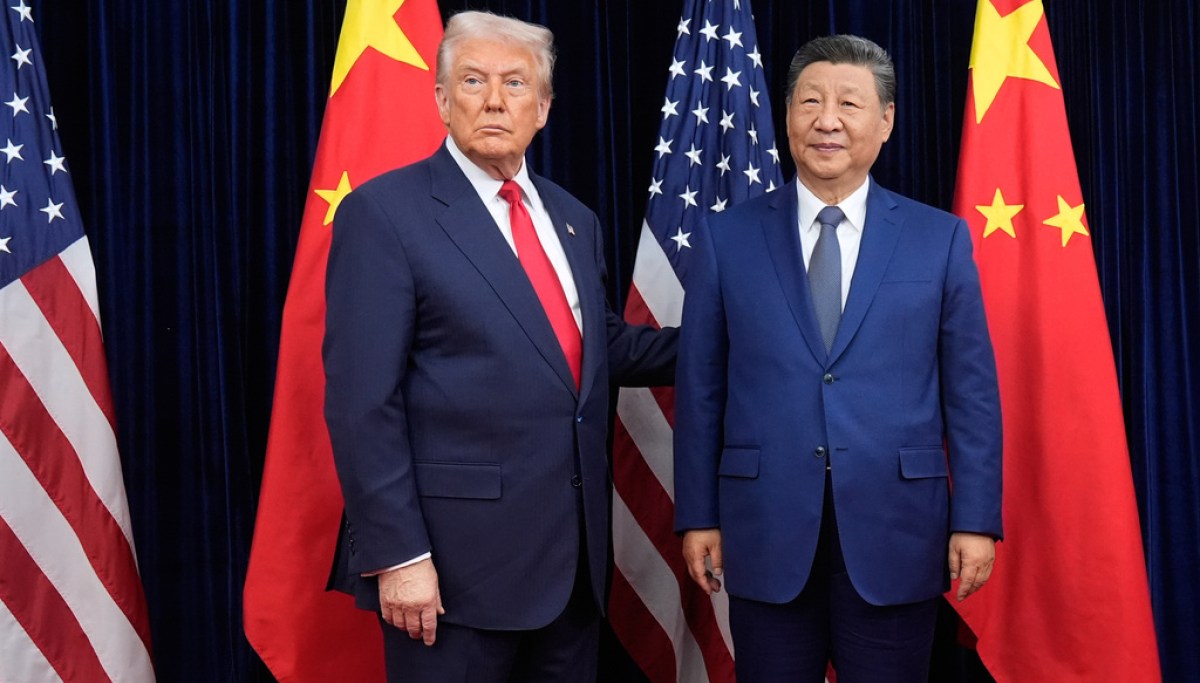
TRUMP TO VISIT CHINA IN MAY AFTER IRAN WAR POSTPONED TRIP
Trump has already shown the way forward. He’s called out the loophole, worked with Congress to address it, and made clear that law and order in trade is important. Now the task is to build on that progress.
China will keep looking for the next loophole. That’s what it does. Our job is to close each and every one of them decisively, intelligently, and with the public always in mind.
Jason Chaffetz (@jasoninthehouse) is a former member of Congress, a Fox News contributor, and the host of the Jason in the Housepodcast on Fox News Radio. He chaired the Committee on Oversight and Government Reform.