Democrats are lambasting a top Trump adviser for dismissing concerns that high oil prices brought on by the war in Iran will raise costs for American consumers.
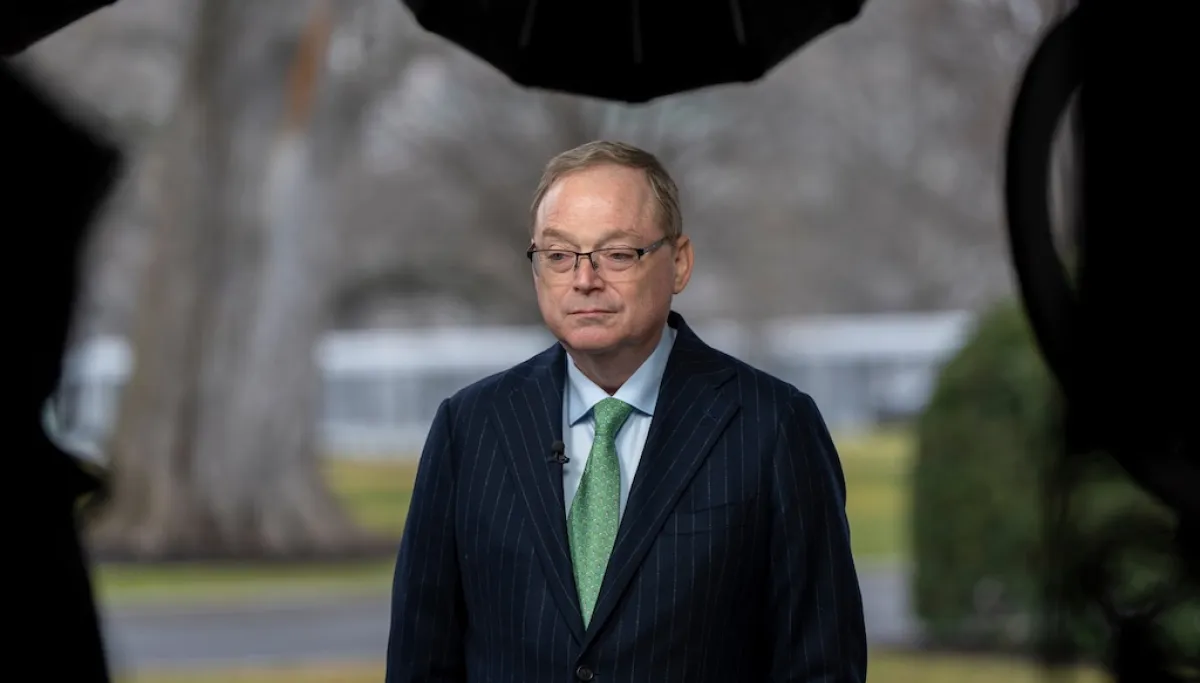
The adviser, National Economic Council Director Kevin Hassett, acknowledged that a prolonged war would “hurt consumers” in a Tuesday morning interview on CNBC.
“We’d have to think about, you know, if that continued, what we would have to do about that,” he said. “But that’s, like, really the last of our concerns right now, because we’re very confident that this thing is going ahead of schedule.”
Hassett made the comment in the context of arguing that the economy is “fundamentally sound,” and would not be disrupted if the war in Iran were extended for a significant period of time.
But congressional Democrats criticized his framing. House Democratic Vice Chairman Ted Lieu (D-CA) claimed the Trump administration doesn’t “care” about consumers.
“I want the White House to send Kevin Hassett to every single TV channel and to every single swing House district, where you can tell the voters of America that hurting consumers is, quote, the last of their concerns,” Lieu told reporters.
“And that is where the administration is. They don’t care about the American consumer,” he added. “They don’t care about people who can’t make ends meet, and we’re going to see what happens this November.”
House Minority Leader Hakeem Jeffries (D-NY) also criticized Hassett on social media, saying, “The Trump administration has once again said the quiet part out loud. Republicans don’t give a damn about the American people and will continue to make your life more expensive. You deserve better.”
In response to a request for clarification on Hassett’s comments, White House spokesman Kush Desai said that Hassett said, “What President Trump and the entire U.S. Military have been saying: America and our allies ARE making astonishing progress in Operation Epic Fury and are proceeding ahead of schedule in neutralizing the Iranian terror threat.”
Desai added that Hassett also “made clear during his CNBC interview that while the economy remains fundamentally strong with robust wage and productivity growth, he’s constantly thinking about short-term economic disruptions from Operation Epic Fury and is constantly examining new measures to mitigate these disruptions for everyday Americans. The economy will be stronger, and oil prices lower in the long run after Operation Epic Fury ends the Iranian threat to global energy markets.”
In the weeks since the U.S.-Israeli attacks in Iran late last month, oil and gas prices have skyrocketed, hitting above $100 per barrel, as traffic through the Strait of Hormuz has been at an effective standstill.
The Strait of Hormuz is considered one of the most vital waterways for global oil and gas trade, with roughly 20 million barrels of crude oil and other oil products passing through the strait daily, equivalent to 20% of global oil demand.
The United Nations estimates that traffic has dropped by roughly 97% since the war began.
The inability to move product through the waterway has strained oil and gas producers in the Gulf, forcing many countries, such as Kuwait, Qatar, and Iraq, to cut output or send their product through alternative routes.
Higher oil prices have sent ripples through the global economy, driving gasoline prices soaring. Crude oil is the largest component of the retail price of gasoline, accounting for around 50%.
STRAIT OF HORMUZ TRAFFIC HAS GROUND TO A HALT. HERE’S WHY IT’S VITAL TO GET IT BACK UP AND RUNNING
As of Tuesday, the national average price of gasoline was $3.790 per gallon, up nearly a dollar from just one month ago, according to AAA estimates. Diesel was also averaging more than $5 a gallon, the highest level seen since 2022.
Even if oil flows resume and return to normal levels, some analysts have warned, gasoline prices won’t return to levels seen before March until mid-2027.