What is the biggest threat posed by rapidly expanding Artificial Intelligence? That is a difficult question to answer; however, it is one that has many AI developers worried.
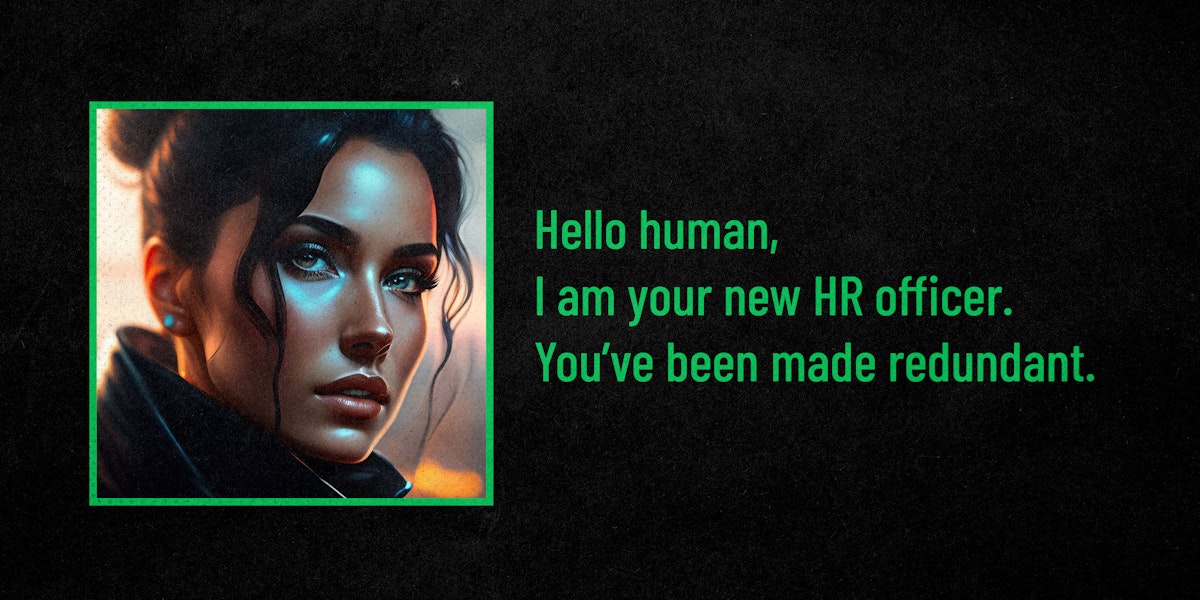
Recently, Dario Amodei, the CEO of the world’s largest AI developer, Anthropic, expressed concern about the most likely imminent threat posed by AI. In an interview with Axios, Amodei predicted that AI could wipe out half of all entry-level white-collar jobs within the next five years.
He further warned that this could lead to a 10-20% spike in the nation’s unemployment rate. The 42-year-old lamented that most workers “are unaware that this is about to happen. It sounds crazy, and people just don’t believe it.”
President Donald Trump’s former campaign advisor, Steve Bannon, predicted that AI expansion and its job-killing impact would become a major campaign issue in the next presidential election. “I don’t think anyone is taking into consideration how administrative, managerial, and tech jobs for people under 30 — entry-level jobs that are so important in your 20s — are going to be eviscerated,” Bannon opined.
Amodei’s concern over AI is not a warning to stop its development; rather, he sees it as both an inevitability and a positive. As he put it, “Cancer is cured, the economy grows at 10% a year, the budget is balanced — and 20% of people don’t have jobs.” He added, “We, as the producers of this technology, have a duty and an obligation to be honest about what is coming. I don’t think this is on people’s radar.”
Amodei’s former boss and AI development competitor, OpenAI CEO Sam Altman, put a more positive spin on the burgeoning technology. As he wrote in a recent manifesto titled “The Intelligence Age,” “If a lamplighter could see the world today, he would think the prosperity all around him was unimaginable.”
Will that be the view of many folks, specifically white-collar workers, five or 10 years from now?
The types of entry-level white-collar jobs that Amodei sees collapsing include finance, law, technology, and consulting, to name a few.
Maybe the biggest concern with AI technology is its rapid expansion, as it could effectively wipe out entire fields seemingly overnight. And one of the reasons for this, Amodei notes, is that companies are increasingly leaning toward automation. “It’s going to happen in a small amount of time — as little as a couple of years or less,” he warns.
Earlier this year on Joe Rogan’s podcast, Meta CEO Mark Zuckerberg stated, “Probably in 2025, we at Meta, as well as the other companies that are basically working on this, are going to have an AI that can effectively be a sort of mid-level engineer that you have at your company that can write code.” He noted that this would eventually lead to the elimination of humans needed to do this work.
Indeed, Big Tech companies are starting to shed workers. Microsoft is reportedly laying off roughly 3% of its workforce, some 6,000 employees, many of whom are engineers. The cybersecurity company CrowdStrike is laying off 500 employees and pointed to “AI reshaping every industry” as the reason.
In a New York Times op-ed, LinkedIn Chief Economic Opportunity Officer Aneesh Raman wrote that what AI is “Breaking first is the bottom rung of the career ladder.” This will have a negative impact on those seeking to get into the industry via entry-level jobs.
As Bob Dylan sang over six decades ago, “The times they are a-changin’.” And with change comes both opportunity and loss, pain and gain. But the AI revolution might produce the fastest massive economic transformation the world has ever experienced.