From the passage of landmark tax legislation to President Donald Trump‘s sweeping tariff agenda, 2025 featured changes to economic policy that will have major implications for American families and businesses for years.
Trump won the 2024 presidential election in large part because of voter dissatisfaction with the inflation that plagued the country for much of former President Joe Biden’s time in office.
TOP REPUBLICAN UNVEILS BIPARTISAN HOUSING BILL TO BOOST SUPPLY AND AID AFFORDABILITY
Now, nearly a year into Trump’s second term, households are still struggling with high prices, and the Federal Reserve is trying to finally contain the fallout from the inflation wave that cascaded through the economy as the pandemic came to an end.
The One Big Beautiful Bill Act
The president’s biggest legislative achievement of his second term so far is the passage of the One Big Beautiful Bill Act, which the White House has worked to rebrand as the working families tax cut.
The landmark GOP legislation, signed into law by Trump on the Fourth of July, permanently extended tax cuts enacted by Trump and Republicans during his first term, which were set to expire, while also implementing new tax breaks and funding immigration enforcement.
A provision that could have major ramifications for the economy bill permanently allows companies to immediately deduct domestic research and development costs. The bill also permanently allows full expensing for new capital investment, such as factory machinery.
These business provisions were a priority for lawmakers because incentives for businesses are thought to be especially helpful in boosting economic growth. Republicans hope that businesses will accelerate spending on plants, machinery, software, and much more. In theory, higher business investment could yield greater tax revenues in the years ahead, offsetting the cost to the treasury of the tax cuts.
“That does simplify things a little bit,” Stephen Kates, a financial analyst at Bankrate, told the Washington Examiner. “I think there was concerns from the business community and from individual taxpayers that it’s just a pain to update tax law and figure out what the new things are. So this provides some consistency.”
Still, on paper, the tax cuts add to deficits. With the national debt headed to record levels, some deficit hawks are worried about the fiscal health of the government.
The legislation also fulfills some of Trump’s campaign promises, such as no taxes on tips. It cuts taxes on overtime pay and allows up to $10,000 in deductions for auto loan interest paid.
Tariffs
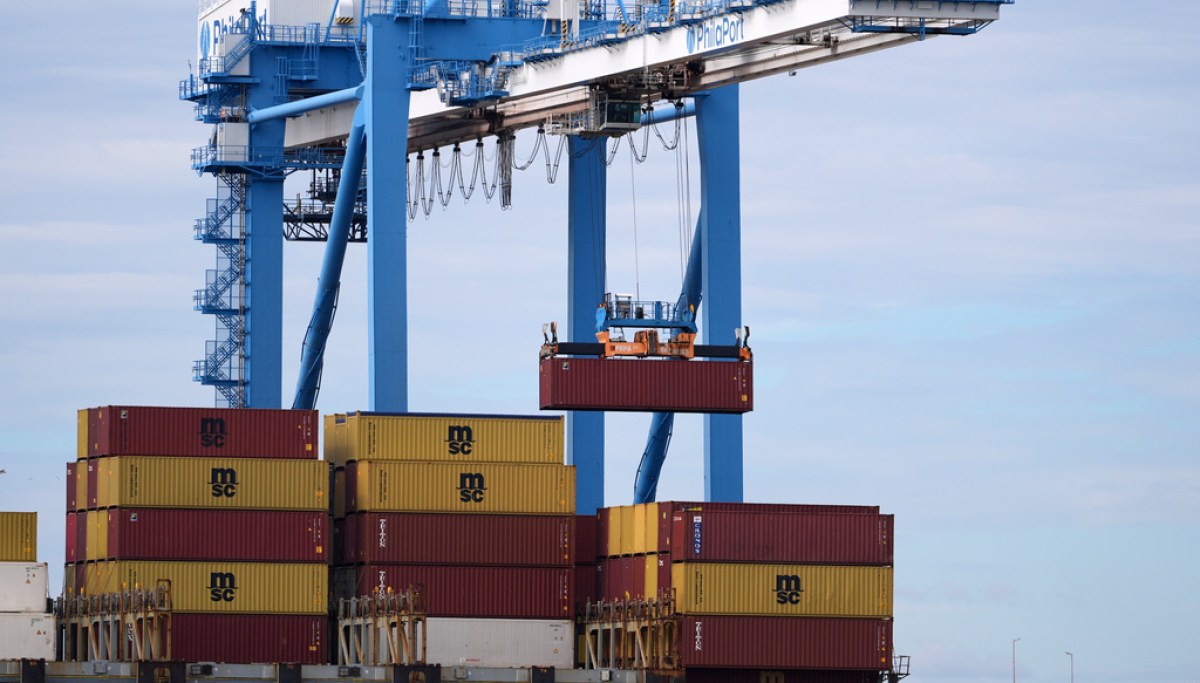
Trump campaigned on imposing sweeping tariffs, arguing that they are necessary to reshore domestic manufacturing, reduce reliance on foreign supply chains, and address trade imbalances. Many economists have panned the tariffs as a tax on consumers, and they are facing a challenge in the Supreme Court.
The tariffs, which largely took effect earlier this year on what the White House dubbed “Liberation Day,” affect trade worldwide.
The tariff policy, though, has undergone significant change as deals with other countries were inked, and investors and businesses have faced uncertainty about what changes might come down the line.
For instance, the Supreme Court already heard oral arguments on Trump’s use of the International Emergency Economic Powers Act to impose tariffs. Some analysts predict that the high court will strike those down, although the White House has said they will be able to recreate them using other means if that does occur.
There were major concerns from some that the tariffs would further exacerbate inflation, which is still running over the Fed’s 2% level. Still, the inflationary impact has not been as profound as some economists had predicted earlier this year.
“In terms of what has flowed through to inflation and prices, it has been lesser than expected,” Kates said. “Now, I will say that what was expected at the time that it was announced was quite hyperbolic.”
Kates pointed out the many changes that the tariffs have undergone and how that further complicates the economic picture.
“Some were pared back, some had exclusions applied, there were a lot of changes that went that went into place,” he said. “So the tariffs we have today are very different than the tariffs that were announced.”
Inflation and the Fed
Inflation was still a lingering concern throughout 2025.
While inflation has declined from the multi-decade highs reached under the Biden administration, price growth has yet to return to levels that the Fed considers healthy.
The Fed targets 2% inflation. For most of the year, though, inflation has been running closer to 3%.
The Fed is attempting to balance its dual mandate — price stability and maximum employment. Inflation remains too high, but there are recent signs that the labor market is softening meaningfully.
In particular, hiring has slowed to rates below the pre-pandemic norm.
NEW TRUMP FED CHAIR WON’T MEAN QUICK DROP IN MORTGAGE RATES
So, which side of the mandate to prioritize is a central tension.
“Inflation isn’t out of control and the employment situation is not tanking, but they’re having to basically prioritize one or the other, and that’s the question on which the committee is split,” Dennis Lockhart, former president of the Federal Reserve Bank of Atlanta, recently told the Washington Examiner.