Order Jamie Glazov’s new book, ‘United in Hate: The Left’s Romance with Tyranny, Terror, and Hamas’: HERE.
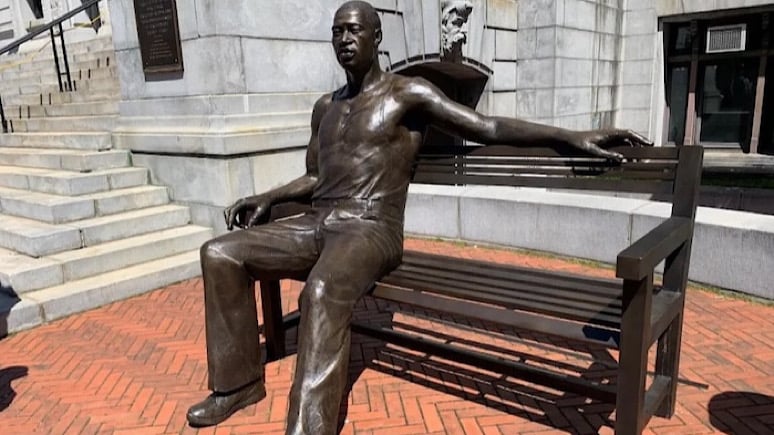
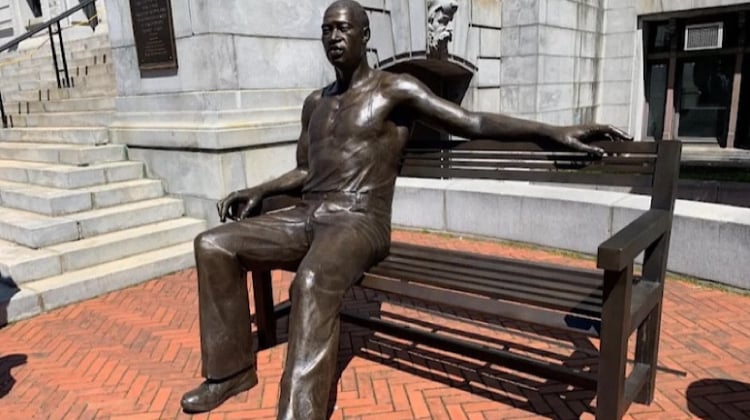
George Floyd: The Prototype
The death of George Floyd was a political windfall for the enemies of the United States. Almost immediately, inconvenient facts, including toxicology reports showing lethal levels of fentanyl and methamphetamine, were brushed aside. Floyd’s death was transformed from a tragedy into a political instrument.
What followed was not justice. It was chaos: weeks of rioting, dozens of deaths, billions of dollars in insurance losses, statues torn down, neighborhoods burned, and elected officials openly siding with vandals.
This was not an accident. It was indulgence.
What followed in Minnesota was not an isolated episode, but the unveiling of a repeatable political formula: First, identify a death. Next, strip away inconvenient facts. Then elevate the event into a racial or ideological symbol. Finally, use that symbol to justify disorder, intimidation, and permanent suspicion of law enforcement.
Dolal Idd: The Failed Sequel
When the riots finally subsided, Minnesota seemed eager to manufacture the next symbol, a “George Floyd II.” That candidate emerged in December 2020 in the form of Dolal Idd.
Idd was killed during a Minnesota Bureau of Criminal Apprehension sting, the state’s equivalent of an FBI operation, while attempting to sell stolen firearms. When officers moved in to arrest him, Idd tried to shoot his way out by firing through the driver-side window. Police returned fire, and Idd was killed.
Under ordinary circumstances, the story would have ended there. But because Idd was Somali, the facts were immediately subordinated to identity. Jaylani Hussein, executive director of the Minnesota chapter of the Hamas-linked Council on American-Islamic Relations (CAIR), quickly emerged as the designated interpreter of events. He was repeatedly given platforms to second-guess law enforcement, eventually appearing on ABC News, despite having no investigative role, no access to evidence, and no obligation to be accurate. For a time, Idd was framed as yet another victim of racial injustice, until the accumulating details made that narrative impossible to sustain.
When the Dolal Idd narrative collapsed under the weight of reality, CAIR did not reassess. It pivoted, supplying the media with a fresh narrative, prepackaged and ready for immediate reuse. The facts were irrelevant; the momentum mattered.
January 6: The Narrative Reset
The January 6 Capitol riot conveniently provided the next opportunity. Hussein quickly declared it proof that “white supremacy” was the greatest threat facing the nation, a claim CAIR repeats reflexively.
Context, scale, and causation were irrelevant. The talking point remained the same, just recycled for the next moment.
Eventually, even that cycle ran its course. Minnesota limped forward, economically damaged, politically radicalized, but nominally stable.
That stability did not last.
Jacob Blake: Exporting the Script
Next came Jacob Blake, a repeat domestic offender who defied police commands in Kenosha, Wisconsin, while attempting to retrieve something from his vehicle. A police officer shot and paralyzed Blake, and Kenosha promptly erupted into arson, rioting, and lawlessness. Although Jaylani Hussein had no direct connection to the incident, and there is not even a CAIR chapter in Wisconsin, he nonetheless emergedonce again, using his public platform to agitate and inflame.
Geography, jurisdiction, and relevance posed no obstacle to Hussein’s ambitions.
Myon Burrell: Revolution Without a Case
Then came Myon Burrell, a man who had spent nearly two decades in prison for the 2002 killing of Tyesha Edwards. In December 2020, Minnesota’s Board of Pardons voted to commute his life sentence after questions were raised about the reliability of the original investigation and the integrity of key evidence used to secure his conviction.
There is no evidence that CAIR had ever been involved in Burrell’s case. Yet Jaylani Hussein inserted himself anyway, proclaiming that “we are not stopping with Myon, we are starting with Myon,” and announcing that the country was in the midst of a revolution.
It was not advocacy. It was mobilization. Burrell was merely the latest prop. Hussein’s real objective was never justice in a single case, but mobilization against the United States itself.
With a record like this, one might expect TV stations to stop putting him on the broadcast. On the contrary, TV stations — and much of Minnesota’s political leadership — appear to reward his conduct.
Renee Good: The Next Attempted Martyr
This week, a woman, Renee Good, apparently inflamed by years of rhetoric portraying immigration enforcement as illegitimate, was killed during an encounter with an ICE officer who reasonably believed he was facing a potential vehicular assault. The distinction between lawful self-defense and post‑hoc narrative construction was immediately blurred. Almost immediately, Minnesota’s political class reached for the George Floyd script again.
Law enforcement was delegitimized. Obstruction was excused. Resistance was sanctified. Jaylani Hussein went further, declaring (@1:09) that people have a God-given right to fight ICE agents.
God has chosen us to carry the burden of this nation’s fight against President Trump’s authoritarianism.
The message was reinforced at the highest levels. Minnesota Governor Tim Walz said (@17:00) publicly:
If you’re in Portland or you’re in LA or you’re in Chicago or you’re wherever they’re coming next, stand with us, stand with us against this.
This is no longer rhetorical excess. It is encouragement of resistance to lawful authority on a national level.
Ready to Do It Again
One might think Minnesota would now avoid invoking George Floyd. Instead, senior state leaders treat the unrest as an achievement, treating the months-long rioting they enabled, excused, and in some cases actively encouraged, as a precedent they are prepared to repeat.
Minnesota today is a place where public funds vanish, governance falters, law enforcement is treated as the enemy, political leaders openly flirt with lawlessness, and allies of terrorists are routinely given platforms. Violence is rationalized. Misinformation is reported as news. Police orders are treated as optional, illegal immigration is normalized, and mob action is moralized.
This is not coincidence. It is a process, one that has Minnesota exhibiting the defining characteristics of a failed state, not through foreign invasion, but through ideological corrosion from within, sustained by a constant demand for manufactured martyrs.