Order Michael Finch’s new book, A Time to Stand: HERE. Prof. Jason Hill calls it “an aesthetic and political tour de force.”
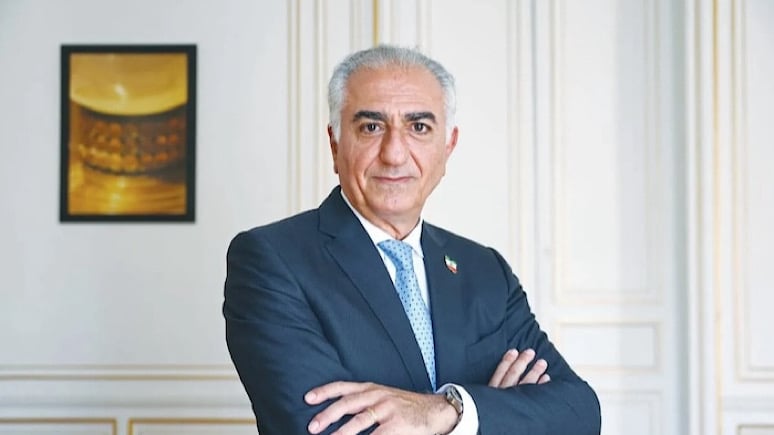
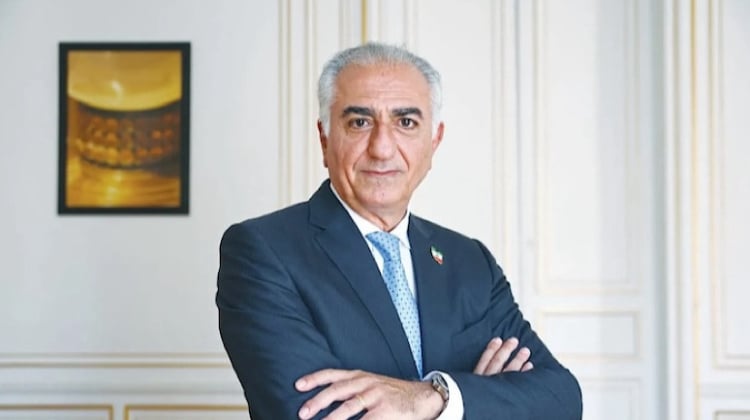
During the current protest in Iran, a new chant is now being heard. In addition to “Death to Khamenei,” there is now the cry of “Javid Shah” — “Long Live the Shah” — which is a demand for the Islamic Republic to be toppled, and to be replaced by a new government with the Crown Prince Reza Pahlavi as its head or, more likely, as its figurehead, akin to the British monarch. In previous protests in Iran, the crown prince had not been mentioned; now his name can be heard everywhere in protests across Iran. More on the significance of this chant can be found here: “‘Javid Shah!’ Why Iranians are calling for the return of the Pahlavis and their monarchy,” by Alex Winston, Jerusalem Post, January 1, 2026:
As protesters took to the streets of Iran this week, amid chants of anger against Supreme Leader Ayatollah Ali Khamenei and fury over an economy in free fall, a slogan once considered politically unutterable returned, and the sounds of crowds chanting it filled the air.
“Javid Shah” – Long Live the Shah.
Videos sent from inside Iran showed demonstrators chanting openly in support of the Pahlavi dynasty, in exile since the fall of the last shah, Mohammad Reza Pahlavi, alongside calls for the downfall of the Islamic Republic. For a regime built on the overthrow of the monarchy and the erasure of the Pahlavi legacy, the chant is existentially threatening. It is a sign that anger has moved beyond dissatisfaction with economic policies or personalities and toward rejection of the Islamic Republic itself.
The demonstrations erupted last Sunday after Tehran’s powerful bazaari merchant class shuttered its shops in protest at Iran’s deepening financial crisis. The collapse of the rial, which briefly saw the open-market value of $1 reach 1.4 million rials, compared to the official rate of 42,000, transformed long-simmering economic despair into open unrest. From Tehran to Isfahan, Mashhad, Ahvaz, and Hamadan, protests spread rapidly, and the slogans soon moved beyond bread-and-butter grievances.
Crowds were heard chanting, “This is the final battle! Pahlavi will return,” and “The shah will return to the homeland, and Zahhak (despot) will be overthrown,” invoking the mythological tyrant of Persian lore. Chants calling for the death of Khamenei and rejecting Iran’s regional spending – “No to Gaza, no to Lebanon, I give my life for Iran” – have shown that it is not merely financial disaster but the continuous funneling of billions of dollars to proxy groups that the people are sick of.
The Islamic Republic has been spending $4.6 billion a year to support its proxies — Hamas in Gaza, Hezbollah in Lebanon, and the Houthis in Lebanon — with weapons. But in the last two years of war, the IDF has managed to destroy almost all of that weaponry. In addition, the $100 billion that Iran has spent on its nuclear program went up in smoke when the IDF obliterated those nuclear facilities during that 12-day war in June. Iranians are furious at this gigantic waste, this misallocation of resources that ought to have been spent not on a nuclear program, nor on its terrorist proxies, but on improving the quality of life of ordinary Iranians.
The Crown Prince is not power-mad, unlike the Supreme Leader, and does not want to be another quasi-absolute ruler like his father. If his people want him, as decided by a referendum, he is willing to serve, but has made clear he has no political ambitions beyond that.
The crowds demonstrating across Iran cannot be cowed. They are increasing in size and becoming more threatening to the regime, by now demanding “Death to the Supreme Leader.” And meanwhile, they are asking that that despot be replaced not by another despot, but by the one unifying figure in Iran’s current state: the Crown Prince, Reza Pahlavi.