Order Michael Finch’s new book, A Time to Stand: HERE. Prof. Jason Hill calls it “an aesthetic and political tour de force.”
The escalating confrontation between Prime Minister Nikol Pashinyan and the Armenian Apostolic Church is not merely an internal Armenian struggle. As revealed vividly during yesterday’s Paris conference, this conflict now carries direct implications for regional stability and the fragile peace process with Azerbaijan.
The Armenian Church is not simply a religious institution. It is a historical backbone of Armenian national identity, having preserved language, culture, and social cohesion through centuries of upheaval. Speakers from across political and ideological divides warned that an open clash between the state and such a central institution risk plunging Armenia into a deeper political and moral crisis.
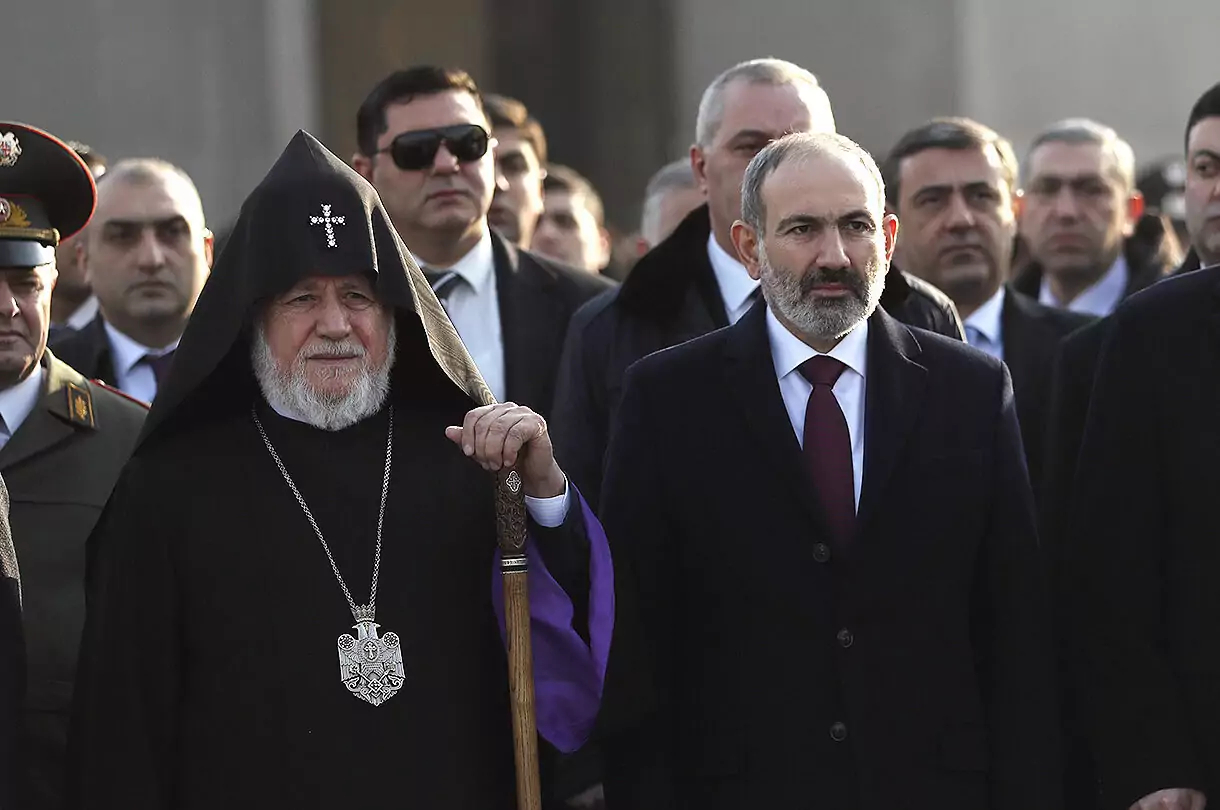
Pashinyan’s public calls for the removal of the Catholicos, alongside the detention of senior religious figures, have transformed a political dispute into a symbolic rupture. For many Armenians, the issue is no longer about governance efficiency or reform; it is about the survival of an ancient spiritual authority. This transformation carries dangerous consequences for internal stability at precisely the moment when Armenia requires maximum cohesion to navigate its post-war realities.
Peace with Azerbaijan is not merely a diplomatic document; it is a societal process that demands political legitimacy, public trust, and national consensus. A government locked in confrontation with its own Church struggles to generate that trust. Any agreement with Azerbaijan, however technically sound, will be judged by a population whose spiritual leadership is in open conflict with the state.
Several speakers in Paris emphasized that internal repression weakens Armenia’s negotiating position externally. A leadership perceived as suppressing dissent and marginalizing the Church risks being viewed as domestically insecure. This perception inevitably shapes how external actors, including Baku, calculate Armenia’s capacity to implement and sustain peace commitments.
At the same time, the tensions feed into the broader narrative war over regional legitimacy. Azerbaijan presents itself as a state consolidating post-conflict stability. Armenia, by contrast, now appears increasingly consumed by internal discord. This imbalance does not strengthen Armenia’s hand at the negotiating table; it erodes it.
The intervention of Simone Rizkallah, who invoked the historical trauma of 1915 and the Church’s role in national survival, highlighted another critical dimension. For many Armenians, peace cannot be separated from identity. When identity feels under assault from within, compromise abroad becomes politically explosive.
Yet not all voices in Paris called for outright condemnation. Gérard Devedjian reminded the audience of Armenia’s extraordinarily complex geopolitical position and the pressures it continues to face. His intervention underscored the tragic paradox confronting Yerevan: the need to modernize governance while preserving institutions that embody historical continuity.
The danger lies in mistaking confrontation for reform. True reform requires dialogue, legitimacy, and consent. The current standoff with the Church produces the opposite: polarization, distrust, and institutional paralysis. As long as this tension remains unresolved, every step toward peace with Azerbaijan will rest on fragile political ground.
In this sense, Pashinyan’s conflict with the Armenian Apostolic Church is no longer a domestic matter alone. It has become a variable in the regional peace equation. Armenia’s stability, credibility, and capacity for durable peace depend on its ability to reconcile an ancient spiritual authority with the demands of modern democratic governance — not through force, but through constitutional dialogue.
Rachel Avraham is the CEO of the Dona Gracia Center for Diplomacy and an Israel-based journalist. She is the author of “Women and Jihad: Debating Palestinian Female Suicide Bombings in the American, Israeli and Arab Media.”