Two highly anticipated cases involving transgender athletes — i.e. biological men suing for the right to compete in women’s sports came — before the Supreme Court on Tuesday, with opinions on the cases expected by the end of June. National Public Radio’s All Things Considered covered the opening arguments on Sunday.
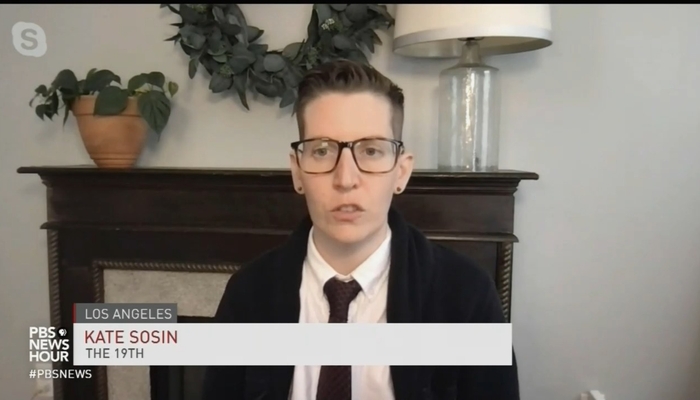
NPR’s idea of an objective reporter? Transgender (biological female) reporter Kate Sosin, who uses the “they” pronoun, and who works for the LGBTQ+ activist media outlet The 19th, previously praised by PBS.
SARAH MCCAMMON, HOST: This week, the Supreme Court will hear arguments from two separate cases weighing the rights of transgender athletes. Little v. Hecox challenges Idaho’s ban on trans athletes playing on women’s and girls’ sports teams. West Virginia v. B.P.J. challenges a similar ban in West Virginia. Kate Sosin covers LGBTQ issues for the nonprofit newsroom The 19th and has been following these cases closely. They’re here to give us a preview. Welcome.
Sosin misled from the start, falsely claiming Hecox and Pepper-Jackson had been “banned from [athletic] competition.” As biological males, they were only “banned” from competing against girls, where their natural biological makeup would give them an unfair competitive advantage.
KATE SOSIN: So conservatives have increasingly argued that transgender women and girls have an unfair advantage in sports, that their hormone levels make them stronger and faster, and for that reason, they say, trans women should be banned from competition. These two girls, Lindsay Hecox and Becky Pepper-Jackson, were banned from playing sports in their respective states by these state bans, and 27 states have these bans. And now the question is, will the Supreme Court back these bans and find that they are constitutional or not?
….
MCCAMMON: Isn’t one of the concerns not just about taking spots on teams, but also a competitive advantage against their opponents, a potential advantage?
SOSIN: Certainly, yes. But what we found is that the research just simply doesn’t back this up. And in part because there is limited research. There’s a 2021 study published in the Journal of Sports Medicine that found no basis in existing research for banning trans women from sports. And a 2021 study funded by the International Olympic Committee, published in the British Journal of Sports Medicine, concluded that transgender women likely had several physical disadvantages compared with their cisgender peers….
Besides the obvious truths, that men have more lung capacity, larger hearts, more muscle mass, lower body fat, etc., NPR skipped over studies showing performance advantage is retained for males even after hormone suppression.
SOSIN: ….I think the bigger implication that we would see is that having your Supreme Court come back and tell you again and again and again that your rights matter less than everybody else’s is a really damaging thing for a lot of transgender individuals. We’re seeing a slow chipping away of transgender dignity, equality and also the law, very, very slowly.
Again and again, the two trans-sympathetic reporters conflate insisting athletes compete with their own sex with a total ban on competing.
MCCAMMON: And what does it mean for these athletes to be told they can’t participate?
SOSIN: You know, especially in grade schools or even college athletics, these are kids who are trying to join and be part of their extracurricular activities. They’re not necessarily out to win a competition. You know, we have cases of transgender people where they come in fifth, and that is still seen as a negative thing. Transgender people have a right to exist and to live….
More trans-centric hyperbole: Who is arguing trans people shouldn’t live?
In July 2023 Sosin referred to one of the parties in the case, the Alliance for Defending Freedom, as a “hate group” while discussing a previous Supreme Court decision in which ADF successfully defended a website designer’s First Amendment right to refuse to design wedding websites for gay couples. Again, this is NPR’s choice for fair “reporting” on the issue.