Content warning: This article includes content that may not be appropriate for some readers.
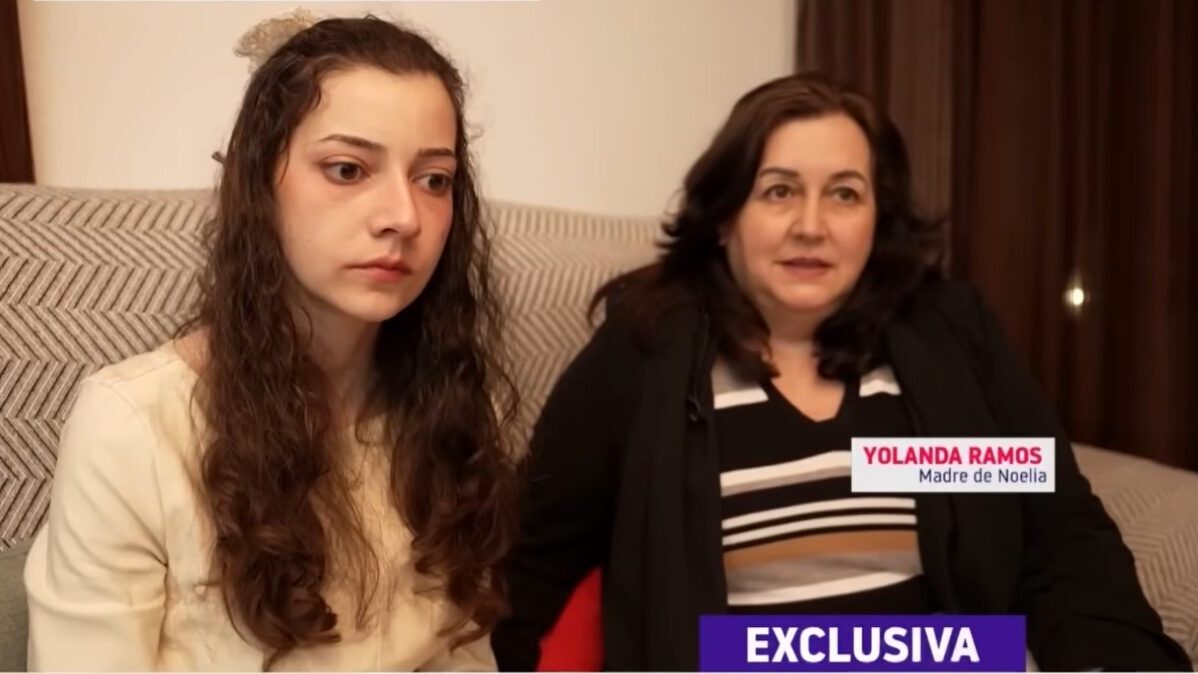
Noelia Castillo Ramos, a 25-year-old survivor of multiple sexual assaults, died in Spain by legal euthanasia last week. Her life and death expose the cruelty of the left’s “compassion.”
Ramos’ childhood was marred by family problems: her parents’ separation and her father’s alcohol issues. The state placed her in the foster care system when she was about 13 years old. It was around this time that Ramos began a long battle with mental health issues after being diagnosed with obsessive-compulsive disorder (OCD) and borderline personality disorder (BPD).
The state-run system that was supposed to look after Ramos’ wellbeing neglected her. She suffered multiple sexual assaults, including being gang-raped while living in a state-run facility for at-risk youth in 2022. In her despair, Ramos tried to commit suicide multiple times, including jumping from a fifth-floor balcony. She survived, but was left paralyzed from the waist down and in constant chronic pain. Emotionally and mentally, she grappled with profound isolation, losing her sense of purpose in a world that had caused her so much suffering.
Father Opposed Daughter’s Euthanasia
In 2021, Spain legalized euthanasia and physician-assisted suicide. The country is one of the first European nations to do so and allows adults as young as 18 with a “serious, chronic and disabling” condition causing “constant and unbearable suffering” to request assisted death. By the end of 2024, more than 1,100 Spaniards had died under the law, with numbers continuing to rise.
Ramos requested euthanasia in 2024. Catalonia’s Guarantee and Evaluation Commission approved it unanimously. Her father, Gerónimo Castillo, opposed the decision, arguing that her treatable mental health conditions impaired her capacity to consent. He also filmed Ramos learning to walk again after her paralysis to show that she was making progress physically.
Backed by the Catholic legal group Abogados Cristianos, he waged a nearly 20-month legal battle to try to save his daughter’s life. A lower court temporarily delayed the euthanasia of Ramos. Yet, hospital staff reportedly told Ramos’ family that her organs had already been earmarked for donation. So, Ramos must die. Incredibly, one committee member who approved her euthanasia was allegedly affiliated with the National Transplant Organization, according to a lawsuit filed by the Catholic legal group.
Unfortunately, courts at almost every other level — including Barcelona courts, Catalonia’s Superior Court of Justice, Spain’s Supreme Court and Constitutional Court, and even the European Court of Human Rights — all sided with Ramos’ “right to die,” and Castillo’s appeal was dismissed this year.
On March 26, at a facility near Barcelona, Ramos died from lethal injections. Under the euthanasia law, her death was recorded as “natural.” A lawyer for her father captured the tragedy: “We were told this law was for extreme cases — for people who were practically dying. Instead, it ended the life of a 25-year-old girl with her whole life ahead of her, who suffered from a treatable illness.”
Progressives’ Dark Worldview
Yet, left-leaning outlets eagerly framed the story as a victory for bodily autonomy, while downplaying Ramos’ experience as a rape victim. The Guardian, for instance, sounds almost celebratory with this headline: “Spanish woman … won legal battle for right to euthanasia.”
In truth, this case exposes something darker: the failure of a progressive worldview that sidelines family, faith, and genuine care in favor of bureaucratic efficiency and state-approved solutions. The ideology also indoctrinates young people with the belief that life should be free of pain and suffering. Otherwise, life is not worth living, and death is empowering and compassionate.
The system that neglected Ramos throughout her life only showed interest when she expressed a desire to die. Organs from young people like Ramos could reportedly fetch millions of dollars. Ramos may have had second thoughts in her final days, but was allegedly pressured by hospital staff to proceed with the plan because her organs had already been allocated. Additionally, an account claims that the hospital prevented her best friend from visiting, fearing she might change Ramos’ mind.
Whether or not every allegation holds, the optics are damning: a young woman’s death became logistically useful to a system that benefits from both reduced long-term care costs and increased organ availability.
Like Spain, Belgium, the Netherlands, and Canada also have integrated organ donation with euthanasia programs. After Canada established the Medical Assistance in Dying (MAiD) program in 2016, the share of organ donors in Quebec who died via MAiD rose from 4.9 percent in 2018 to 14 percent in 2022. As a nation, Canada leads globally in organ donations linked to MAiD. A 2022 study documented hundreds of such donations across Canada, Belgium, the Netherlands, and Spain — with Canada accounting for nearly half. Former U.S. Deputy Secretary of Health and Human Services Jim O’Neill rightly called Canada’s expansive MAiD fueling organ harvesting a “strange new horror.”
History has already offered us a dark precedent for state-run euthanasia programs. In 1939, Adolf Hitler ordered Nazi doctors to offer “mercy deaths” for those deemed incurable or burdensome. Tens of thousands with disabilities or mental illnesses were killed under Nazi Germany’s euthanasia program before the program expanded into the Holocaust.
Euthanasia’s Expansion
Modern defenders of modern-day euthanasia programs emphasize “voluntary choice” and autonomy. But as Ramos’ case shows, once consent is given, changing one’s mind often becomes practically impossible. If institutions have incentives — financial, logistical, or ideological — to proceed, how voluntary is the process really?
Euthanasia laws that began as a narrow safeguard for the terminally ill have quickly expanded from medical illness to mental illness, inevitably making it easy for young people to request and received assisted suicide.
For example, in the Netherlands in 2024, 30 people aged 15–29 died by euthanasia for psychological reasons alone, despite being otherwise physically healthy. Ramos’ case shows how quickly the “unbearable suffering” standard swallows the most vulnerable lives in society. Yet Canada is contemplating extending MAiD to minors as young as 12.
Coming to the US
Alarmingly, the expansion of euthanasia laws is coming to the United States. As of March 2026, physician-assisted suicide (often called medical aid in dying) is legal in 13 U.S. states plus the District of Columbia. Proposals to broaden definitions of death to harvest more viable organs have already surfaced from transplant-linked physicians. If Democrats regain unified control of federal government, pressure to federalize or normalize the practice will intensify, and could even be tied to organ donations.
Noelia Castillo Ramos’ story is not a triumph of compassion or autonomy. It is a warning: when society severs life from its intrinsic value, treats suffering as solvable only by elimination, and substitutes bureaucratic approval for human solidarity, the vulnerable pay the price — often with their lives. A civilization that eliminates its youth by euthanasia is morally bankrupt and numerically doomed.
Americans should watch Europe and Canada closely. The euthanasia slippery slope is not theoretical. It has a human face, and it is now young, traumatized, and entirely preventable.