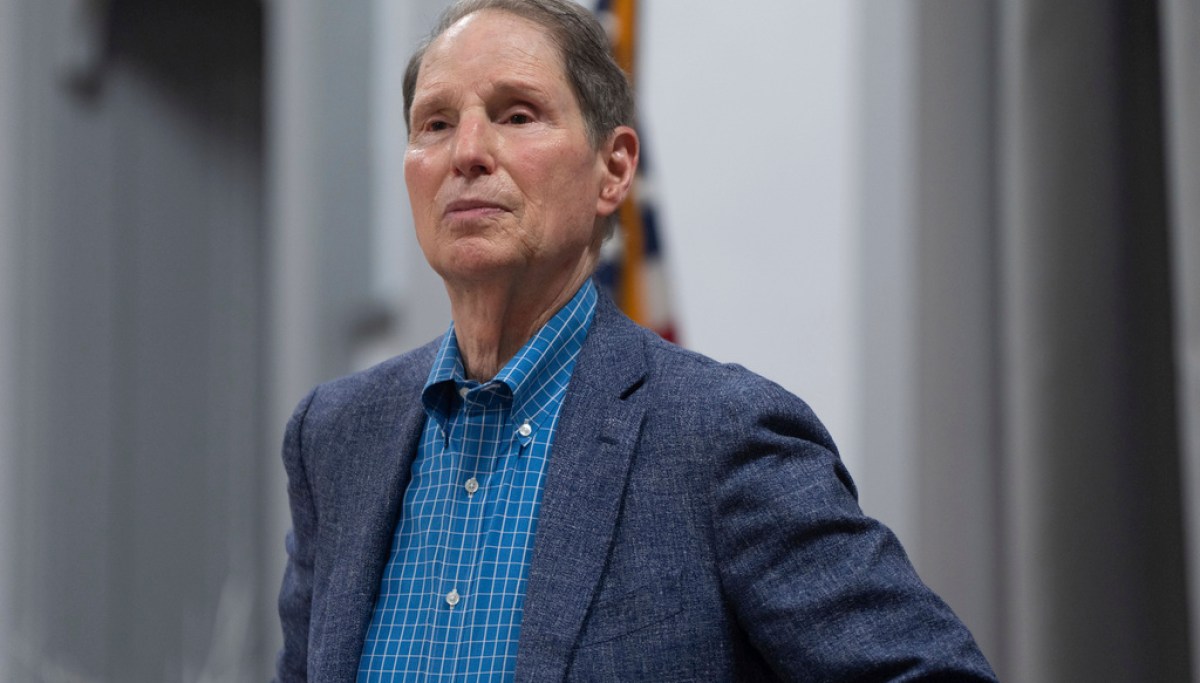
Senate Democrats are attempting to unify the party on health insurance reform ideas to lay the policy groundwork for the next time their party wins both chambers of Congress and the White House.
Sen. Ron Wyden (D-OR) and 11 other Democrats sent a policy strategy letter to their Senate colleagues on Thursday outlining three core principles they would like to see in reforms for the private health insurance market to rein in costs and make healthcare more accessible.
Healthcare costs are a top-of-mind issue for voters heading into both the 2026 midterm elections and the presidential election in 2028.
Wyden, as the leading Democrat on the Senate Finance Committee, which has jurisdiction over private health insurance as well as Medicare and Medicaid, is leading the charge to build consensus among his colleagues on a healthcare message for the next several election cycles, in hopes of giving the party an upper hand.
“We want to make sure the Senate is prepared to take action on these issues the next time Democrats have an opportunity to enact the bold, meaningful change the American people seek,” Wyden and his colleagues wrote.
Thursday’s letter is the second in a series of policy letters drafted by Wyden and his team with the intention of aligning Democrats on health policy priorities ahead of the next time their party wins a trifecta, meaning solid majorities in the House and Senate and a Democratic White House.
The first, disseminated in February, addressed how Democrats can lower the costs of prescription drugs, including through reforms to pharmaceutical middlemen that have had bipartisan support in prior legislation. A Finance Committee Democratic aide told reporters the third letter in the series will focus on solutions for long-term care, such as nursing homes and physical rehabilitation facilities.
The newly published letter outlines guiding principles for reforming employer-sponsored health insurance and the Obamacare marketplace exchange plans created by the Affordable Care Act.
Wyden’s letter cites surveys saying that half of all patients with private health insurance from their employers or Obamacare are unhappy with their premiums and out-of-pocket costs, and a majority experience problems accessing care with their insurance.
“The American people need relief from rising premiums and deductibles that are forcing families into financial ruin,” Wyden and his colleagues wrote. “They also want an insurance system that doesn’t require them to jump through hoops and hack through red tape every time they need care.”
Wyden’s three pillars include reforms to “make healthcare simpler for families” and to “take on corporate greed,” as well as undoing Republican reforms, such as increasing access to catastrophic health insurance plans.
But the letter steers clear of offering exact policy prescriptions and instead invites colleagues to “be part of this bold vision,” fostering dialogue within the party.
Ideas for reforming the private health insurance market split Democrats during the 2016 and 2020 primary elections for president, with most falling into one of two camps.
The first group supports reform of the structural problems in Obamacare marketplace insurance plans, and the second, led by Sen. Bernie Sanders (I-VT), wants to replace the extant framework with a Medicare-for-All or single-payer style system that would have the federal government provide health insurance for the entire nation.
Finance Committee staff told reporters that Democrats are facing a wake-up call moment in the wake of the GOP’s healthcare reforms enacted in the One Big Beautiful Bill Act last summer, which will reduce Medicaid spending by $1 trillion over the next 10 years.
Staff also said Congress’s failure last fall to renew enhanced subsidies for Obamacare marketplace plans, which resulted in steep premium increases for 2026, will also likely bring Democrats to compromise and develop a cohesive party-line strategy.
Republicans have also been gearing up their healthcare affordability messaging ahead of the next election cycle.
White House deputy chief of staff James Blair and Trumpworld pollster Tony Fabrizio have reportedly told Republican candidates to downplay more controversial elements of President Donald Trump’s Make America Healthy Again agenda, such as vaccine reforms, and instead focus on healthcare affordability.
Trump administration officials have recently placed greater emphasis on prescription drug pricing negotiations and insurance reform, as well as improving nutrition quality to make the U.S. population healthier.
In Congress, GOP leadership on the House Energy and Commerce committee has held a series of hearings on lowering healthcare costs, hearing testimony from health insurers, pharmaceutical supply chain stakeholders, and hospital and provider associations.
But Democrats appear to be positioned better than their Republican colleagues in appealing to voters on healthcare reform ahead of the 2026 election.
A poll from the health policy organization KFF earlier this month found that nearly 4 in 10 voters say they trust Democrats on lowering prescription drug and healthcare expenses, compared to 28% who favor the GOP.
GOP HAS WORK TO DO WITH VOTERS ON HEALTHCARE COSTS
Of independent voters, about a third say they believe Democrats can lower healthcare and drug prices, while less than 20% say the same of Republicans.
Nearly a quarter of Americans reported being “very worried” about being able to afford prescriptions this year, and another 37% are at least “somewhat worried.”