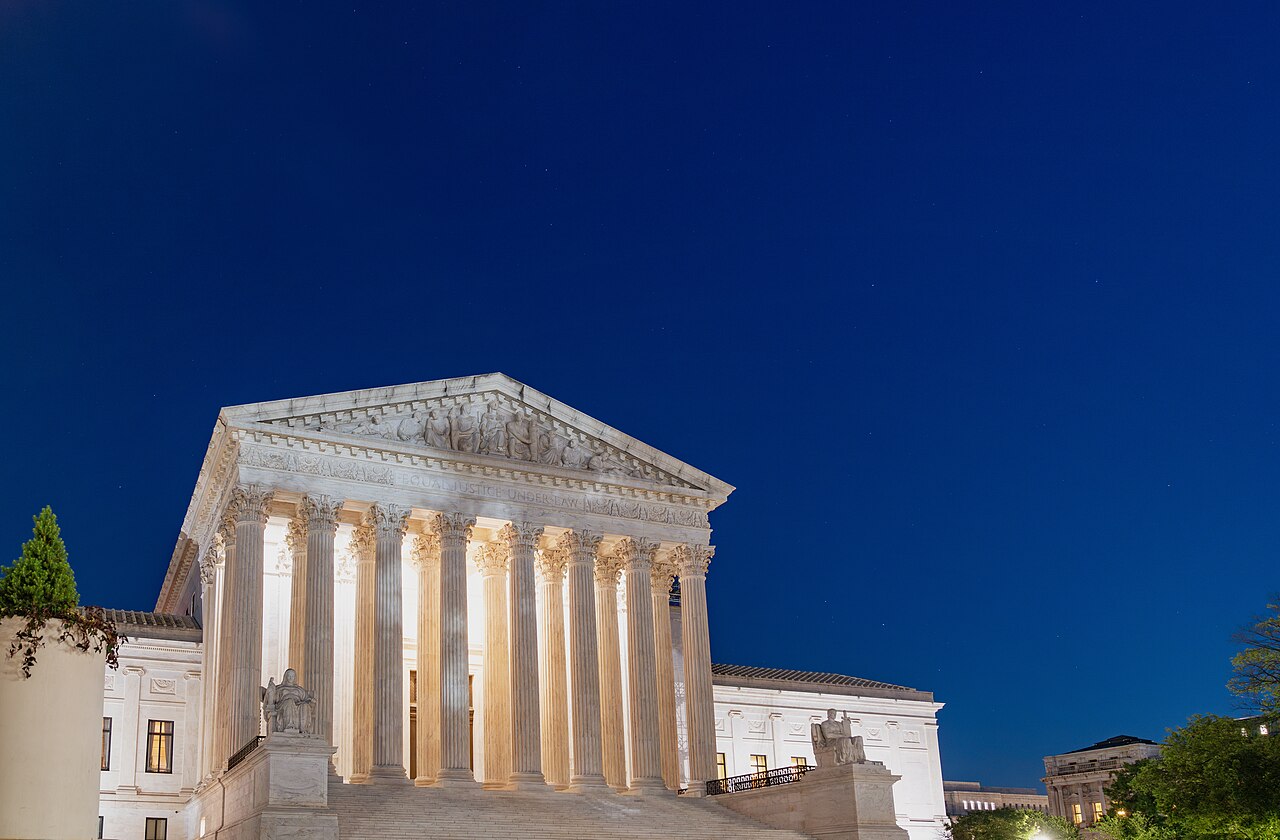
A majority of Supreme Court justices appear poised to uphold state laws protecting women’s sports from trans-identifying men.
The high court held oral arguments on Tuesday in Little v. Hecox and West Virginia v. B.P.J., which center around statutes passed by Idaho and West Virginia stipulating that girls’ sports are reserved for females. The justices will address the question of whether the laws violate the 14th Amendment’s equal protection clause, or, in West Virginia’s case, Title IX.
During oral arguments, attorneys representing trans-identifying men seeking to invalidate the laws contested that the statutes should be declared unconstitutional. But it seemed that many of the court’s Republican appointees weren’t sold on such claims.
During his questioning in Little, Chief Justice John Roberts questioned Hecox’s attorney Kathleen Hartlett about whether or not the court should view her position as “a challenge to the distinction between boys and girls on the basis of sex or whether or not [she is] perfectly comfortable with the distinction between boys and girls, [but she] just want[s] an exception to the biological definition of girls.” He also appeared to espouse concern about the can of worms it would open up should the court adopt such a position.
“If we adopted that, that would have to apply across the board and not simply to the area of athletics,” Roberts said.
The chief justice expressed further skepticism of arguments put forward by B.P.J.’s attorney in the West Virginia case.
Another justice seemingly unconvinced by Hartlett’s claims was Samuel Alito. The George W. Bush appointee’s most notable exchange came when he stumped Hecox’s lawyer with the “toughest” question of her career. That is, he asked her to define “man” and “woman.”
[READ: Justice Alito’s ‘What Is A Woman?’ Question Leaves Left-Wing Attorney Flailing]
Meanwhile, Associate Justice Brett Kavanaugh, a father of two daughters, raised the unfairness issue of permitting trans-identifying men in women’s sports.
In arguments for Little, the Trump appointee highlighted the progress of women’s sports throughout the past several decades. He also underscored the unfairness issue at the heart of the matter, telling Hartlett, “[F]or the individual girl who does not make the team or doesn’t get on the stand for the medal or doesn’t make all league … there’s a harm there, and I think we can’t sweep that aside.”
Kavanaugh raised similar concerns when later addressing B.P.J.’s attorney Joshua Block during arguments for the West Virginia case.
Associate Justice Clarence Thomas also sounded skeptical of the arguments put forward by the laws’ opponents.
During her questioning in Little, Associate Justice Amy Coney Barrett probed how Hartlett’s claim that Idaho’s law, as Barrett summarized, “discriminates on the basis of transgender status” can hold up when the statute only prevents trans-identifying males from competing in women’s sports and not the other way around. She further pressed Hecox’s attorney on whether “transgender status is a suspect class” — an issue she raised in her concurring opinion in U.S. v. Skrmetti, in which the court upheld state laws prohibiting trans-related procedures from being administered to minors.
Perhaps the most notable line of questioning, however, came from Associate Justice Neil Gorsuch. While offering several tough queries for Hartlett, the Trump appointee had his own share of challenging questions for the laws’ advocates.
Similar to Barrett, Gorsuch probed Idaho Solicitor General Alan Hurst about whether “transgender” should be considered a suspect class, as argued by Hecox. He also got into tense exchanges with West Virginia Solicitor General Michael Williams and Deputy Principal Solicitor General Hashim Mooppan, who argued in support of the laws on behalf of the Trump administration, during the West Virginia case.
It’s worth mentioning that Gorsuch authored the court’s 2020 Bostock v. Clayton County decision, in which the majority (that also included Roberts) unliterally declared that so-called “gender identity” is covered under the Civil Rights Acts’ Title VII protections.
[READ: Gorsuch, Barrett Buy Into ‘Trans’ Ideology In Arguments For Girls’ Sports Case]
The court’s Democrat appointees were unsurprisingly hostile to Idaho’s and West Virginia’s arguments — particularly Associate Justices Sonia Sotomayor and Ketanji Brown Jackson.
While Sotomayor repeatedly referred to the trans-identifying male challenging Idaho’s law with female pronouns, Jackson employed leftist terms and phrases such as “cisgender” and sex “assigned at birth.” The latter also expressed continued confusion over what a “woman” is.
Shawn Fleetwood is a staff writer for The Federalist and a graduate of the University of Mary Washington. He is a co-recipient of the 2025 Dao Prize for Excellence in Investigative Journalism. His work has been featured in numerous outlets, including RealClearPolitics and RealClearHealth. Follow him on Twitter @ShawnFleetwood