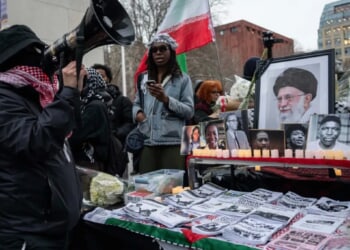
On March 7, a tense protest on Manhattan’s Upper East Side took a dangerous turn when two men threw homemade explosive devices into a crowd gathered for an anti-Islam demonstration near Gracie Mansion, the official residence of New York City’s mayor. Authorities say the suspects, 18-year-old Emir Balat and 19-year-old Ibrahim Kayumi of Pennsylvania, had traveled to New York specifically to rally against the event and were inspired by the Islamic State terrorist group.
The rally itself had been organized under the banner “Stop the Islamic Takeover of New York City” and arranged by pardoned January 6 activist Jake Lang, who has voiced strong opposition to Mayor Zohran Mamdani, the city’s first Muslim mayor. The event attracted both supporters of Lang’s cause and counterdemonstrators. During a confrontation, one of the suspects tossed a homemade explosive device into the crowd — or, more specifically, in Lang’s direction — causing him and others to run. Police later confirmed the device was not a harmless prop meant to scare the group, but rather a real bomb containing nuts, bolts, and other shrapnel materials capable of causing serious injury or death.
Fortunately, the devices failed to detonate, and no one was injured. Still, investigators say the danger was very real. New York City Police Commissioner Jessica Tisch stated that the bombs were “improvised explosive devices that could have caused serious injury or death,” and the incident is being investigated by both the NYPD and the FBI as an act of “ISIS-inspired terrorism.”
According to court documents, the suspects openly admitted their ideological motivation. When officers asked what he hoped to accomplish, one of the men allegedly told police that he wanted the attack to be “bigger than the Boston Marathon bombing.”
Multiple devices were ultimately recovered, including one thrown during the protest and others discovered nearby. Authorities quickly arrested the suspects and charged them with terrorism-related offenses.
On its face, the story appears fairly straightforward: two individuals inspired by a terrorist organization attempted to carry out a bombing at a political protest, but they failed, and no one was hurt. But the controversy surrounding the incident has less to do with what happened on the street that day and more to do with how the story was presented afterward.
Early media coverage sparked immediate backlash as it blatantly downplayed key details about the attackers and their motivations, while trying to soften the public’s perception of the men who carried out the attack. There seemed to be a concerted effort to avoid mentioning that the suspects were Muslims, that they allegedly shouted “Allahu Akbar,” or that investigators said they were inspired by ISIS.
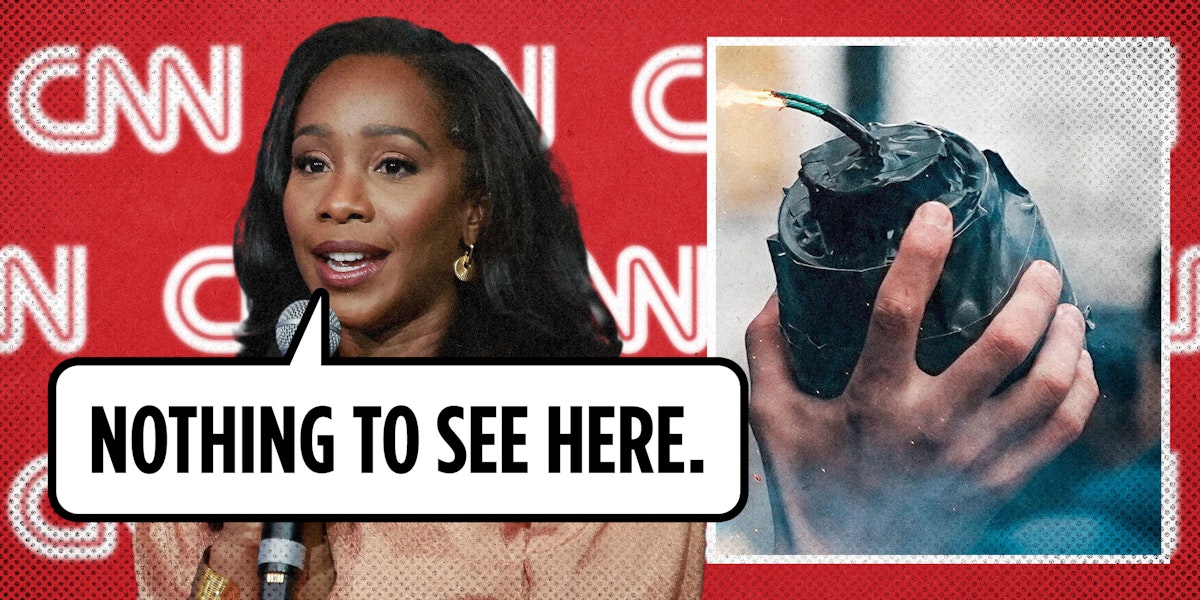
CNN seemed determined to sugarcoat the situation, glossing over the gravity of what could have played out had the bombs actually worked. Its now-deleted social media post framed the suspects simply as two young men who crossed into New York City on a warm day, but little did they know, according to the disgraced network, “in less than an hour, their lives would drastically change as the pair would be arrested for throwing homemade bombs during an anti-Muslim protest.”
Contrary to the sympathetic framing the left-wing outfit seemed eager to create, the reality is far less complicated. If you’re at home assembling homemade bombs in your kitchen, then carrying them to a protest with the intention of throwing them into a crowded group of people, you know exactly what you’re doing. And you certainly understand that if the plan works — or if you’re caught trying — it’s going to permanently change the course of your life.
David Strum of Hot Air argued that this pattern reflects a broader problem in how certain stories are reported. As he put it, “The left lies so brazenly because they can get away with it,” arguing that media outlets often assume their audiences won’t challenge narratives that omit inconvenient details — and far too often, it’s true.
“CBS Evening News” appeared ready to stretch the narrative even further. A post on X shared a clip of the network illustrating its report about the attempted IED attack with an image of Trump supporters, effectively suggesting that the bombs had been thrown by right-wing protesters rather than by the suspects who were actually arrested.
CNN’s Abby Phillip did more of the same, as she introduced the story on her evening show by claiming that Mayor Mamdani was the intended target of the bombers. Calls for her to be fired soon followed. Phillip later issued a correction, claiming she had failed to proofread her notes beforehand, which led her to report something inaccurate and misleading. But verifying information before presenting it to the public is a basic responsibility of journalism. If someone is going to go live and report a story to a national audience, making sure the facts are accurate should come before anything else.
That kind of framing doesn’t happen by accident. It’s a choice — one repeatedly made by biased outlets because enough people still buy into the narrative to make it worth pushing. If those lies weren’t convincing enough of their audience to help advance the Democrat agenda, the media wouldn’t bother repeating them.
Ana Navarro appeared to have seen Phillip’s initial report but missed the correction. During a later segment of Phillip’s show, while speaking with a panel of guests, Navarro repeated the claim that Mayor Mamdani had been the target of the attack. Joe Borelli quickly pushed back and corrected the statement, but Phillip sat quietly as it happened, allowing Navarro to continue repeating the false narrative even though she knew it wasn’t true and had issued a statement saying as much.
All of this has fueled growing concern about narrative control in modern media. It’s becoming harder for people to filter through the noise and find the truth, as more voices are motivated by the power that comes from shaping the story — and have little care for the consequences of misleading the public or the harm that follows the lies.
When the facts of a story conflict with a preferred political narrative, the focus often drifts away from what we should actually be paying attention to. Instead of examining the perpetrators and their motives — crucial information that helps us understand the threat and protect our communities — coverage shifts toward the surrounding political context. In many cases, the framing plays on emotions in order to encourage sympathy for the perpetrators rather than the victims.
The danger in that approach is obvious. When attention moves away from the actual threat, it becomes harder to confront it honestly. If ideological extremism is softened, ignored, or reframed to avoid uncomfortable discussions, the public never fully understands what happened — or why.
The attempted bombing in New York could have ended in tragedy. Instead, it ended with a close call and two suspects in custody. But the debate that followed reveals something deeper about the way dangerous events are discussed.
When our attention is intentionally moved away from the problem itself to protecting a preferred narrative, and even framing the wrong people as the problem, the real issue gets lost and goes unaddressed. And when that happens, society risks concentrating on the wrong threat while the real one continues to grow. Ignoring uncomfortable facts may make the conversation easier in the moment, but it also makes everyone less safe in the long run.