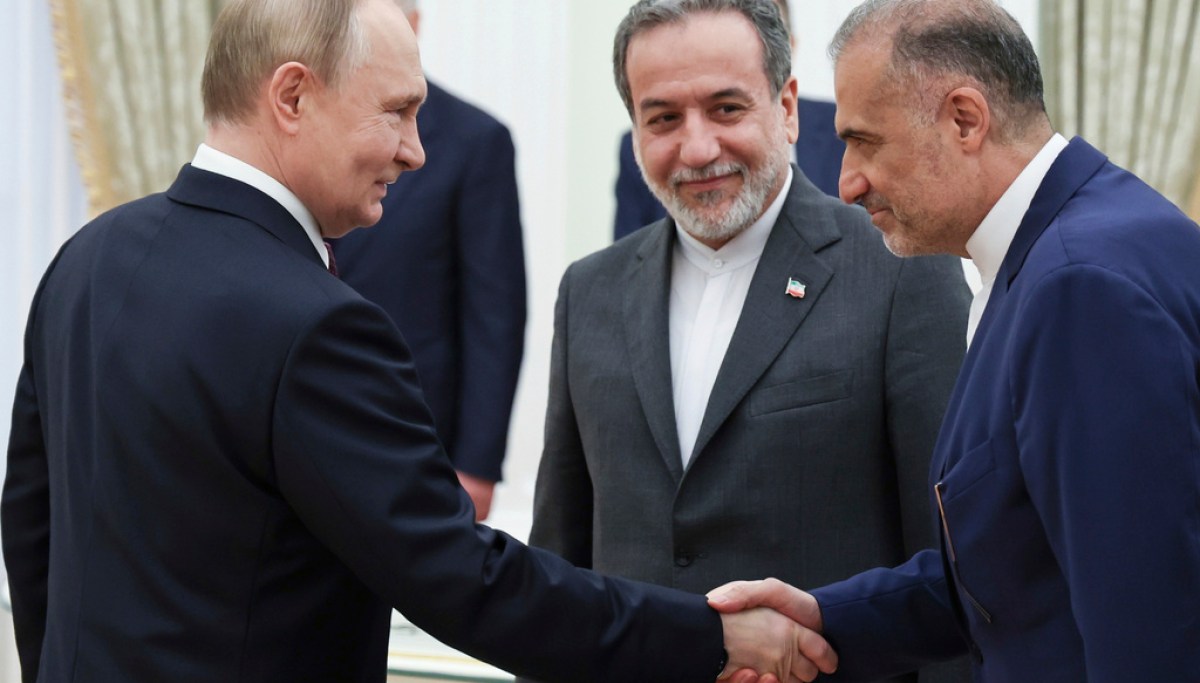
Russia appears to have emerged as an early winner of the U.S. and Israel’s war in Iran, which has caused chaos in the region and sent energy prices globally soaring.
Since the United States and Israel jointly launched their offenses on Iran Feb. 28, they have carried out retaliatory attacks in roughly a dozen neighboring countries, while the entire world has felt reverberations, primarily but not exclusively, in rising energy costs.
Energy and oil markets
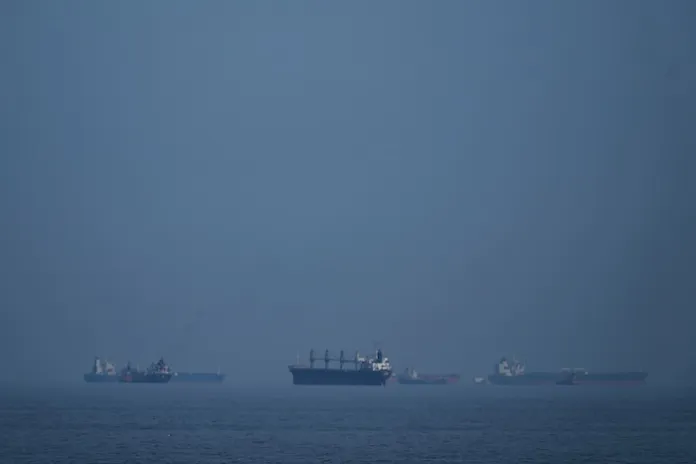
Iran has effectively shut down the Strait of Hormuz, threatening to attack ships that try to transit the waterway off their coast.
Before the war, around 20 million barrels of crude oil and other oil products were transiting the strait each day, equivalent to 20% of global oil demand.
The Trump administration moved to loosen sanctions on Russian oil earlier this month, signaling that they are scrambling to try every avenue to calm the markets, as the nearly monthlong effective closure of the Strait of Hormuz has sent prices surging more than 40% since the Iran war began.
Loosening the sanctions on Russia frees up roughly 130 million barrels for global supply, and allows countries like India to resume or ramp up imports amid the Middle Eastern disruptions.
The move, however, has been criticized by European allies, who claim it will only fuel Russia’s campaign in Ukraine.
An analysis released by the Centre for Research on Energy and Clean Air last week found that Russia earned an estimated €6 billion (nearly $7 billion) from fossil fuel exports since the war in Iran began.
“Obviously, it’s not a favorable development for Ukraine,” Maria Snegovaya, a senior fellow with the Center for Strategic and International Studies, told the Washington Examiner. “Stockpiles are running out, and Russia is gaining extra money, just as Russia’s economic situation finally started to demonstrably become much worse. It’s really unfortunate that it’s now happening, it’s now been reversed, hopefully temporarily because of the oil price increase.”
The organization found that Moscow’s oil and gas export revenues averaged €510 million a day in the week following the initial U.S.-Israeli strikes, roughly 14% higher than the daily average in February.
“Easing sanctions now would not stabilize markets. What it would do is allow Russia to sell the same oil for a far better price,” Alexander Kirk, Sanctions Campaigner at non-profit environmental and human rights organization Urgewald, said last week. “U.S. sanctions have forced Russian crude to trade at a steep discount. A rollback closes that gap overnight and hands the Kremlin a revenue boost worth billions, at the very moment that pressure is starting to bite.”
The decision to lift sanctions on Russian oil does not appear to have had a significant effect on the oil markets, as the administration has since taken several other non-traditional actions aimed at lowering or reversing the price hikes.
This includes easing sanctions on Venezuela – allowing U.S. companies to buy oil and gas directly from state-owned oil and gas firm, PdVSA – and even weighing easing sanctions on Iranian oil.
Despite these attempts, oil remains extremely elevated as of Friday afternoon. Just after 2 p.m. EST, both international and domestic benchmarks were up by around 2%. West Texas Intermediate was nearly hitting $100 a barrel, up by 2.23%, and selling at $97.68. Brent Crude had also jumped 1.98% and was priced at $110.80 per barrel.
Ukraine war
The Department of War has deployed significant assets to the Middle East amid the war, and as a result, those are resources that cannot go to Ukraine.
Ukraine has long requested and used air defense systems from the U.S. and other European countries, but they rapidly go through interceptors due to the frequency of Russia’s persistent attacks.
“Another way this is good for the Russians is that the air defense requirements in the Middle East to protect the United States forces and our Gulf allies in Israel, that’s going to saturate basically all the available Patriot interceptors that didn’t already exist, and Ukraine is no longer receiving those patriots happen,” George Barros, an analyst with the Institute for the Study of War, told the Washington Examiner.
Ukraine is vulnerable to Russian ballistic missiles without interceptors for the Patriot air defense system, and Russian forces have already begun to take advantage of the mismatch.
“The Russians have been innovating and conducting strike packages that notably contain substantially more ballistic missiles than cruise missiles or drones than the previous strike packages because I think the Russians have accurately realized that while all the Patriots are going to a different theater and CENTCOM, the Ukrainians are now vulnerable, and the Russians can basically land free ballistic missile hits,” he said.
Simultaneously, the Trump administration-led negotiations to end Russia’s war in Ukraine, which had gone on intermittently for more than a year, have been deprioritized amid the war.
Dividing NATO
An evergreen Kremlin goal is to divide and weaken the NATO alliance, and the war in Iran has driven a wedge between the U.S. and Europe.
President Donald Trump requested NATO countries, as well as other U.S. allies, to help reopen the Strait of Hormuz, but most countries demurred. Then, an angry President Donald Trump said he no longer wanted their assistance, and he argued their refusal validated his skepticism toward the alliance.
“Without the U.S.A., NATO IS A PAPER TIGER! They didn’t want to join the fight to stop a Nuclear Powered Iran,” Trump wrote on Friday. “Now that fight is Militarily WON, with very little danger for them, they complain about the high oil prices they are forced to pay, but don’t want to help open the Strait of Hormuz, a simple military maneuver that is the single reason for the high oil prices. So easy for them to do, with so little risk. COWARDS, and we will REMEMBER!”
US HAS ‘HIGH CONFIDENCE’ IN LOCATION OF IRAN’S ENRICHED URANIUM: GABBARD
European countries could attempt to “leverage the U.S. request to help unlock the Strait of Hormuz,” in exchange for “future support” from the U.S. for Ukraine, Snegovaya said.
Trump has long accused NATO members of relying too heavily on the U.S. military, and he pressed the alliance as a whole to more than double each country’s required defense spending.
Secretary of War Pete Hegseth said the U.S.’s allies in Europe were “ungrateful” on Thursday, while he highlighted how Iran’s attacks on Gulf countries have improved the U.S.’s relations with those countries.