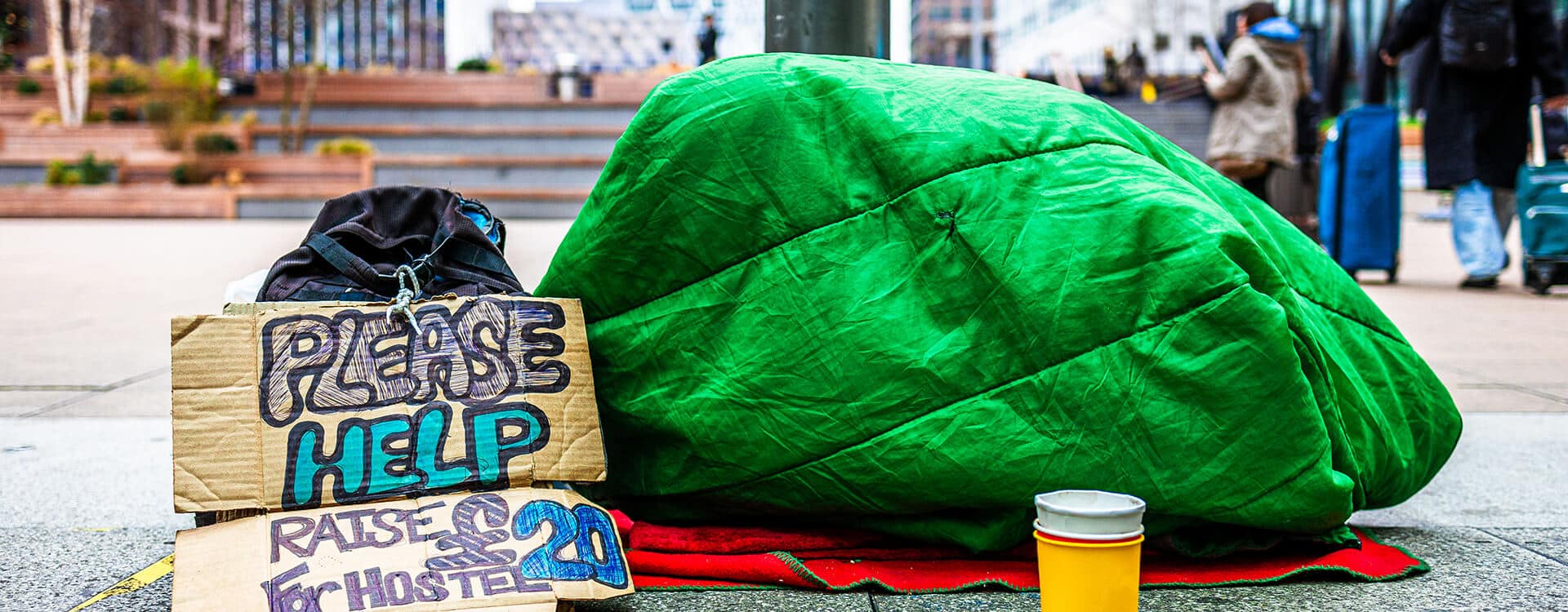
- 4,793 people were sleeping rough on a single night in autumn 2025, the highest number ever recorded
- Record levels of non-EU migration fuelling surge with fivefold increase in those sleeping on streets since 2021
- New plan to tackle “migrant homelessness crisis” with Dutch-style return arrangements
- Labour mayors Andy Burnham and Steve Rotheram back Housing First scheme
Rough sleeping has hit a record high, official figures show.
4,793 people were sleeping rough on a single night last autumn, the highest number ever recorded. This is an increase of 96 per cent since 2021, and 171 per cent since 2010.
Analysis of the figures by cross-party think tank the Centre for Social Justice (CSJ) found monthly totals to be even higher than the nightly counts, with over 9,000 people seen sleeping rough in October and in November, falling to just over 8,000 in December.
The number of people sleeping rough long term (those sleeping rough in three or more months in the last year) has also risen, up by 18 per cent in the 12 months to December 2025. Long-term rough sleepers are now the largest group sleeping rough, a sign of Britain’s entrenched homelessness crisis.
The think tank’s new Rough Sleeping Tracker report found that record levels of immigration and a cross-government failure to tackle the asylum crisis have put enormous strain on homelessness services.
There has been a 396 per cent increase in non-EU (excluding UK) nationals sleeping rough since 2021. Across England, one in four (24 per cent) rough sleepers are non-British, rising to almost one in two (47 per cent) in London.
In December the government published its homelessness strategy, A National Plan to End Homelessness, which sets a new target to halve long-term rough sleeping. But the CSJ argue that this pledge is underpowered and lacks ambition.
The think tank’s report urges ministers to change course and roll out the successful Housing First model across England, which is proven to break the cycle of rough sleeping for the vast majority of participants.
The report urges the government to:
- Double Housing First capacity by providing a total of 5,600 places by the end of the Parliament, taking thousands of British long-term rough sleepers off the streets. The CSJ proposes funding this by abolishing expensive relocation expenses for civil servants and scaling back the programme that moves them to the regions.
- Deliver on a new target for the voluntary return of non-UK national rough sleepers, while making sure those here illegally are removed.
- Prevent rough sleeping by tackling its “root causes”, including by reforming welfare, extending support for those with addiction and intervening early to support vulnerable families.
Josh Nicholson, Head of Housing and Communities at the Centre for Social Justice, said:
“The government’s homelessness strategy is right to focus on prevention, but if it doesn’t address the immediate crisis on our streets, it will be judged a failure.
“Rough sleeping has been out of control for too long and more of the same won’t cut it. Ministers still have time to act, by prioritising proven interventions like Housing First, and to scale them up within the strategy before it’s too late.”
Bob Blackman MP, Co-Chair of the APPG for Ending Homelessness and author of the 2017 Homelessness Reduction Act, said:
“The levels of rough sleeping revealed today are a national disgrace and undermine any ambition this government might have to end rough sleeping for good. The CSJ’s analysis shows a system trapped in crisis and a state unable to keep pace with the pressures it faces.
“The public expect that those with no right to be in the UK, or those who would be better supported by returning home, are not left to languish across our town and city centres.”
Notes to Editors
The CSJ’s analysis of rough sleeping data is based on the rough sleeping snapshot in England: 2025, and the Rough Sleeping Data Framework-October to December 2025 release, both published by MHCLG on the 26th February 2026.
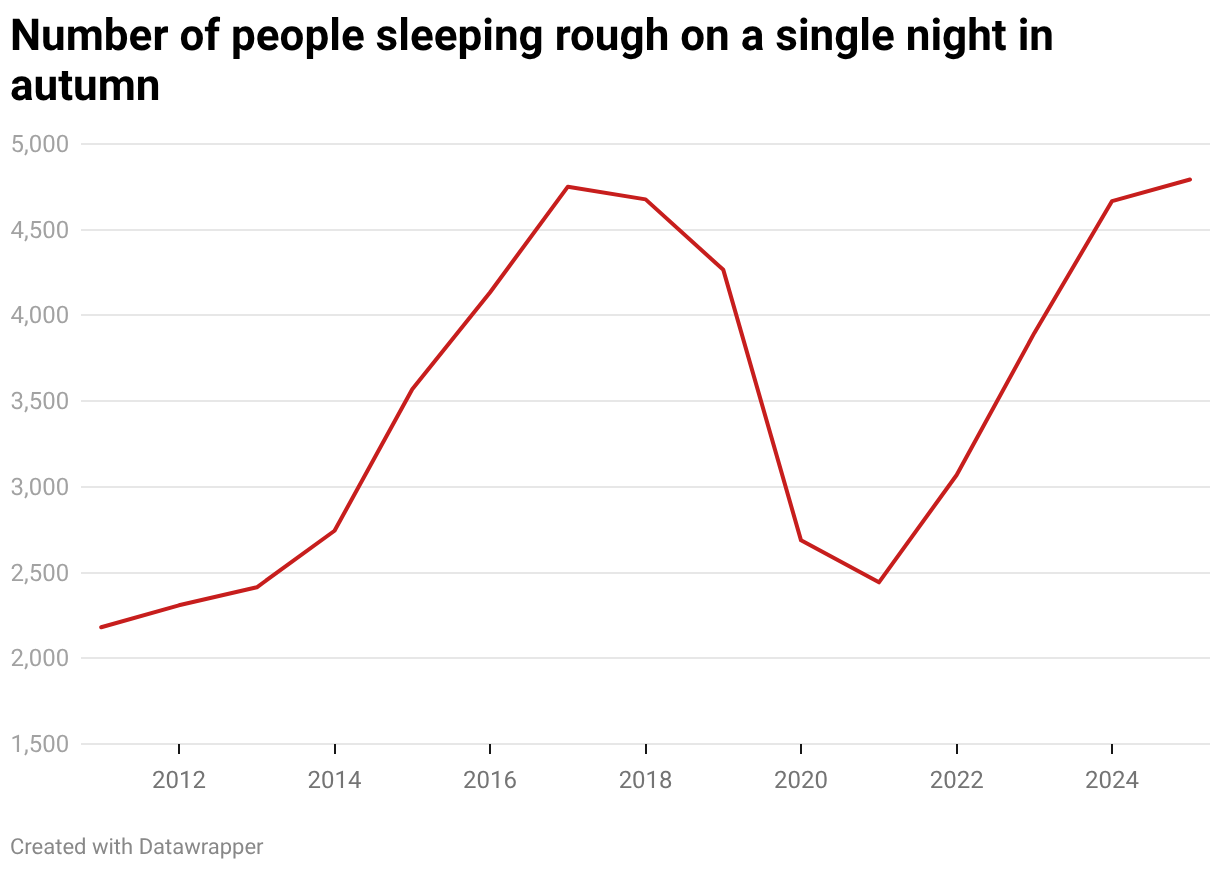
Source: Ministry for Housing, Communities and Local Government, 2026
Housing First is a homelessness service which provides ordinary settled housing alongside intensive, person centred support for people whose homelessness is compounded by multiple and complex support needs. Housing First is different from conventional interventions as it offers permanent housing immediately, dependent on an individual’s willingness to maintain a tenancy. Intensive support is provided to help the individual overcome complex problems in their life. In the national pilots, 84 per cent of service users sustained permanent housing after three years.