People are frustrated by Congress’s inability or unwillingness to pass legislation supported by the vast majority of people. Polls show overwhelming bipartisan support for banning congressional stock trading — around 76% of voters favor it. Similarly, the SAVE America Act, which would require proof of citizenship to vote in federal elections, enjoys broad support from voters of both parties. Yet both measures have stalled in Congress, blocked not by lack of popular support, but by entrenched political interests resistant to change.
This disconnect between what people want and what their representatives deliver has become a defining feature of modern politics. People don’t want their elected officials to get rich from insider trading, but multiple efforts to prohibit stock trading by members of Congress have hit a brick wall. Multiple bills have been introduced, including Rep. Bryan Steil’s (R-WI) Stop Insider Trading Act and Rep. Chris Pappas’s (D-NH) newly introduced No Getting Rich in Congress Act, yet none have overcome the resistance of senior members who benefit from the status quo. And nowhere is that tension more visible than in the Democratic Party’s belated reckoning with its own old guard.
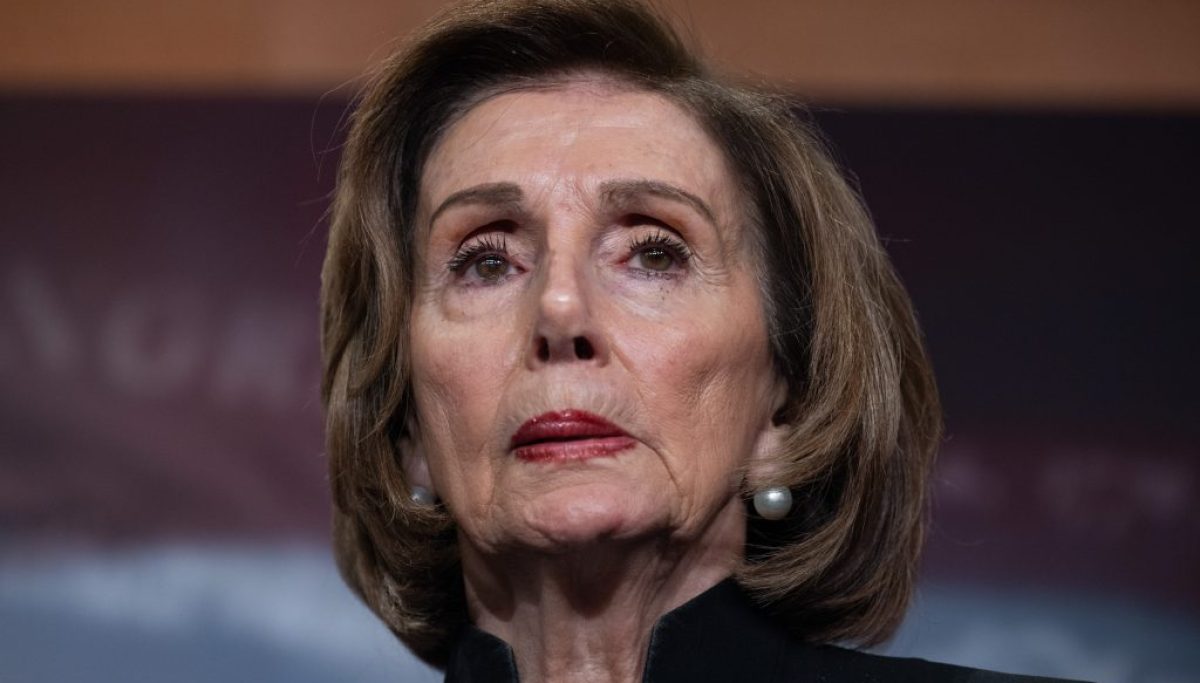
Rep. Nancy Pelosi (D-CA) was publicly called out at the State of the Union for her stock trades. Former President Bill Clinton and former first lady Hillary Clinton were hauled before Congress for their relationship with Jeffrey Epstein. And the applause that once elevated party royalty is now empowering the voices dismantling their legacy.
GOP FAILURE TO PASS SAVE ACT SHOWS WHY TRUMP WAS ELECTED
At the State of the Union address, President Donald Trump called out Pelosi by name while calling on Congress to ban lawmakers from trading individual stocks. The moment was not surprising because he has criticized her for years.
What was striking was what happened next. Democrats stood and applauded.
Pelosi has become the symbol of congressional stock trading excess, a reputation built on well-timed trades. While families struggle to afford groceries and gas, they watch members of Congress consistently outperform Wall Street with precision.
To pick just one example: In late 2022, Pelosi’s husband sold roughly $500,000 worth of Visa stock. One month later, the company’s stock dropped sharply after the Justice Department sued it for allegedly maintaining a monopoly over debit transactions. The lawsuit itself was baseless, given the lack of any demonstrable harm to consumers and the abundance of other ways to pay for things. But timing is everything in markets — and the Pelosis were out before the hit.
For years, Democrats defended her actions. Now, even the New York Times reporter Annie Karnie wrote that Democrats increasingly view Pelosi’s long-standing opposition to a congressional stock trading ban as “an unfortunate blemish.”
Then came the Clintons.
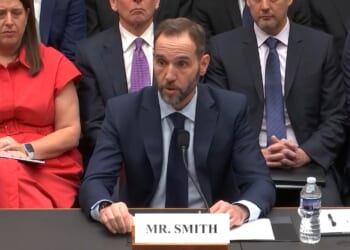
For years, Bill and Hilary Clinton were treated as untouchable by the Democratic Party. Last month, they sat for depositions before the House oversight committee regarding their ties to Epstein. Rep. Robert Garcia (D-CA), the ranking member, told Politico that “both Republicans and Democrats” were “glad” about the chance to depose the Clintons. That is not a minor development. It marks the first time in U.S. history that a former president has been compelled to testify before Congress against his will.
Regardless of what was said behind closed doors, the symbolism is unmistakable. The Clintons once defined the Democratic Party. Now they are viewed as political liabilities whom the party no longer feels obligated to protect.
These humiliations mark the start of a long-deferred reckoning in the Democratic Party.
The Republican Party already went through its revolution. The Trump era reshaped politics by breaking the GOP from its own establishment. The party of tradition and the founders ceded control from the old guard to the voters.
President George H.W. Bush voted for Hillary Clinton in 2016. His son, Former President George W. Bush, declined to support Trump in both 2016 and 2020. Former Vice President Dick Cheney ultimately endorsed 2024 Democratic nominee Kamala Harris. The younger Bush was absent from three consecutive Republican conventions.
The Republican base made clear that legacy status was not immunity.
Meanwhile, Democrats chose the opposite strategy. The party that prides itself on dismantling the past preserved its own. Every living Democratic president remained in good standing. Former Presidents Clinton, Barack Obama, and Joe Biden were fixtures at Trump-era conventions — unity was prioritized over ideological consistency.
Clinton signed the Defense of Marriage Act, defining marriage as a union between a man and a woman; enacted “Don’t Ask, Don’t Tell”; cut welfare programs; and signed the 1994 crime bill that expanded incarceration. Biden voted for the Defense of Marriage Act and wrote the Senate version of the crime bill. Even Obama campaigned in 2008 as an opponent of gay marriage.
Under today’s Democratic Party, those positions would be disqualifying.
The party’s decision to overlook all of this was strategic. A generational purge would have fractured the coalition and alienated voters who remembered the Clinton years as stable and prosperous. The party closed ranks.
In 2020, the calculation worked. Democratic primary electorate, with behind-the-scenes encouragement from Obama, consolidated behind Biden, the familiar centrist promising normalcy.
By 2024, the strategy collapsed.
Biden’s poll numbers tanked. Harris attempted to have it both ways, running as a change candidate while telling The View that she couldn’t think of anything she’d have done differently than Biden. Voters rejected that.
Now the guardrails are off. Trump is term-limited, the sting of losing the popular vote, and Democrats no longer feel compelled to protect legacy figures as a shield against him.
A new, younger, aggressive generation of candidates is rising and testing entrenched incumbents. Former New York Gov. Andrew Cuomo was forced out by socialist New York Mayor Zohran Mamdani.
PELOSI ISN’T ALONE — CONGRESS IS A TRADING FLOOR
Polling suggests that Rep. Alexandria Ocasio-Cortez (D-NY) would crush Sen. Chuck Schumer (D-NY) in a 2028 Senate primary. Or maybe she’ll run for president. If she does, don’t expect her, or whoever the nominee is, to do a big photo op with former presidents. Voters want a generational turnover.
The Republican Party has already experienced its internal revolution. The Democratic Party’s is approaching fast.
Mehek Cooke, an attorney and political strategist, was a surrogate for Donald Trump’s presidential campaign and the Republican National Convention.