The surprise attack on Iran’s leadership by the United States and Israel on February 28 was greeted on PBS by skepticism of Trump’s long-term plans, while avoiding the vital historical context of Iran’s authoritarian Islamist regime.
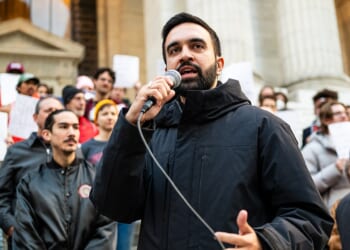
Worse was the pro-regime coverage of the joint mission from special correspondent Reza Sayah in Tehran, who previously worked for anti-American and anti-Israel outlet Al-Jazeera and served as CNN’s correspondent based in Cairo. He’s currently also appearing on Drop Site News, an anti-Trump, anti-Israel news network on Substack.
From the last minutes of PBS’s special “War with Iran” coverage on Saturday featuring the weekday News Hour team, with Sayah portraying a dark day for the Iranian people (never mind those mass celebrations) while portraying the awful regime as a persecuted pipsqueak in the region:
Reza Sayah: Yes, this was a bleak, grim, and scary day for the people of Iran, a population that has seen a lot of adversity over these past five decades, and this time the adversity they’re facing was an attack by the world’s leading superpower, the United States of America and the regional power Israel, both of them nuclear powers, mind you….
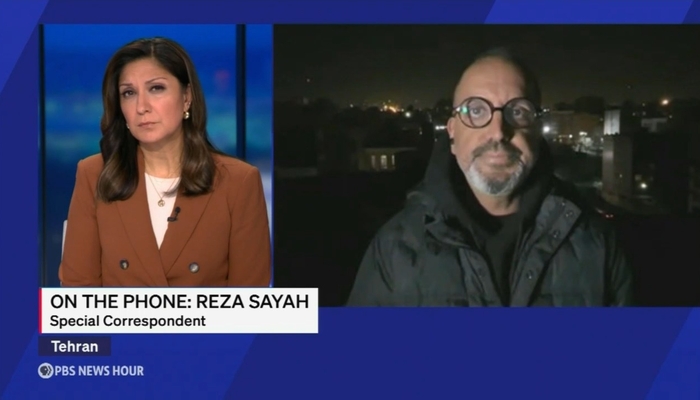
On Monday’s PBS News Hour, Sayah again reported from Tehran, using a similar tone.
Co-anchor Amna Nawaz: ….Just give us a sense of what you’re seeing and what you’re hearing on the ground there.
Reza Sayah: Amna, as I’m talking to you right now, I’m hearing the unnerving sound of jet fighters flying over Tehran and massive earth-shaking explosions. They started around 12:00 midnight local time, and it’s continued for the next 90 minutes, so, again, multiple explosions in what sounds like anti-aircraft….Earlier today, more airstrikes, intense airstrikes targeting the heart of the city. Israeli officials have repeatedly said they’re targeting the security apparatus, buildings related to the military, Revolutionary Guard.
But, increasingly, we are seeing on the ground non-military targets either being hit or severely damaged, hospitals. We had a school on Saturday. Earlier today, I went to a major square here where a police headquarters was hit. The police station was destroyed, but surrounding it were scores of residential buildings. They too, they were either destroyed or severely damaged. I went to a cafe across from the police station, talked to a patron there who was there during the airstrike. He was smoking a hookah when the missiles hit. He showed me some gruesome video of a fellow patron with his head severed….
Nawaz: Reza, let me ask you about what we have heard from U.S. officials, because President Trump claimed yesterday that Tehran had reached out to talk and to negotiate. Today, he warned of a — quote, unquote — “big wave” of strikes yet to come, and he didn’t rule out U.S. troops on the ground. What’s been Tehran’s response to all of this?
Sayah took Tehran’s side in the propaganda war.
Sayah: Tehran’s response is no talks and they’re going to keep fighting. Just keep in mind, from Tehran’s point of view, there’s no trust. This is the second time they’re in the middle of negotiations. Without warning, they have been under attack. And they tried to project resilience. Ali Larijani, the secretary of the National Security Council, in a statement saying they’re not going to negotiate with terrorists. The foreign minister, Abbas Araghchi, saying that they have learned lessons from U.S. defeats in the region, and they’re going to use these lessons in this war. They’re going to decide how the war ends. So they’re projecting resilience, toughness. And seemingly, in the region, they’re carrying out an aggressive campaign targeting U.S. bases, U.S. assets, Gulf states, military bases. And they’re also saying they’re targeting hotels because they have intelligence that U.S. servicemen have left the bases to go to the hotels.
A transcript is available, click “Expand.”
PBS News Hour
3/2/26
7:16:58 p.m. (ET)
Amna Nawaz: Let’s go now to special correspondent Reza Sayah in Tehran. Reza joins us on the phone.
Reza, now this third straight day of U.S. and Israeli strikes in Iran. Just give us a sense of what you’re seeing and what you’re hearing on the ground there.
Reza Sayah: Amna, as I’m talking to you right now, I’m hearing the unnerving sound of jet fighters flying over Tehran and massive earth-shaking explosions.
They started around 12:00 midnight local time, and it’s continued for the next 90 minutes, so, again, multiple explosions in what sounds like anti-aircraft. And one other thing that I need to point out is, around 1:30 a.m., the Internet access was cut off. And that’s kind of unusual.
When this war started, the government cut off the Internet. There was only access to the national network. It was a closed network. But using VPN, virtual private network, I was able to get access to the international network. That stopped around 1:30 am local time. Was it related to these latest airstrikes that started around midnight? It’s not clear, but no Internet.
That’s why I’m talking to you on the phone. Earlier today, more airstrikes, intense airstrikes targeting the heart of the city. Israeli officials have repeatedly said they’re targeting the security apparatus, buildings related to the military, Revolutionary Guard.
But, increasingly, we are seeing on the ground non-military targets either being hit or severely damaged, hospitals. We had a school on Saturday. Earlier today, I went to a major square here where a police headquarters was hit. The police station was destroyed, but surrounding it were scores of residential buildings.
They too, they were either destroyed or severely damaged. I went to a cafe across from the police station, talked to a patron there who was there during the airstrike. He was smoking a hookah when the missiles hit. He showed me some gruesome video of a fellow patron with his head severed.
And he described what sounded like a double-tap strike, where he said the initial strike wasn’t much, wasn’t much of an explosion, a few minutes later, massive explosion. And that gives you an idea of the cycle of violence we’re experiencing.
Amna Nawaz: Reza, let me ask you about what we have heard from U.S. officials, because President Trump claimed yesterday that Tehran had reached out to talk and to negotiate. Today, he warned of a — quote, unquote — “big wave” of strikes yet to come, and he didn’t rule out U.S. troops on the ground.
What’s been Tehran’s response to all of this?
Reza Sayah: Tehran’s response is no talks and they’re going to keep fighting.
Just keep in mind, from Tehran’s point of view, there’s no trust. This is the second time they’re in the middle of negotiations. Without warning, they have been under attack. And they have tried to project resilience.
Ali Larijani, the secretary of the National Security Council, in a statement saying they’re not going to negotiate with terrorists. The foreign minister, Abbas Araghchi, saying that they have learned lessons from U.S. defeats in the region, and they’re going to use these lessons in this war. They’re going to decide how the war ends.
So they’re projecting resilience, toughness. And seemingly, in the region, they’re carrying out an aggressive campaign targeting U.S. bases, U.S. assets, Gulf states, military bases. And they’re also saying they’re targeting hotels because they have intelligence that U.S. servicemen have left the bases to go to the hotels.
Amna Nawaz: That is our special correspondent, Reza Sayah, joining us tonight on the phone from Tehran, Iran.
Reza, thank you.