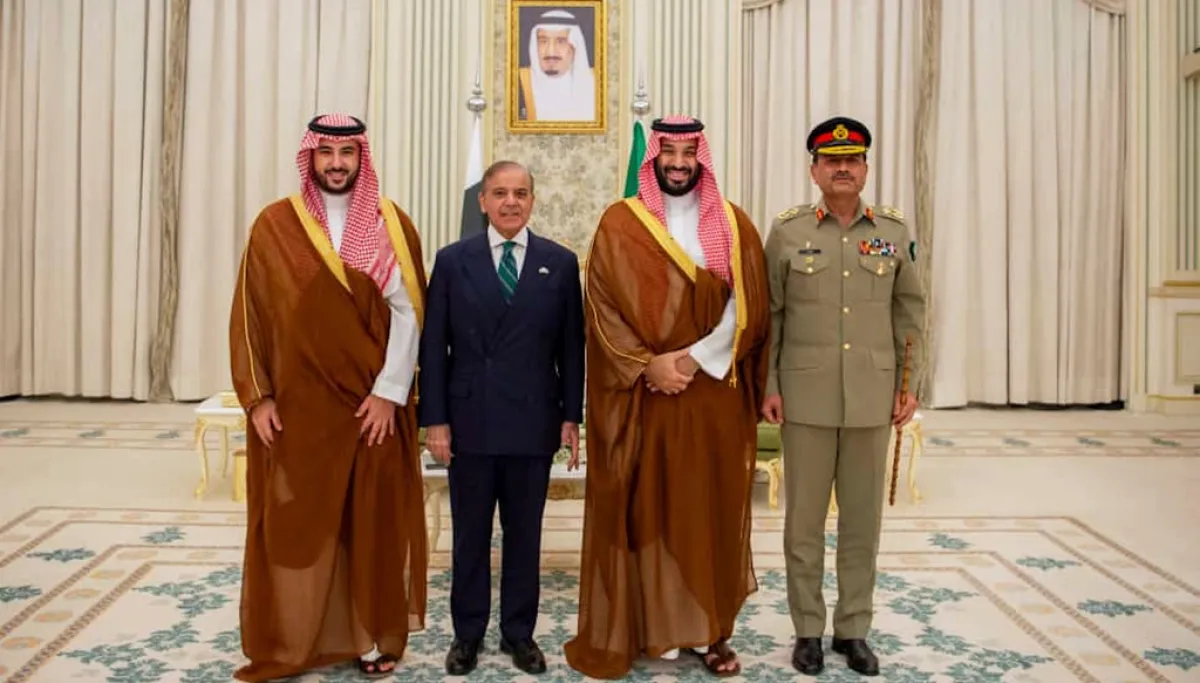
Pakistan said Sunday that it would be hosting peace talks between the United States and Iran despite Tehran vowing to set invading American troops “on fire” and dismissing any plans for talks.
Pakistani officials have positioned Islamabad as a possible mediator, saying both Washington and Tehran have signaled some level of trust in its role, though it remains unclear whether any negotiations would be direct or conducted through intermediaries.
The announcement comes as roughly 2,500 additional U.S. Marines arrived in the Middle East, after which Iranian parliament Speaker Mohammad Bagher Qalibaf said Iranian forces were “waiting for the arrival of American troops on the ground to set them on fire and punish their regional partners forever.”
BILL MAHER PRESSES ELISSA SLOTKIN OVER DEMOCRATIC STAND AGAINST IRAN WAR
It is unclear whether U.S. troops will engage in ground combat or if they were deployed as a show of strength to further peace negotiations. President Donald Trump left deploying ground troops an option, and the Pentagon is reportedly planning for a “final blow” in Iran that could include soldiers deployed for ground combat.
Iran has continued to accuse the U.S. of using diplomacy as a cover as military operations expand in the region and dismissed the possibility of talks in Pakistan. The U.S. has not publicly made clear if leaders will attend.
Tehran has drafted its own five-point proposal to end the war that calls for a halt to killing Iranian officials, guarantees against future attacks, reparations, and Iran’s “exercise of sovereignty over the Strait of Hormuz.”
The plan for peace negotiations follows a high-level meeting where top officials from Saudi Arabia, Turkey, and Egypt met in Islamabad to discuss an effort to open a path forward toward negotiations between Washington and Tehran to end the monthlong war.
More than 3,000 people have been killed in the war that began with U.S. and Israeli strikes on Iranian targets that began in late February, triggering a wider regional conflict that has disrupted energy markets and drawn in multiple Middle Eastern actors.
TOP DIPLOMATS MEET IN PAKISTAN FOR TALKS ON ENDING IRAN WAR AS STRIKES CONTINUE
Iran-backed Houthi rebels in Yemen entered the conflict on Saturday after firing a barrage of missiles at “sensitive Israeli military sites” in southern Israel, escalating fears that the conflict will continue to expand.
While Iran has continued its attacks on Israel and anything tied to the U.S., it has eased some restrictions on shipping through the Strait of Hormuz, allowing limited transit of ships from Pakistan, India, Russia, China, Iraq, Malaysia, and Thailand, even as it seeks to maintain leverage on energy markets.