Arguably the height of hypocrisy for the American left is the audacious Make America Affordable Again campaign launched by congressional Democrats ahead of next year’s midterm elections.
The idea is to hammer Republicans — particularly President Donald Trump — early and often on pocketbook issues. So the same people that brought you the ill-named Inflation Reduction Act that raised inflation, the same party whose tax-and-spend policies unleashed 9 percent inflation on Americans, are going to tell voters that 3 percent inflation is a “crisis” only they can fix? You bet they are. Talk about the audacity of hope.
Of course, if Democrats really cared about the affordability problem in America they would have long ago ended their addiction to big government. Then again, too many Republicans are struggling with the same affliction. Per usual, it’s the American taxpayer picking up the tab for the government junkies.
In a new deep dive into the ever-growing monster that is the federal government, public spending tracker OpenTheBooks explores how the leviathan has feasted on taxpayer money over the last century-plus.
10,000 Percent
Federal spending per person has exploded nearly 10,000 percent since 1916, according to the analysis. That was the year President Woodrow Wilson campaigned for a second term on the slogan, “He Kept Us Out of War.” Within five months of Wilson’s second electoral victory, that slogan would prove to be just another politician’s broken promise. America entered the First World War — the war to end all wars — and Wilson and his fellow Democrats began spending like there was no tomorrow.
Wilson presided over a national debt that soared more than 700 percent during his tenure, from $2.9 billion to $23.97 billion. Yes, those debt figures seem quaint next to the $38 trillion obligation currently saddling the federal government — rising by $70,000 every second.
Wilson’s War had a great deal to do with the hefty debt in the early 20th century, but the progressive father of the administrative state set federal government on the path to massive expansion — in the bureaucracy’s footprint and their centralized power. In his book, American Leviathan, conservative activist Ned Ryun describes Wilson as one of the “Four Horsemen of the Progressive Apocalypse.”
Franklin Delano Roosevelt picked up Wilson’s tax-and-spend torch, and Lyndon Baines Johnson and his costly war on poverty and Vietnam put big government on steroids. Republicans often went along for the ride, especially when it came to their pet projects. All that spending adds up to a disastrous debt.
‘Less with More’
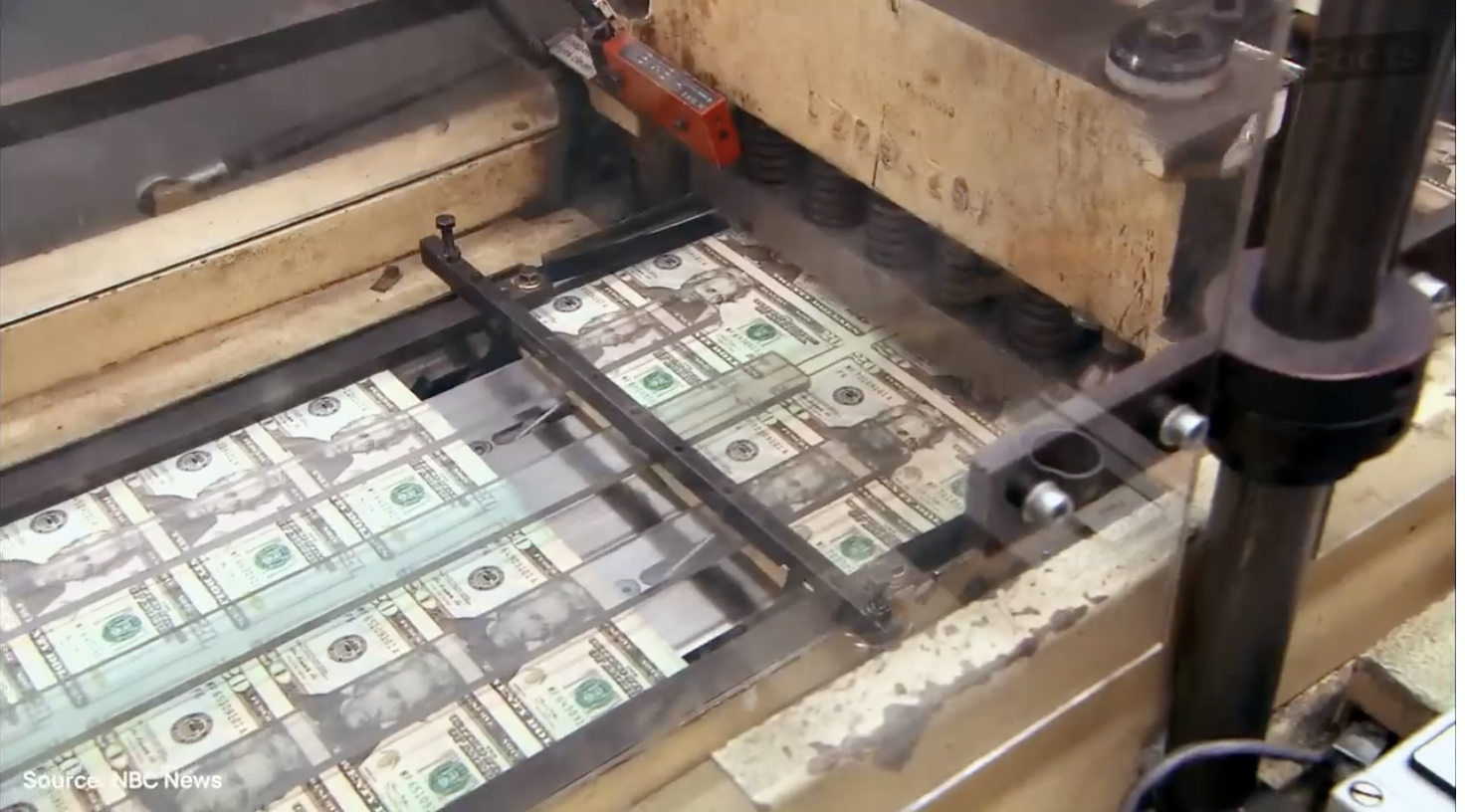
In the recently ended fiscal year 2025, the federal government spent a record (again) $7.035 trillion, according to Congressional Budget Office estimates. That’s $20,474.19 for every man, woman and child living in the country.
As OpenThe Books’ report notes, median household income in 2024 was $83,730. The government spending share for a family of four would be north of $80,000, just under what that average family would have earned in pre-tax income.
“While American families and businesses find a way to do more with less, the government does less with more,” said John Hart, CEO of OpenTheBooks, in a statement.

Illustration: OpenTheBooks
There are myriad examples of the fiscal bloating of the federal government. In more recent times, Washington’s response to the subprime mortgage crisis of of 2007-08 was the Emergency Economic Stabilization Act of 2008, signed by Republican President George W. Bush, whose War on Terror jacked up the debt in its own right. And who could forget TARP, the Troubled Assets Relief Program, to bail out lenders via taxpayer-funded purchases of toxic assets tied to insanely risking mortgages.
“TARP was authorized to spend $700 billion. The following year, President Barack Obama signed the American Recovery and Reinvestment Act of 2009 (ARRA), a major spending bill meant to stimulate the economy at a cost of over $800 billion,” the report notes.
By fiscal year 2009, per-capita spending hit $17,346.91. The surge eased a bit in the following years, but when the pandemic panic hit in early 2020, federal government spending exploded to $24,808.23 per person. Congress went on a spending bender, dishing out trillions of dollars for programs aimed at propping up an economy that state governments shut down.
There was the $800 billion Paycheck Protection Program, according to Pandemic Oversight. Another $670 billion for expanded and much more generous unemployment benefits. Another $800 billion in Economic Impact Payments, and $320 billion in Economic Injury Disaster Loans. States and local governments raked in $634 billion in federal pandemic aid funds, according to the Covid Money Tracker. And then there were all those “stimmies,” about $835 billion in checks cut to U.S. households.
“Real spending continued to outpace population growth and reached new heights during the pandemic,” the OpenTheBooks analysis states.
Buried in Debt
Things haven’t improved all that much in big government land. The report finds spending per person in the most recent fiscal year was, aside from the pandemic, higher than any other time in U.S history. Democrats are demanding hundreds of billions of dollars more in expanded government programs, including an extension of the pandemic era Obamacare subsidies set to expire at the end of the month — because the pandemic is long over.
While the Trump administration has made some aggressive cuts in the 2 million-plus federal employee workforce, spending at the Department of War and Veterans Affairs have offset savings. The federal government has borrowed big to make up the difference, according to OpenTheBooks. That includes $572.8 billion in July alone.
“That’s the most borrowing in a single month ever, aside from the early months of the pandemic,” the report states.
We are buried in debt, a good share of it from cradle-to-grave government programs that aren’t sustainable and the increasing burden of servicing a $38 trillion national debt.
“But taxpayers should also scrutinize all aspects of federal spending. Has quality of life, affordability, or innovation improved along with per capita spending?” OpenTheBooks asks in its analysis. “Aside from interest, what else is the government buying that it wasn’t before, back when we were building ourselves into a global superpower?”
Matt Kittle is a senior elections correspondent for The Federalist. An award-winning investigative reporter and 30-year veteran of print, broadcast, and online journalism, Kittle previously served as the executive director of Empower Wisconsin.