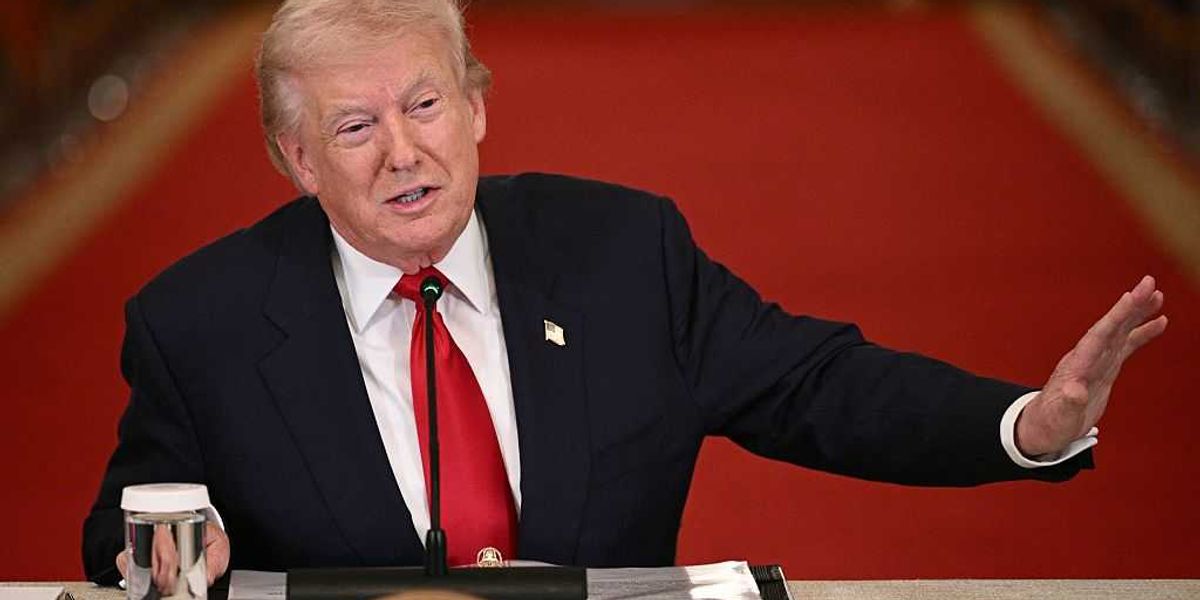
President Donald Trump and members of his administration are attempting to defuse concerns over skyrocketing energy costs. The problem may, however, get a whole lot worse before getting better.
Roughly one-fifth of the world’s oil normally transits the Strait of Hormuz, a stretch of water between Iran and Oman that links the Persian Gulf with the Gulf of Oman.
The latest Middle Eastern conflict, now in its second week, has not only prompted various regional energy giants to temporarily shutter their operations but effectively halted traffic through the strait, as illustrated by Marine Vessel Traffic’s real-time map.
‘The sky is the limit.’
These interruptions to the global energy supply have driven up oil prices to over $100 per barrel of crude.
Prior to the opening bell on Monday morning, the international benchmark Brent crude saw an intraday high of nearly $120 per barrel. After trading at over $104 per barrel after opening, Brent fell closer to $102.
Citing data from over 12 million individual price reports, Patrick De Haan, head of petroleum analysis at the price-tracking service GasBuddy, noted, “The nation’s average price of gasoline has risen 51.1 cents over the last week and stands at $3.45 per gallon.”
“The national average is up 54.1 cents from a month ago and is 41.6 cents per gallon higher than a year ago,” continued De Haan. “The national average price of diesel rose 85.9 cents in the last week and stands at $4.599 per gallon.”
RELATED: Iran promises to cease attacks on neighboring countries as Trump warns it will be ‘hit very hard’
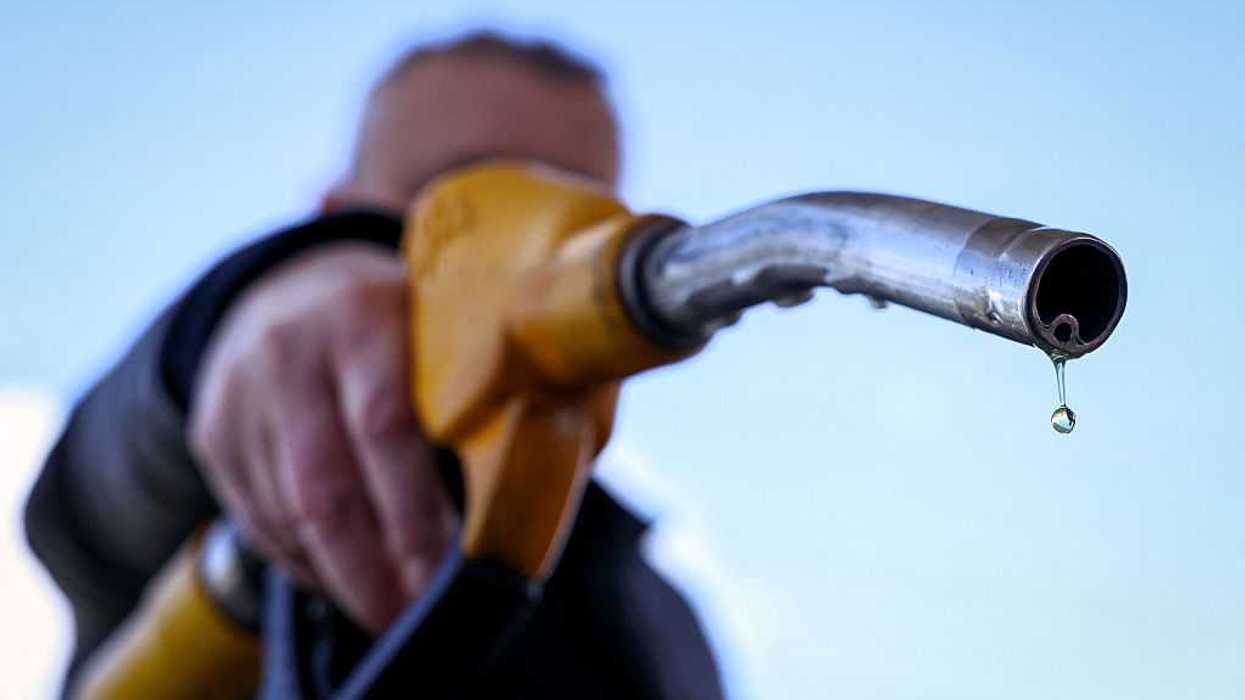 Photo by Alain JOCARD/AFP/Getty Images
De Haan projected the national average for gasoline prices might soon reach $3.65-$3.85 per gallon and suggested that the three remaining states with gas prices below $3 per gallon — Kansas, Oklahoma, and Arizona — won’t be able to maintain that ceiling for long.
When asked on Saturday whether he might consider utilizing America’s Strategic Petroleum Reserve to alleviate some of the pressure at home, Trump told reporters, “We’ve got a lot of oil. Our country has a tremendous amount.” The president then criticized former President Joe Biden’s massive withdrawals from the reserve.
Facing market signals that oil prices would continue rising, the president and his administration attempted the following day to downplay the issue and emphasize the short-lived nature of the cost increase.
Trump noted on Sunday, “Short term oil prices, which will drop rapidly when the destruction of the Iran nuclear threat is over, is a very small price to pay for U.S.A., and World, Safety and Peace.”
“ONLY FOOLS WOULD THINK DIFFERENTLY!” added the president.
Energy Secretary Chris Wright told “Fox News Sunday” that coalition forces are “massively attriting” Iran’s ability to strike oil assets in the Middle East and “that rate of attrition will increase in the coming days” such that “energy will flow soon.”
Wright claimed further that the surging cost of oil and gas “has nothing to do with any shortage of barrels of oil or natural gas. It’s just fear and perception.”
The energy secretary also pushed this notion on CBS News, claiming that the price spikes are resultant of “emotional reactions and fear that this is a long-term war,” adding that “it’s a temporary movement.”
White House press secretary Karoline Leavitt similarly emphasized that the cost increases will be brief, telling Fox News’ “Sunday Morning Futures” that the price rises amount to a “short-term disruption for the long-term gain of taking out the rogue Iranian terrorist regime and finally ending their restriction of the free flow of energy in the Middle East.”
Neil Atkinson, the former head of oil at the International Energy Agency, is among the analysts who believe this disruption has all the makings of a historic crisis.
“Though there are oil stocks around the world, the point is that if this closure of the Strait persists, those oil stocks, if they are deployed, will be depleted and we are going to be in a situation where, with the oil production actually shut in, in Iraq and possibly in Kuwait, and maybe even, in time, in Saudi Arabia, that we are going to be in a crisis the likes of which we have never seen before,” Atkinson told CNBC.
When asked about oil prices, Atkinson said, “There is no precedent for this. The sky is the limit.”
Like Blaze News? Bypass the censors, sign up for our newsletters, and get stories like this direct to your inbox. Sign up here!