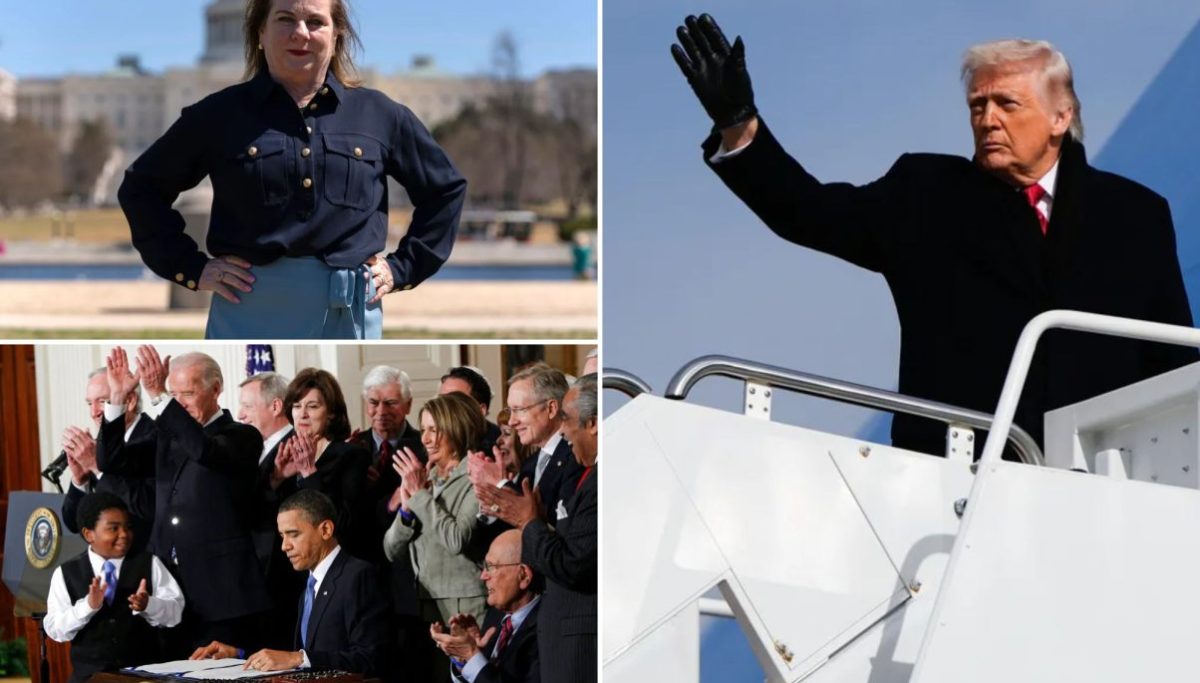
Congressional Republicans weighing whether to extend enhanced Obamacare subsidies face a decision similar to the one that confronted anti-abortion Democrats 15 years ago, when they voted for the law despite the staunch opposition of anti-abortion activists.
Anti-abortion advocates are warning that, if Republicans vote to allow subsidies to go to insurance plans that cover abortions, activists will abandon the party, with massive consequences for the 2026 midterm elections.
OPINION: HOW SHOULD PRO-LIFERS RESPOND TO TRUMP?
Legislative efforts to extend the now-expired enhanced premium subsidies for Obamacare enrollees have ground to a halt in the Senate due to demands from anti-abortion Republicans that any deal must include restrictions on abortion funding.
The expiration of the enhanced subsidies, which were COVID-era measures passed by Democrats in 2021 and that Democrats are now eager to re-up, has created a form of leverage for Republicans on healthcare that they haven’t had since Obamacare was created in the 2010s.
But a number of Republicans in both chambers of Congress have signaled that they are willing to vote to extend the Obamacare subsidies without including language similar to the Hyde Amendment, which prohibits federal abortion funding in appropriations bills except in cases of rape, incest, or life-threatening conditions for the mother.
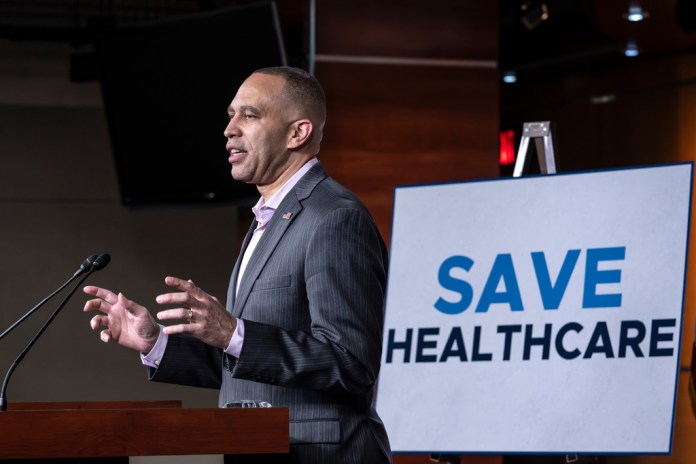
This culminated in 17 Republicans earlier this month siding with Democrats voting in support of House Minority Leader Hakeem Jeffries‘s (D-NY) bill to extend the enhanced Obamacare subsidies for three more years without any changes to how abortion is treated in the plans.
Even President Donald Trump told legislators earlier this month to be “flexible on Hyde” during negotiations on Obamacare and other health policy issues in the coming months so that Republicans can highlight healthcare victories during the 2026 midterm elections.
But Marjorie Dannenfelser, President of Susan B. Anthony Pro-Life America, told the Washington Examiner that the current push from certain Republicans to not demand Hyde protections is reminiscent of the pressure placed on anti-abortion Democrats who stood in the way of the original passage of Obamacare in 2010.
The problem in consideration is that subsidies that go to private health insurance plans offered on the Obamacare exchanges are not subject the Hyde Amendment. The Hyde Amendment only applies to health insurance that the federal government itself runs.
Instead, Obamacare requires a “not less than $1” surcharge to all patients enrolled in an exchange plan that covers abortion, which insurance companies, in theory, are to keep in a separate pool of funds so that federal subsidy money does not pay for abortion procedures.
During the creation of Obamacare, anti-abortion advocates in both parties initially opposed this abortion surcharge system. The resistance of a bloc of anti-abortion Democrats threatened the law’s passage.
But the anti-abortion Democrats eventually relented following reassurances from then-President Barack Obama, who convinced them that the abortion surcharge would be a sufficient protection against federally funded abortion.
Almost all of those anti-abortion Democrats, however, lost their seats to Republicans in the 2010 midterm elections. Dannefelser said the same electoral woes could face Republicans who are not strident on Hyde today.
“They’ll use the fig leaf language, just like the Democrats did back in 2010, and they still are going to have a struggle to get across the finish line in battlegrounds without the support of the pro-life movement,” Dannenfelser said.
TRUMP FIRST YEAR REPORT CARD: A- PROMISE KEEPER OR ‘NIGHTMARE’ FAILURE
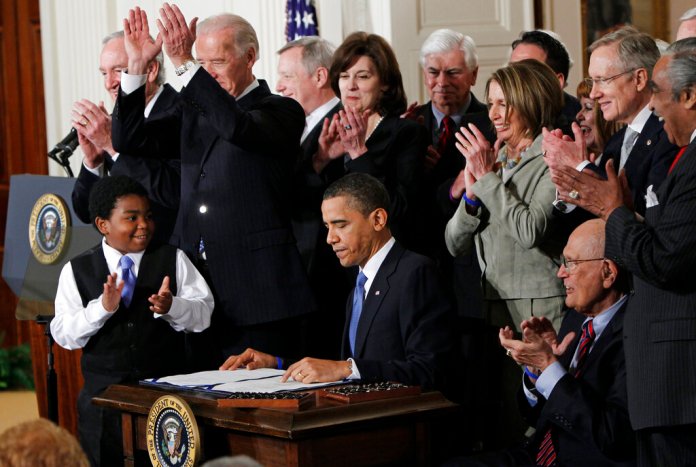
How Obamacare killed the anti-abortion Democrats
The passage of Obamacare effectively led to the end of the anti-abortion faction in the Democratic Party.
Then-Rep. Bart Stupak (D-MI) cosponsored an amendment to the House version of the legislation, the Affordable Health Care for America Act, with Republican Rep. Joseph Pitts of Pennsylvania.
The Stupak-Pitts Amendment mirrored Hyde in that it prohibited federal funds from paying “for any abortion or to cover any part of the costs of any healthcare plan that includes coverage of abortion” except in cases of rape, incest, or life-threatening complications for the mother.
Stupak’s amendment was essential to getting votes from anti-abortion Democrats in the House, but the Senate’s version, Patient Protection and Affordable Care Act, did not contain similar language. Anti-abortion senators were unable to get the Stupak-Pitts or a similar amendment past then-Senate Majority Leader Harry Reid (D-NV).
Eventually, however, Obama, working with Stupak, won the votes of the anti-abortion Democrat bloc in exchange for an executive order reinforcing that the abortion surcharge structure for Obamacare exchange plans was consistent with the principles of Hyde protections.
But the passage of Obamacare with the anti-abortion vote proved fatal for the reelection campaigns of a slew of centrist Democrats, including former House Budget Committee chairman John Spratt (D-SC), who supported the Stupak-Pitts Amendment.
Stupak did not seek reelection. He faced months of intense backlash during this period, first from abortion-rights advocates for supporting Hyde and then from anti-abortionists who felt betrayed by his deal with the president.
Dannenfelser, who led SBA at the time, said her organization was “central to their defeats” through the clawing back of campaign dollars and massive attack ad campaigns. The issue contributed to the “red wave” of Tea Party Republican victories that year.
“If you look at the shift that happened in 2010 after the pro-life Democrats were kicked out of the party, and what Republicans picked up, they picked up the Midwest because they were picking up pro-life moderate Democrats,” Dannenfelser said.
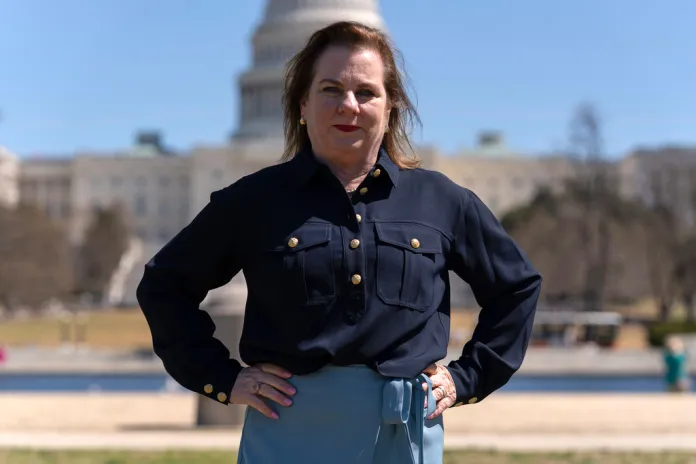
Will GOP members voting for extension face consequences?
Dannenfelser said that, for the 2026 elections, the 17 House Republicans who voted with Democrats to extend the Obamacare subsidies without Hyde “should be very concerned about their winning vote margins, of which the pro-life movement is substantial.”
GUERRILLA-LIKE ‘ICE WATCH’ GROUPS BACKED BY TOP LEFT-WING GRANTMAKERS
But Matt Doyle, a GOP strategist in Ohio, told the Washington Examiner that the representatives who voted with Democrats and the senators working on bipartisan talks have likely made the political decision that backing Obamacare subsidies is less risky than supporting Hyde at all costs.
He argued that voting against the subsidies was tantamount to supporting dramatically increasing the costs of healthcare for their constituents. That, Doyle said, would likely be more damaging at the ballot box than being against Hyde in one narrow vote, especially if the candidate has an otherwise strong anti-abortion record.
“These folks have to survive Republican primaries, and that has to be part of the math,” Doyle said. “I can promise you, these people are doing the political calculus.”
Doyle suggested that most of the Republicans who voted alongside Democrats to extend premium subsidies without Hyde language came from purple districts with a decent group of constituents on either side of the aisle.
But an analysis of 2024 election results conducted by the Washington Examiner found that eight of the 17 House Republicans who supported the subsidies came from deep red districts but have other reasons to support the status quo on Obamacare.
Rep. David Joyce (R-OH) won his seat by more than 27 percentage points in 2024. He and his fellow Ohioan Rep. Max Miller (R-OH), who also voted for the subsidies, represent solidly GOP districts in northeastern Ohio, where the distinguished hospital system, the Cleveland Clinic, is the largest private employer in the region.
In Rep. Maria Elvira Salazar’s (R-FL) Miami district, which she won by 21 percentage points, nearly four in 10 of her constituents are enrolled in Obamacare, according to data from the health policy think tank KFF.
Rep. Monica De La Cruz (R-TX), who also supported the three-year extension, is in a similar situation, with almost 19% of her district enrolled in an Obamacare plan. She won her district last cycle with a 14 percentage point margin.
Only three of the Republican House members who sided with Democrats on the vote came from purple districts where they won with a margin of less than three percentage points. Two of those, Reps. Robert Bresnahan (R-PA) and Ryan Mackenzie (R-PA), represent some of the tightest swing districts in the country in northeastern Pennsylvania.
CRYPTO INDUSTRY SPENT TENS OF MILLIONS INFLUENCING NOW-DELAYED CRYPTOCURRENCY REGULATIONS
Dannenfelser, whose organization funds millions in grassroots organizing for GOP candidates, said that Republicans who voted against Hyde will pay a hefty electoral price come November.
“This is the wrong track, and I think that the only way that’s going to be felt is if it’s felt at the ballot box,” said Dannenfelser. “If you don’t accept the moral position as a Republican, you’re going to be forced to see it as a political mistake.”
Future for the anti-abortion bloc
Doyle said that Republicans who vote in favor of the subsidies without Hyde can defend their choice to their voters without compromising their anti-abortion bona fides. He says candidates can frame their siding with Democrats as a short-term solution to the problem of rising premium costs for Obamacare enrollees while Congress works out a more permanent healthcare deal, which could include Hyde language.
Doyle said that Republican candidates can make the case “subsidies and abortion are two different things.”
Last week, Trump released what the White House called the Great Healthcare Plan, a blueprint for legislation ostensibly to lower healthcare costs across the market rather than focusing on Obamacare premiums. The fact sheet does not reference Hyde protections or abortion funding.
And Trump’s earlier message for legislators to be flexible about Hyde in healthcare negotiations has Dannenfelser and others in the anti-abortion movement concerned that blocking federal funding of abortion may no longer be taken as seriously by Republicans moving forward.
Although Dannenfelser said Senate Majority Leader John Thune (R-SD) and House Speaker Mike Johnson (R-LA) “are bright lights fighting to keep this all from happening,” she says she sees the lack of fervent support for Hyde within some corners of the GOP as a harbinger of a “slippery slope, attrition problem with every pro-life position.”
TRUMP ANNOUNCES NEW TARIFF ON EUROPEAN COUNTRIES THAT OPPOSE GREENLAND ACQUISITION
If that comes to pass, the political future for anti-abortion advocates would be very uncertain.
“Could there be a readjustment, a realignment of parties when pro-lifers are kicked out of the Republican Party? If that happens, of course, there would be,” Dannenfelser said. “Where is their home is the question.”