In a culture that celebrates autonomy and technological progress, IVF is often hailed as a miracle solution to infertility. But beneath the promise lies a deeper moral crisis, one that redefines children as commodities, parenthood as entitlement, and family as optional. What is lost when life is no longer received as a gift, but manufactured on demand?
Oftentimes, the modern fertility industry is portrayed as a beacon of compassion and scientific progress—a way of satisfying the inherent human desire for children.
However, underneath the potent emotional draw of using artificial reproductive technologies to conceive children underscores a serious moral and societal crisis, one that Catholics and pro-life advocates alike are gradually prompted to deal with clarity and charity.
A society that condones the manufacture, selection, and disposal of its youngest members risks undermining its moral tenets.
Notably, the upsurge in vitro fertilisation (IVF) and other artificial reproductive technologies, as well as the escalating numbers of single women choosing to become mothers via these means does not merely reflect a passing medical fad but a showcases a fundamental recalibration of what it means to be a parent, a child, and a family.
In essence, the Catholic Church’s perennial opposition to IVF is not premised on a lack of compassion on infertile couples. Rather, the Church acknowledges infertility as a poignant and often agonizing cross. Nonetheless, as Church documents such as Donum Vitae andDignitas Personae have elucidated, the moral problem lies in the separation of procreation from the conjugal act and the dehumanization of human life as a result of manufacturing new babies in a controlled laboratory setting.
When a child is no longer conceived through the loving and sacrificial self-gift of husband and wife… he or she is no longer a gift… but a commodity that is ‘pre-ordered’ and ‘designed’.
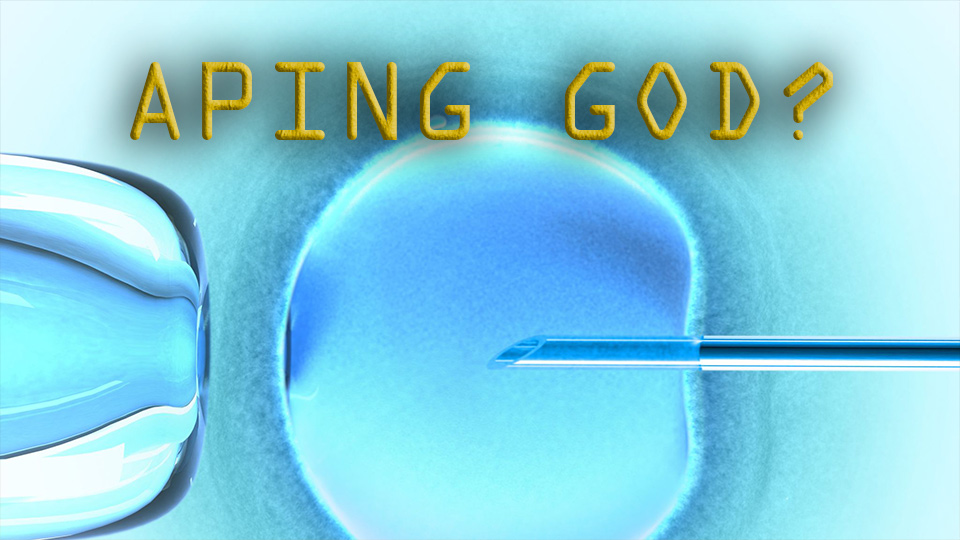
When a child is no longer conceived through the loving and sacrificial self-gift of husband and wife, but instead made in a petri dish, he or she is no longer a gift to be welcomed by parents, but a commodity that is “pre-ordered” and “designed”. Human embryos, each embodying the dignity of a person created in the image of God, are routinely frozen, and/or disposed of at will. Yet the jargon about IVF—“cycles,” “success rates,” “embryo selection”—belies this reality.
Strikingly, the Catechism of the Catholic Church unambiguously declares: “The human being must be respected and treated as a person from the moment of conception” (CCC 2270). Even more disturbing is the process of embryo selection, where some lives are deemed more “viable” or “desirable” than others, in IVF. Such a practice brings an insidious eugenic mindset into modern medicine. When some embryos are selected and others dismissed according to perceived quality, society begins to normalize the notion that human worth is conditional. Sadly, IVF procedures regularly breach the Catholic understanding of the dignity of every human person as a cherished creature of God, regardless of health, ability, or circumstance.
When some embryos are selected and others dismissed according to perceived quality, society begins to normalize the notion that human worth is conditional.
What is more, the increase in single women purposely opting for motherhood through IVF adds further moral complexity to the whole issue at hand. Although mainstream society typically describes such a trend as “female empowerment” or “autonomy”, the Catholic Church welcomes us to consider the welfare of children involved in IVF, and not only adult whims. Every child should be conceived ideally within the stable, loving union of a mother and father, an ideal premised on the natural law and the complementary nature of the sexes.
Bringing a child into the world without a father via IVF is not equivalent to the unfortunate circumstances in which a parent is lost or absent. Consequently, a child “manufactured” out of IVF becomes like a product catering to an adult’s personal desires. Rather, children are not “entitlements” but “gifts” from God, born out of a mutual self-giving love between spouses. When this rudimentary axiom is forgotten, even sincere and genuine desires to have children can lead to unjust outcomes.
Children are not ‘entitlements’ but ‘gifts’ from God, born out of a mutual self-giving love between spouses.
It has been well-documented that the fertility industry both in the United States and functions within a hugely unrestricted global marketplace, usually motivated by profit and without ethical limits. IVF clinics routinely tout success stories while glossing over the emotional, physical, and moral downsides of the procedure. To boot, women seeking IVF have to undergo repeated hormonal treatments and invasive procedures, often with considerable health risks. Simultaneously, hundreds of embryos remain frozen indefinitely, illustrating how human life has been commodified from its nascent stages.
All in all, the debate over IVF is not about denying happiness to infertile couples, but about protecting the dignity of human life and the integrity of the family. A society that condones the manufacture, selection, and disposal of its youngest members risks undermining its moral tenets. Likewise, a culture that prioritises adult autonomy over the best interests and wellbeing of children may imperceptibly regard parenthood as a form of ownership instead of stewardship.
For Catholics, the challenge is to bear witness to a life-affirming vision of childbirth and parenthood, one in which new life is always received and never artificially manufactured; This approach embraces children as gifts instead of treats them as commodities; as well as bases the family unit on the self-sacrificial and life-giving union of man and woman. While the Catholic approach may go against existing cultural norms, it nevertheless remains a vital and life-affirming witness in an era increasingly influenced by technological prowess and individual whims.