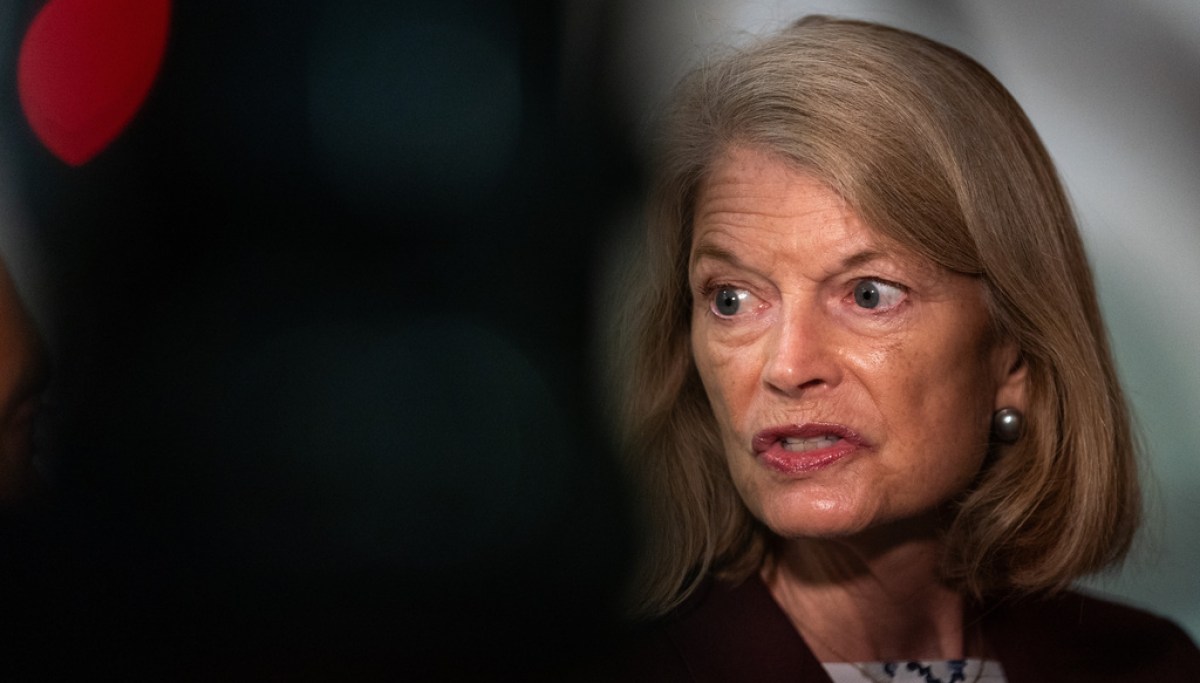
Sen. Lisa Murkowski (R-AK) told Federal Reserve Chairman Jerome Powell after the start of the Justice Department investigation into him that she was glad Powell was speaking out against the inquiry.
Murkowski said that, in a phone call, Powell told her he was planning to be “pushing back very forcefully” against the subpoena.
“It was news to me … that the administration was moving forward with it, so I expressed a little bit of my surprise, and I said, ‘I’m glad you’re going to be speaking up for yourself,’” the Alaska senator recounted.
The call was the first of many that Powell had with lawmakers of both parties in the days following the revelation of the unprecedented step by the DOJ to open an inquiry into the Fed chairman, according to Powell’s recently released schedule for January.
TIM SCOTT SAYS HE DOES ‘NOT BELIEVE’ JEROME POWELL ‘COMMITTED A CRIME’ IN TESTIMONY
But Murkowski was the only Republican who spoke to Powell in those days who was willing to recount some of the specifics about the conversation with the Washington Examiner. Most other GOP lawmakers were mum on what was discussed, or said they didn’t even recall the conversation.
Murkowski said that the call wasn’t out of the ordinary, given her history with Powell.
“It was not the first time that I’ve had calls with Chairman Powell over the years, where I have called him on his personal cell and said, ‘Tell me what’s really going on,’ and he has shared with me,” she told the Washington Examiner.
Powell released a video message on Jan. 11 in which he disclosed that he had received grand jury subpoenas regarding claims he made in Senate testimony about overruns on a construction project at the central bank’s headquarters. He called the accusations from the administration mere “pretexts” to pressure him to lower interest rates, as long sought by President Donald Trump.
The revelation caused major controversy, but most of the Republicans who spoke with him in its immediate aftermath said they didn’t remember having a conversation or declined to comment.
“I have no idea what you’re talking about,” Sen. Shelley Moore Capito (R-WV) said in response to the question. “I didn’t have a phone call.”
“I don’t even remember,” Sen. John Kennedy (R-LA) said when asked about what was discussed on the call.
“I’m not going to talk about what we discussed,” Sen. James Lankford (R-OK) said.
In addition to Murkowski, Capito, Kennedy, and Lankford, Powell’s calendar also listed calls with Sens. Mark Warner (D-VA), Bill Cassidy (R-LA), Mitch McConnell (R-KY), banking committee Chairman Tim Scott (R-SC), and Finance Committee Chairman Mike Crapo (R-ID).
The Washington Examiner reached out to their offices for comment. Crapo’s office noted that he doesn’t generally disclose details of private meetings.
In addition to the senators, Powell also had calls with four members of the House.
One of those calls, on Jan. 15, was to Rep. Frank Lucas (R-OK), who is chairman of the Committee on Science, Space, and Technology and a member of the Financial Services Committee.
“Honestly, I don’t remember. I have ongoing discussions with him about a lot of policy issues, the task force stuff, committee work,” Lucas told the Washington Examiner when asked about what he and Powell discussed on the call.
When pushed about whether he remembers discussing the investigation specifically, Lucas said, “I do not remember discussing that.”
“Honestly, that’s something outside of my purview,” he added. “I provide oversight. I let those legal issues go in other places.”
In addition to Lucas, Powell’s calendar lists calls with Financial Services Committee ranking member Maxine Waters (D-CA), Rep. Steny Hoyer (D-MD), and Rep. Joyce Beatty (D-OH). The Washington Examiner reached out to their offices for comment.
The investigation into Powell came as a major surprise, as was his response to the inquiry. Powell is known for staying far from politics and often goes to great lengths to ensure that any statements or responses to questions about pressure from the White House regarding monetary policy remain neutral and staid.
But he was very direct in casting the investigation as a pressure campaign from President Donald Trump.
“This new threat is not about my testimony last June or about the renovation of the Federal Reserve buildings,” Powell said. “It is not about Congress’s oversight role; the Fed, through testimony and other public disclosures, made every effort to keep Congress informed about the renovation project. Those are pretexts. The threat of criminal charges is a consequence of the Federal Reserve setting interest rates based on our best assessment of what will serve the public, rather than following the preferences of the president.”
At the heart of the controversy are accusations that Powell misled Congress when answering questions about the cost of renovations at the Fed’s headquarters in Washington.
The buildings at the center of the renovation, the Eccles Building and 1951 Constitution Avenue, had an estimated renovation budget of $1.9 billion in 2023. By 2025, though, those costs had ballooned to $2.5 billion. Both are located near the National Mall in Washington.
During the hearing, Powell responded to questions about the added costs, including that the remodeling included opulent touches, such as special dining rooms and luxurious marble.
“I would just point to it, there’s no VIP dining room,” Powell said. “There’s no new marble. We took down the old marble. We’re putting it back up. We’ll have to use new marble where some of the old marble broke. But there’s no new — there are no special elevators. They’re just — they’re old elevators that have been there. There are no new water features. There’s no beehives, and there’s no — and there’s no roof terrace gardens.”
Scott later followed up with Powell in a letter, saying that the only available construction plans for the building appear to contradict some of Powell’s statements.
Since then, Scott, who asked Powell the questions that formed the basis of the investigation, has said he doesn’t think that Powell committed any criminal wrongdoing.
“I’ve found him to be inept at doing his job, but ineptness or being incompetent is not a criminal act,” he said on Fox Business. “I believe what he did was make a gross error in judgment; he was not prepared for that hearing — I do not believe he committed a crime during the hearing.”
But the investigation has created another headache for the Trump administration and for Scott — namely, by complicating the nomination of former Fed governor Kevin Warsh to replace Powell.
Retiring Sen. Thom Tillis (R-NC), a member of the Senate Banking, Housing, and Urban Affairs Committee, vowed to block Trump’s nominees to the Fed and whoever he nominates to replace Powell until the legal matter has concluded.
Also, Powell, this week, was asked about whether he will stay on the board of the central bank after his term as chairman concludes in May. He said he would, adding that he would stay on the Fed’s Board of Governors as long as the investigation is ongoing.
“I have no intention of leaving the board until the investigation is well and truly over with transparency and finality,” Powell told reporters.
POWELL VOWS NOT TO LEAVE FED UNTIL DOJ INVESTIGATION CONCLUDES
Powell’s term on the Fed board does not end until 2028. Traditionally, Fed chairs retire from the board after their term as chair is up, allowing the president to fill the vacancy. Powell’s situation is unusual, though, given the investigation.
Powell said he still has not made up his mind about whether he will remain on the board after the investigation ends.