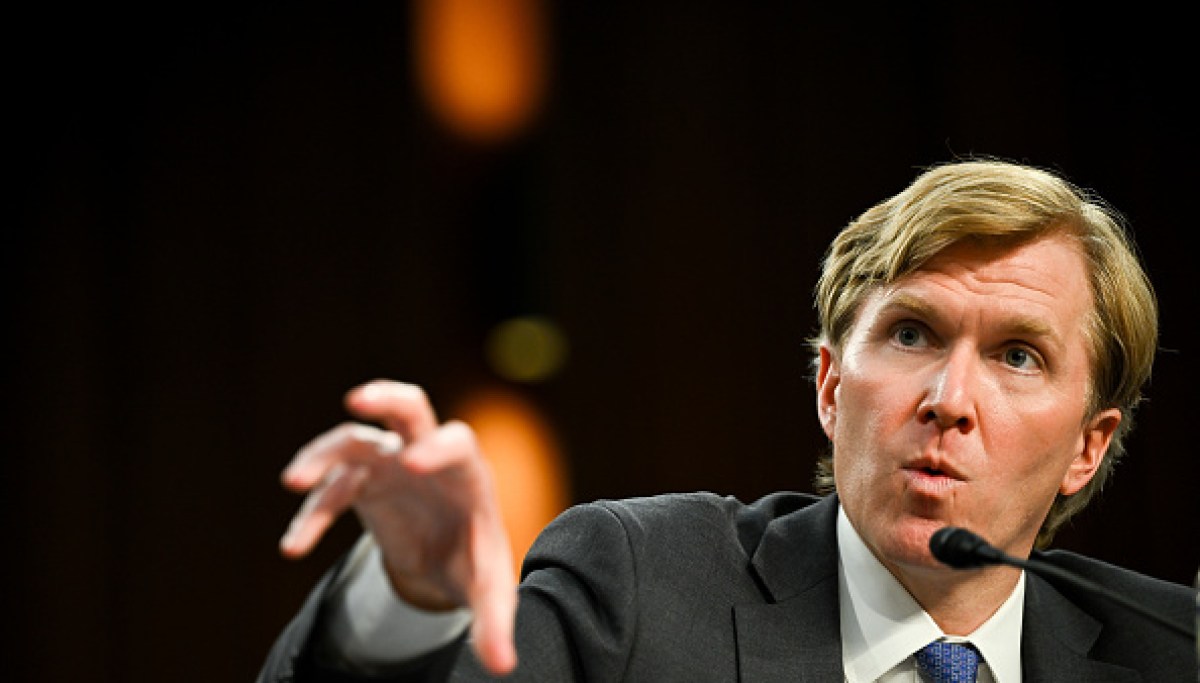
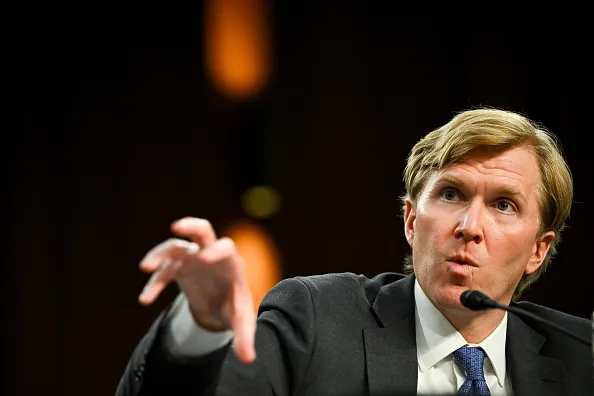
Both Democrat and Republican lawmakers grilled Elbridge Colby, the undersecretary of defense for policy, about how the ongoing war with Iran fits into the administration’s broader national security strategy.
Colby’s appearance in front of the Armed Services Committee on Tuesday morning made him the first Pentagon official to appear in front of Congress since the United States and Israel launched Operation Epic Fury against Iran. His testimony was scheduled before the conflict broke out, and he was there to answer questions about the administration’s national defense strategy.
The administration’s national defense strategy acknowledged the threat posed by Iran but also seemingly downplayed its broader prioritization of the Middle East. Instead, the policy document prioritized securing and defending the homeland and the Western Hemisphere.
“The NDS also says little about our vital interests in the Middle East,” Sen. Roger Wicker (R-MS), the chairman of the committee, said. “This seems out of step with repeated military actions to deal with the ongoing threat of Iran.”
Similarly, Sen. Jack Reed (D-RI), the top Democrat on the committee, said, “I must be blunt at the outset: this NDS is a flawed proposal, and it is now, in many respects, already obsolete.”
Reed added: “Your NDS states ‘no longer will the department be distracted by interventionism, endless wars, regime change, and nation building.’ Yet we have repeatedly intervened, started wars, and sought regime change in the past eight weeks alone, much less the past year.”
Colby pushed back against arguments that the ongoing conflict in the Middle East is contradictory to the president’s foreign policy doctrine.
“I would say America First and Peace Through Strength are served by rolling back, as the military campaign is designed to do, the threats posed by Iran’s very large and growing missile and one-way attack drone program, its navy, and of course ensuring that it doesn’t have a nuclear weapon,” Colby said.
The undersecretary also stood by comments from Secretary of State Marco Rubio made a day earlier, that the U.S. was worried about potentially getting targeted in Iranian retaliation for an Israeli operation, even if they weren’t involved.
“We knew that there was going to be an Israeli action,” Rubio said on Monday. “We knew that that would precipitate an attack against American forces, and we knew that if we didn’t preemptively go after them before they launched those attacks, we would suffer higher casualties.”
HOW THE IRAN CONFLICT WAS LAUNCHED: ‘OPERATION EPIC FURY IS APPROVED. NO ABORTS. GOOD LUCK’
Colby affirmed that Rubio “told the truth,” and said President Donald Trump was the final decision-maker despite Rubio’s comments giving the impression the U.S. carried out the attack on Iran because they knew Iran would retaliate for an Israeli operation even if they didn’t participate.
Sen. Angus King (I-ME) called the “breathtaking implication” of Israel signing the U.S. up for war “very disturbing.”