Order Robert Spencer’s new book, Holy Hell: Islam’s Abuse of Women and the Infidels Who Enable It: HERE.
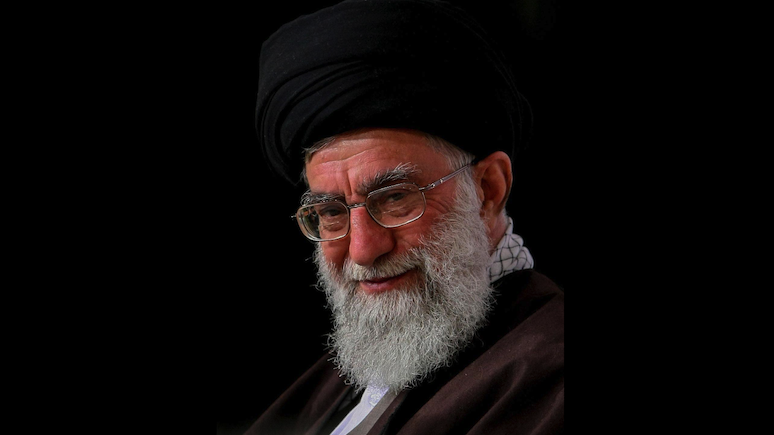
The momentous news has now been confirmed: after 36 years as the supreme leader of the cruel and repressive Islamic regime in Iran, the Ayatollah Ali Khamenei is dead. He was 86 years old when he was killed on Saturday in an Israeli airstrike, and now the fate of the Islamic Republic itself is uncertain. Whether this bloodthirsty regime can even survive Khamenei’s death for any significant period is an open question.
One reason why Khamenei’s death significantly exacerbates the crisis of the Iranian regime is because there is no clear successor at a time when strong, decisive, and universally recognized leadership is required for the Islamic Republic to survive. Axios reported Saturday that Khamenei’s death is “a massive blow to the regime and could accelerate its collapse, which U.S. and Israeli officials have stated as a goal of their operation.” His death “sets off an immediate succession crisis with no clear answer.”
This is because “under Iran’s constitution, a council of clerics is meant to select a new supreme leader — but Israel’s strikes also targeted senior Islamic Revolutionary Guard Corps (IRGC) commanders and political leaders, leaving the regime’s chain of command in disarray. Israeli officials say they assess the Iranian minister of defense and the commander of the IRGC were also among those killed in targeted strikes on Saturday.”
Khamenei was president of Iran from 1981 to 1989, when he succeeded the regime’s founder, the Ayatollah Ruhollah Khomeini, as supreme leader, but the current president, Masoud Pezeshkian, is not a cleric, and thus has no chance to follow Khamenei’s path to the top spot. As The Complete Infidel’s Guide to Iran explains, Khomeini established the Islamic Republic of Iran on the principle that Shi’ite clerics should be the rulers.
This is the concept of velayat-e faqih (guardianship of the jurist), which is based on the example of Muhammad himself. Khomeini argued that the prophet of Islam gave Muslims the pattern for clerical rule: “The Most Noble Messenger (peace and blessings be upon him) headed the executive and administrative institutions of Muslim society. In addition to conveying the revelation and expounding and interpreting the articles of faith and the ordinances and institutions of Islam, he undertook the implementation of law and the establishment of the ordinances of Islam, thereby bringing into being the Islamic state.”
So, following the example of Muhammad, modern-day Shi’ite clerics should rule Iran and make it an Islamic state. The additional problem that Iranian Shi’ite clerics face as they consider the question of who should succeed Khamenei is that the Iranian people are thoroughly sick of Islamic rule.
They’re so sick of it, in fact, that they’re leaving Islam itself. In June 2020, a research organization, the Group for Analyzing and Measuring Attitudes in IRAN (GAMAAN), conducted an anonymous online survey on religious views in Iran after forty years of Islamic rule. Nearly 40,000 Iranians participated.
The survey organizers reported that while Iran is officially over 99% Muslim, only 40% of the Iranians who participated in this anonymous survey said that they were Muslim. After forty years of strict Islamic rule, Iranians were so far from thinking that it was the solution for society’s ills that massive numbers of them didn’t identify as Muslim at all.
So can a regime that its own people hate, based on an ideology that those people increasingly reject, manage a successful transition to a new authoritarian ruler? It is possible, but only with a great deal of bloodshed, and now that the Saturday morning strikes have taken place, and the American military machine is fully operational in Iran, it seems unlikely that President Donald Trump would sit back and watch the Islamic regime massacre even more of its own people without reprisal.
And so these are dark days indeed for the Islamic Republic. Indeed, it would be surprising if the regime does survive. We can only hope for a relatively smooth transition without too much loss of life, although it is doubtful that regime partisans will go gentle into that good night. The Iranian people have already endured more than their share of sorrow, and more is to come. This is, however, their great opportunity to bring joy out of that sorrow, and finally, after 47 years of slavery to an inhuman regime, freedom.