In Focus delivers deeper coverage of the political, cultural, and ideological issues shaping America. Published daily by senior writers and experts, these in-depth pieces go beyond the headlines to give readers the full picture. You can find our full list of In Focus pieces here.
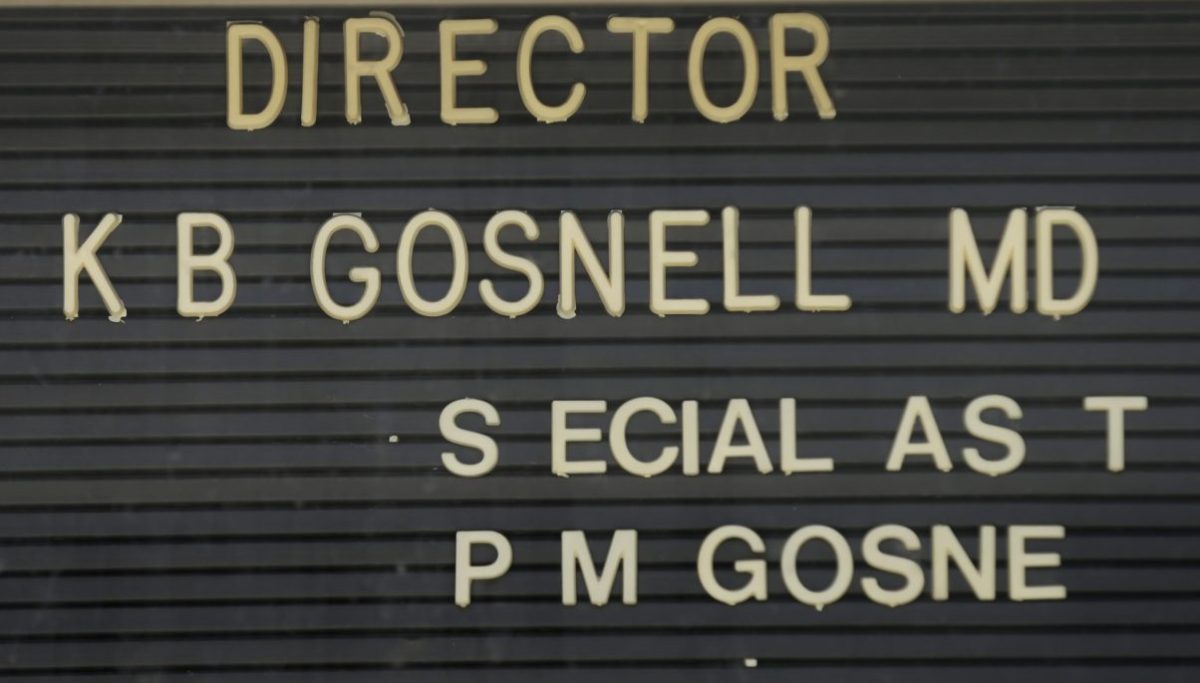
During the 2013 murder trial of Kermit Gosnell, I got a front-row seat in the courthouse for the defense’s closing arguments. I didn’t get to the courthouse in Philadelphia terribly early. I got a prime spot in the press section because most of the news media didn’t want to touch the trial of a late-term abortionist.
“If it bleeds, it leads,” is a colorful, cynical, and generally true description of the media’s attraction to gore. Gosnell’s butcher shop was the exception to that rule. Karnamaya Mongar didn’t die from bleeding after Gosnell aborted her baby, but she did die thanks to Gosnell’s malpractice. And thousands of babies definitely bled after he snipped their necks.
SINS OF OMISSION: THE KERMIT GOSNELL DEFENSES THE PRESS DARED NOT MENTION
Despite the blood and the abuse of power by a longtime doctor and former pillar of the community, neither Gosnell nor his victims led the news.
For years after Gosnell’s license was suspended and his business raided in February 2010, national media ignored the story.
In the end, Gosnell was convicted of aborting some of his patients’ babies after they passed through the mother’s cervix. His defense was that he killed the babies — injecting them with digoxin or snipping their spinal cord with scissors — just before they passed through the cervix.
You can see why the media couldn’t discuss his case.
Gosnell’s record
Kermit Gosnell’s medical practice first appeared in the news media in 1969, when he launched a health clinic for poor Philadelphians. As he put it in one glowing Philadelphia Inquirer profile, “delivering babies and taking out wombs was not my schtick.”
Where did he get the money for this? From running an abortion business in New York City, he said. “He told me he had a ‘gut reaction’ to this work,” the Inquirer columnist wrote, “but did it because the center had to have the proceeds to survive.”
While charging these women to abort their children, Gosnell told a different local columnist that he would never allow the mother of his children to get an abortion.
Gosnell made the news again in 1972 when his clinic was home to a ballyhooed and ultimately gruesome demonstration of third-trimester abortions. This mass abortion featured a new device, “basically plastic razors that were formed into a ball” and covered in gel, which was inserted into a pregnant woman. As Gosnell’s assistant described it: “After several hours of body temperature … the gel would melt, and these 97 things would spring open, supposedly cutting up the fetus, and the fetus would be expelled.”
Most of the mothers in this abortion demonstration developed complications. One ended up in critical condition. The abortions were timed for Mother’s Day.
Gosnell avoided public attention for decades while running his Philly abortion clinic that cut costs by disregarding the sort of standards of care that an actual health-care provider would be expected to follow.
Officials stumbled upon the clinic in 2010 only during a raid for illegal drug purchases by Gosnell. Prosecutors called the case a “complete regulatory collapse.”
Why did no health inspectors ever look inside Gosnell’s abortion business, which reportedly reeked of animal urine, because pets walked around relieving themselves? Why did the hospitals to which Gosnell sent many suffering post-abortive mothers, never call in an investigation?
We can guess: The people in charge in Philadelphia wanted to protect abortion from scrutiny more than they wanted to protect poor mothers from Gosnell.
Eventually Gosnell’s malpractice led to the death of Mongar, a 41-year-old immigrant, who was given excessive pain-killers and anesthesia by untrained staff to deal with the pain of her abortion.
Of course Gosnell didn’t mean to kill Mongar. The hundreds of infants, in contrast, he killed on purpose.
One of Gosnell’s victims, named Baby Boy A by the grand jury, was so big that Gosnell allegedly joked “he could have walked me to the bus station.”
Ashley Baldwin worked at Gosnell’s clinic. She told a Grand Jury that she took part in many abortions where the babies were delivered crying, and then their necks slit. She said about ten babies were delivered (and aborted) big enough that she could have brought them home and cared for them.
The following dialogue between Baldwin and the prosecutor is from the Grand Jury report:
Q. And what happened to those ten babies that came out from their mother, that were big enough that you could put clothes on and take home and take care of, that moved around, what did you see happen to them?
A. He killed them.
Q. Who killed them?
A. Doc.
Q. How did he kill them?
A. He cut the back of the neck.
The Associated Press reported on testimony during the trial: “Unlicensed doctor Steven Massof of Pittsburgh told the grand jury that he used scissors to snip the spines of more than 100 babies born alive. He worked for Gosnell for a few hundred dollars a week. He pleaded guilty to third-degree murder in the deaths of two babies allegedly stabbed by Gosnell while Massof assisted with the abortions….”
In the 2010 raid, “agents found fetal body parts in glass jars and staff refrigerators,” the AP reported.
Gosnell was charged with eight counts of murder. There were hundreds more cases where he probably did the same thing, but these were the cases for which they had evidence.
In the end, he was convicted of involuntary manslaughter for Mongar’s death, and for murdering three babies. He was sentenced to life in prison, and died on March 1.
Not everyone in the media ignored the case, but some very prominent publications did — most notably the Washington Post.
The Post, as a rule, avoids stories that could feed a social conservative narrative or undermine a socially liberal narrative, whether it’s homosexuality, gender ideology, or abortion. It’s not surprising then, that the Post didn’t jump all over the Gosnell story. The extent of the Post’s Gosnell-avoidance, though — and their justification — was astounding.
Philadelphia press reported on Gosnell’s license suspension and the FBI investigation in February 2010. He was arrested and charged in January 2011. His employees were charged later that year, and federal drug charges followed in December. Check the Post’s archives. You won’t find any mention of Gosnell anywhere in 2010 or 2011.
Throughout 2012, there were multiple pre-trial proceedings, and again the Washington Post pretended it wasn’t happening: Zero mentions of Gosnell that year.
Gosnell’s trial began March 18, 2013. For the first three weeks of the trial, as clinic workers such as Baldwin and Manoff testified to the horrors they saw, the Post carried zero stories about the trial. Finally, on April 8, the name Kermit Gosnell appeared in the Washington Post — in an op-ed piece by pro-life conservative commentator Marc Thiessen.
The Post news pages first mentioned Gosnell in the trial’s fourth week, in paragraph 11 of an April 11 article about rising anti-abortion activism. “Antiabortion measures gain momentum in the states,” was the headline, and Gosnell was mentioned only the 11th paragraph, as something of a “conservatives pounce” story.
That day, conservative commentator Mollie Hemingway asked the Post’s health-policy reporter Sarah Kliff why she hadn’t covered the story.
Kliff’s answer: “I cover policy for the Washington Post, not local crime.”
The implication: An abortionist’s mass-murder trial was not parallel to, say the shooting of abortionist George Tiller in Wichita (which of course got blanket coverage from the Post) but was more like some north Philly addict stabbing his drug dealer on the Kensington streets at 2 am.
It wasn’t until April 12 that the Post actually ran a news story about Gosnell.
No other major outlet was as blatant in ignoring the story, but in general, the major outlets were allergic to Gosnell reporting. The reason is simple, and was made clear by Gosnell’s closing argument.
“Every one of those babies died in utero,” defense attorney John McMahon stated.
McMahon told the jury not to consider “whether he was an abortion doctor,” or “is abortion bloody and ugly?” The only relevant question was whether his snipping and injecting happened before or after the babies passed through the cervix.
KERMIT GOSNELL’S DEFENSE: THIS IS JUST ABORTION
“They have no case” regarding Baby A, he said, “because it was killed in utero. Of course Gosnell killed the Baby,” his lawyer said. “That was his job. That was the goal of Dr. Gosnell with [the mother’s] consent: to kill the baby in utero,” the attorney said.
No other reporter besides me quoted this argument, for obvious reasons.
It’s not that they thought Gosnell was a good guy. They didn’t. The problem was that describing Gosnell’s crimes required describing abortion and trying to explain why abortion was any different from murder.