The U.S. Department of Justice and two Washington, D.C., federal judges failed to follow statute and legal precedent by keeping pipe-bomb suspect Brian Cole Jr. behind bars since Dec. 4, an “unjust deprivation of liberty” that can only be corrected by his immediate release, defense lawyers argued to a federal appeals court.
Defense attorney J. Alex Little filed an interlocutory appeal after U.S. Magistrate Judge Matthew Sharbaugh and U.S. District Judge Amir Ali denied Cole release pending trial on charges that he placed two pipe bombs on Capitol Hill on Jan. 5, 2021.
‘At that moment, by operation of statute, the government’s right to hold Cole in custody expired.’
In a 72-page appeal memo and 350-page appendix filed with the U.S. Court of Appeals for the District of Columbia Circuit, Little said the judges violated his client’s rights by failing to hold a required preliminary hearing and then largely ignoring defense evidence that Cole poses no danger to the public.
Federal prosecutors, he wrote, obtained an invalid indictment from the District of Columbia Superior Court on Dec. 29 because they had no intention of presenting evidence at an adversarial preliminary hearing. The federal indictment handed up on Jan. 6 compounded the errors, Little contended, and contained one criminal count with an expired statute of limitations.
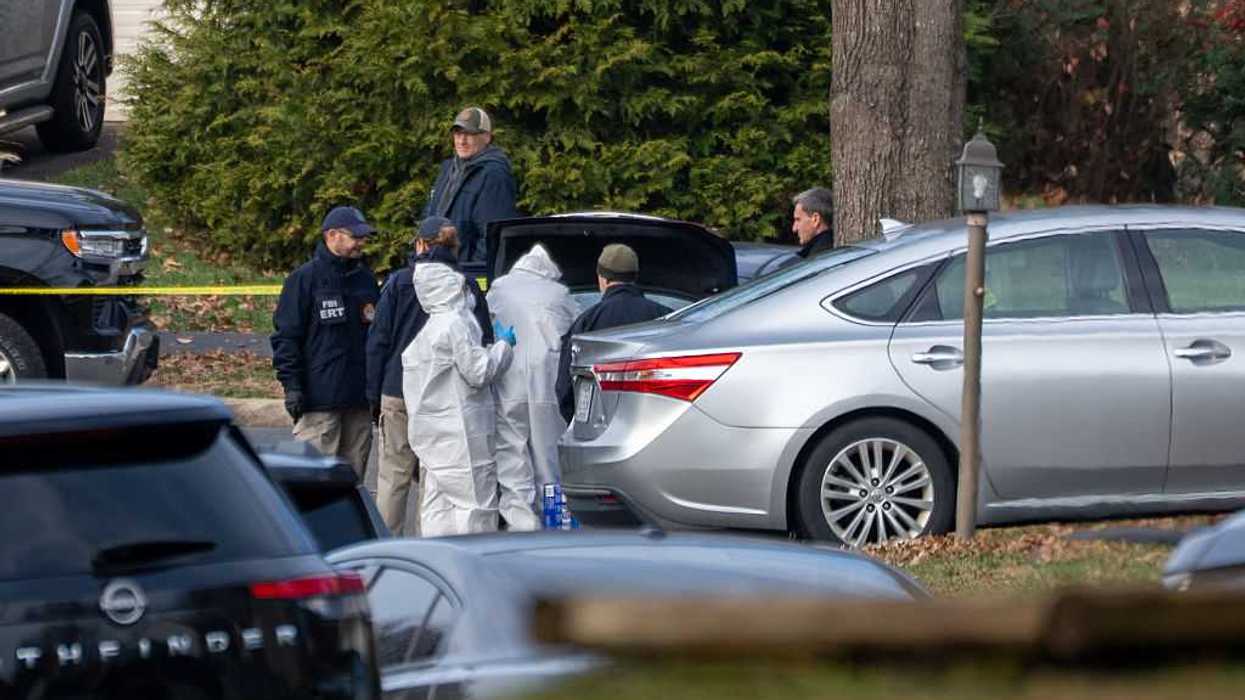 FBI agents and technicians search the 2017 Nissan Sentra belonging to Jan. 6 pipe-bomb suspect Brian Cole Jr. outside his Woodbridge, Virginia, home on Dec. 4, 2025. Photo by Andrew Leyden/Getty Images
“The government — apparently unaware of, or indifferent to, its obligations under [18 U.S. Code] § 3060 and facing the reality that no federal grand jury would be available — raced instead to a D.C. Superior Court grand jury as an end-around to avoid a probable cause hearing,” Little wrote. “Cole objected and requested immediate release.”
Under federal law, criminal defendants must either be charged by grand jury indictment or be given a preliminary hearing within 14 days of their first appearance in court. At a preliminary hearing, defense attorneys are allowed to cross-examine witnesses and challenge government evidence. Cole was arrested Dec. 4 and first appeared in federal court in Washington, D.C., on Dec. 5.
On December 3, the DOJ filed a criminal complaint charging Cole with two counts: transporting an explosive device in interstate commerce with intent to kill, injure, or intimidate, and malicious attempted destruction by means of explosive materials.
No required preliminary hearing
Cole’s attorneys agreed to delay his detention hearing until Dec. 30, but Little said that did not substitute for the mandatory preliminary hearing. The Dec. 29 Superior Court indictment is not a valid substitute for a federal grand jury indictment, Little wrote.
“A Superior Court indictment is not a placeholder, and a subsequent federal indictment cannot reach back in time to satisfy a condition that was not met when it was due,” Little wrote. “This Court should reverse and order Cole’s release.”
Judge Ali held that Cole likely waived the preliminary hearing by not moving to schedule the hearing, according to Little, but said the responsibility was the magistrate’s alone.
RELATED: Brian Cole Jr.’s location just the latest snag in the DOJ’s evolving Jan. 6 pipe-bomb narrative
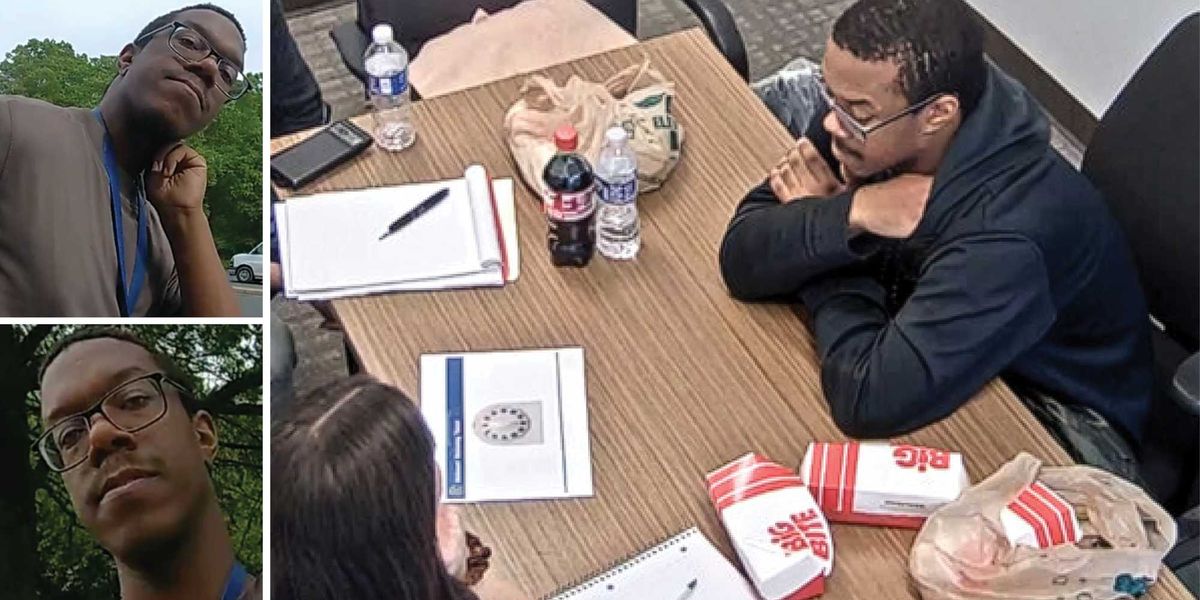
 A federal grand jury charged Brian Cole Jr. with two explosives-related charges, alleging he planted pipe bombs on Capitol Hill on Jan. 5, 2021. FBI, Prince William County photos
“The hearing date is the court’s to set,” Little wrote. “The court has no discretion to omit it. And the defendant bears no responsibility for the court’s compliance with its own mandatory obligation.”
“Even assuming Cole’s right to a preliminary hearing had not been forfeited — and it had not — the government’s attempt to satisfy § 3060(e) through a D.C. Superior Court grand jury indictment was legally invalid,” Little said.
The statutory reference to “an indictment” refers to a federal indictment, Little added.
‘Congress prescribed mandatory discharge as the consequence for the government’s failure.’
“The Superior Court return was not one. The government did not seek the Superior Court indictment because it was the right vehicle,” he wrote. “It sought it because no federal grand jury was available, and it had no intention of presenting evidence at a preliminary hearing.”
The D.C. Superior Court “does not have jurisdiction over federal criminal offenses,” Little wrote. “Congress vested ‘original jurisdiction, exclusive of the courts of the States,’ in the federal district courts ‘of all offenses against the laws of the United States.’”
Magistrate Judge Sharbaugh on Jan. 2 ruled that Cole should remain behind bars until trial. The defense moved to revoke that order, which District Judge Ali refused to do in a ruling on Jan. 16. The defense filed for reconsideration of that decision. On Jan. 29, Judge Ali affirmed the decision to jail Cole until trial, ruling that no release conditions could guarantee the safety of the public.
Little contends that those decisions just compounded a judicial error.
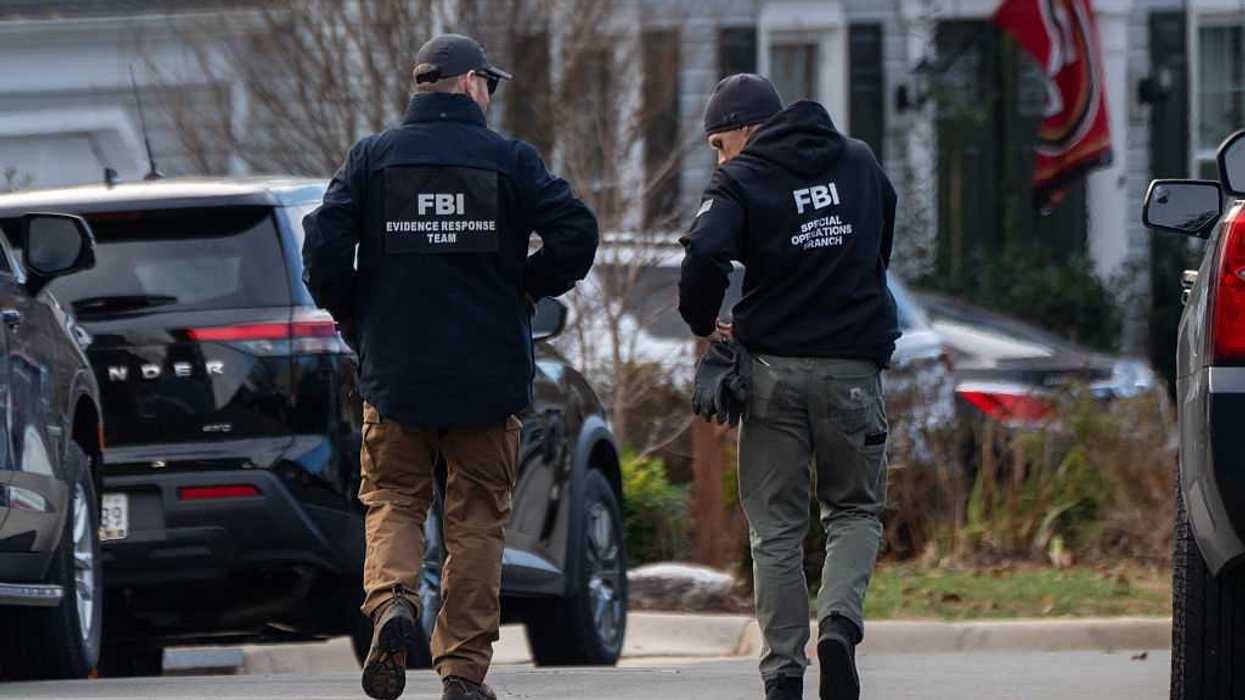 Officials from the FBI’s Evidence Response Team and the Special Operations Branch walk toward the home of Jan. 6 pipe-bomb suspect Brian Cole Jr. in Woodbridge, Virginia, Dec. 4, 2025. Photo by Andrew Leyden/Getty Images
“On December 30, 2025, no valid federal indictment had intervened, no preliminary hearing had been held, and no lawful extraordinary circumstances finding had extended the deadline,” Little wrote. “At that moment, by operation of statute, the government’s right to hold Cole in custody expired.
“Congress prescribed mandatory discharge as the consequence for the government’s failure to comply with the preliminary hearing statute,” he said. “That consequence should be imposed now.”
Short shrift for evidence?
Little said Judge Ali erred by not giving more than a passing glance at defense evidence offered after Judge Sharbaugh’s ruling.
The defense offered evidence refuting the DOJ’s claim that Cole erased his cell phone to destroy evidence in the case and argued that there is no evidence Cole is a danger to the community.
Cole began “wiping” or doing a factory reset on his cell phone in mid-2022. Prosecutors said he wiped the device some 943 times, right up until his arrest. A defense psychologist submitted an affidavit that such behavior is common among those suffering from obsessive-compulsive disorder.
Maryland neuropsychologist David O. Black, who said he diagnosed Cole with autism spectrum disorder, level 1, and obsessive-compulsive disorder, told the court, “Repetitive behavior of this nature is consistent with behavior that is often seen in obsessive-compulsive disorder.”
‘The government cannot have it both ways.’
“Between January 2021 and now, the government cannot point to a single threatening act, a single violent communication, a single extremist affiliation, or a single acquisition of explosive materials,” Little wrote. “It does not claim Cole threatened anyone. It does not claim he posted anything alarming online; indeed, it concedes it found no such posts.”
Little again undermined the DOJ’s argument that Cole spent nearly five years evading the FBI’s massive pipe-bomb investigation.
RELATED: Prosecution of Brian J. Cole Jr. for Jan. 6 pipe bombs raises more questions than it answers
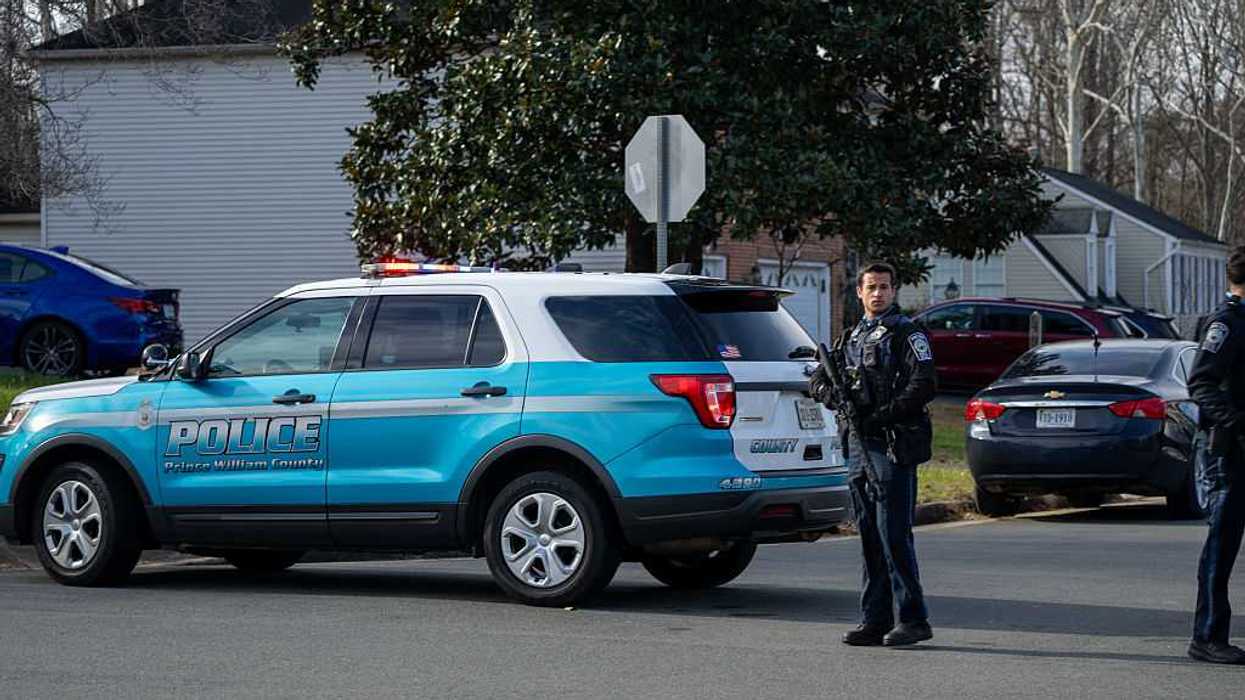 Police block off the road leading to the home of pipe-bomb suspect Brian J. Cole Jr. in Woodbridge, Va., on Dec.4, 2025.Photo by Andrew Leyden/Getty Images
“The government cannot have it both ways,” Little wrote. “Either Cole was a meticulous concealer who carefully covered his tracks for nearly five years, or he was someone who left Home Depot receipts from November 2020 in his vehicle until December 2025, stored pipe components in a closet and his car with their original purchase receipts, and purchased every component using his own credit and debit cards under his own name.”
Cole’s defense team has volunteered that Cole be placed on strict court supervision that includes home detention with GPS monitoring. Cole’s grandmother, Loretta Donnette, volunteered to be responsible for Cole and ensure that he complies with all court release conditions. Her husband, a retired federal law enforcement officer with the Government Services Administration, would be home at all times, she told the court.
“Cole has no criminal history, strong community ties, and a family — including a retired law enforcement officer — prepared to ensure his compliance,” Little said. “Pretrial detention under these circumstances is not ‘the carefully limited exception’ the Constitution requires. It is an unjustified deprivation of liberty that this Court should end.”
The DOJ originally had until March 9 to respond to the defense’s appeal memorandum, but on Monday the Court of Appeals issued an order suspending the appeals calendar for the case. It’s not clear how that will impact timing of a decision from the court.
Like Blaze News? Bypass the censors, sign up for our newsletters, and get stories like this direct to your inbox. Sign up here!