Order Michael Finch’s new book, A Time to Stand: HERE. Prof. Jason Hill calls it “an aesthetic and political tour de force.”
In the 1948 war, members of the Druze minority — who are not Muslims — fought on the side of the Jews. In 1956, the Israeli government made the Druze subject to the draft, the only minority so trusted. The Druze have turned out to be excellent soldiers; some have risen high in the IDF, including four major generals. And now, the Druze who had been living on the Syrian side of the Golan Heights, and had previously supported Syria, have been relying on the IDF for protection and have switched their allegiance to the Jewish state. More on the Druze in the Golan who have now seen that Israel is their most faithful protector, can be found here: “IDF sees sharp rise in enlistment from Druze, Bedouins, and Arab Christians,” by Dana Ben-Shimon, Jerusalem Post, December 2, 2025:
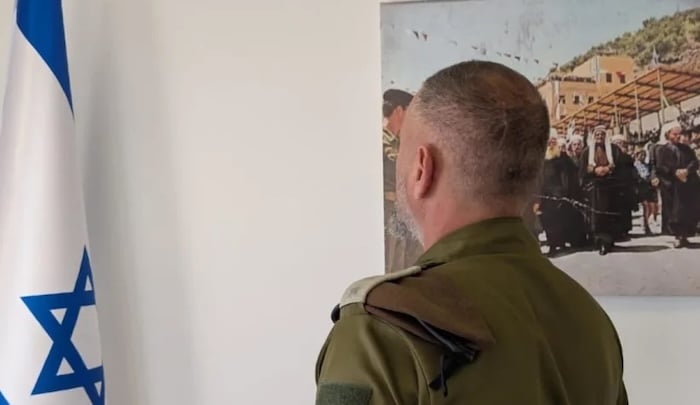
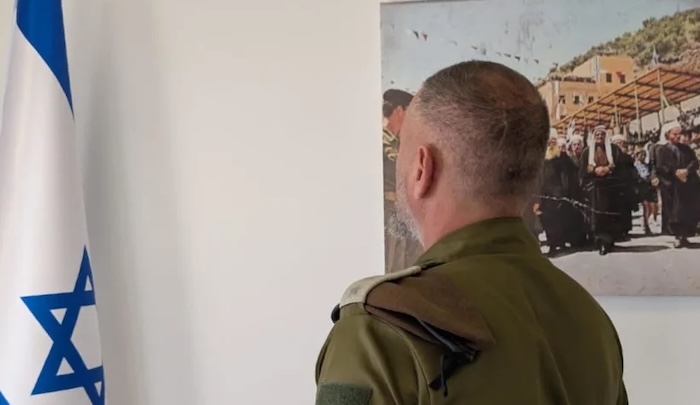
When deadly clashes erupted last July between Bedouin and Druze militias in the southern Syrian city of Sweida, some members of the Druze community living in Israel crossed the border to protect their kin. For Safi Ibrahim, an IDF colonel from the community, the crisis sparked genuine solidarity and brought emotions to the surface. As part of the events, he participated in a military operation in Syria – a mission that became deeply personal for him, fusing his military service with his identity.
For him and other members of Israel’s Druze community, the turmoil across the border has become a catalyst for a broader shift within their community – which includes a dramatic rise in IDF enlistment among Druze who live on the Golan Heights, who are long known for their opposition to Israel. The events in Syria, coupled with the shock of the Hamas massacre on October 7, 2023, are reshaping attitudes toward the Israeli state, the army, and the Druze community’s place within both.
“Protecting lives and defending your people makes you feel you did something really important and valuable. It’s a great pride,” Ibrahim told The Jerusalem Report in a recent interview.
“The Druze residing in Syria believe there is no one who can help them more than the State of Israel,” he said, adding that “there is a very strong awareness among the Druze here and the general leadership [in Israel] about the necessity to support the Syrian Druze. That is meaningful to me as a Druze serving in the IDF.
The Druze in Syria have seen with horror how members of the Syrian army took part in massacres of the Druze in Sweida, and how Israeli attacks on a military headquarters in Damascus and near the presidential palace, by way of warning, have caused the Syrian military to pull out of Sweida.
“In the end, they are our brothers,” said Ibrahim, 45, who hails from the Druze-majority town of Maghar in northern Israel. “It’s true they belong to another country, but they are still our own flesh and blood.”
For Ibrahim – who for the past two years has headed the army’s department for soldiers from Israel’s minority populations – the Suweida clashes and the aftermath of the October 7 attack strengthened the sense of belonging many Druze feel toward Israel and deepened their commitment to serve.
The most surprising change has emerged in the Golan Heights, home to more than 20,000 Druze living in four towns: Majdal Shams, Mas’ade, Buq’ata, and Ein Qiniyye.
For decades, since Israel captured the area in 1967 and annexed two-thirds of the territory in 1981, Golan Druze have largely opposed Israeli sovereignty, identifying with the regime in Syria and keeping their distance from Israeli society.
The Assad regime, led by the Alawites, who are members of an offshoot of Shia Islam, favored the minorities in Syria — the Alawites, the Druze, the Christians, the Kurds — in order to obtain their support against the threat from the more numerous Sunni Arabs. The Druze on the Golan Heights that Israel conquered in the Six-Day War continued to be loyal to Syria, but that began to change when Assad fell and Ahmed al-Sharaa took over. He allowed his troops to join Bedouins in a massacre of Druze in Sweida, and it was Israeli air attacks on targets in Damascus that caused him to order them to pull back.
Unlike the Druze of the Galilee and Carmel – who serve proudly and prominently in the IDF – the Golan’s Druze historically held residency without Israeli citizenship and avoided military service.
That is now shifting, Ibrahim said. IDF enlistment among Golan Druze has surged, with motivation reportedly six times higher than before. He was the first to identify and cultivate the change.
“Shortly after the war began, we saw a willingness among the local population to defend themselves and join the reserves,” the colonel said. “We facilitated training for 150 people, and they continue to serve to this day. Now you see them in IDF uniforms in their villages – something they were reluctant to do previously because they were either shy or afraid.”
A second group of 150 Golan Druze soldiers began basic training this month, and demand continues to climb. Requests for Israeli citizenship are rising as well.
It’s been a spectacular change in the Druze on the Golan, who now openly identify with Israel, support the Jewish state, and are grateful for the IDF becoming the protector of the Druze in Sweida.
Whether the Druze in Syria ultimately push for an autonomous mini-state in Sweida, with its own militia and further protection promised by the IDF, or try to persuade Israel to annex the Druze heartland in Syria, that extends from south of Damascus to the Israeli border, just as it annexed the Golan Heights and the Druze living on it in 1981, is unclear. But what is clear is that the 750,000 Druze who live in Syria no longer feel any loyalty to the Syrian state, but only anger at how al-Sharaa’s military has treated them, and a growing gratitude, and even affection, for the once-feared Israelis.