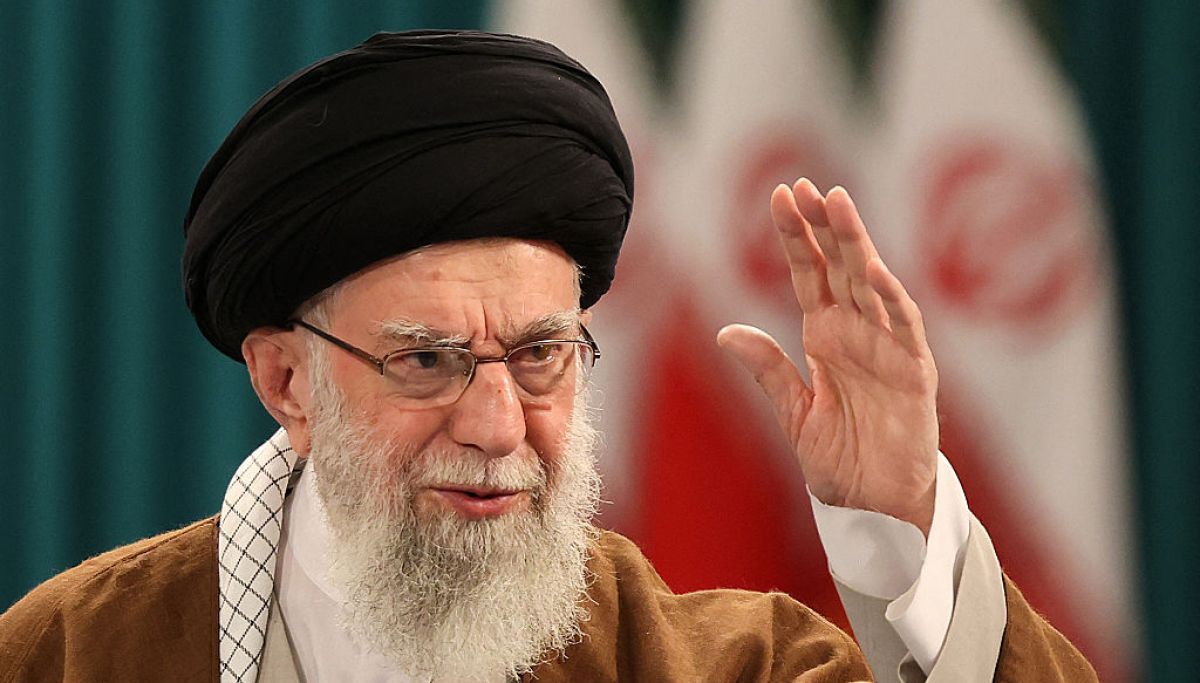
Ali Khamenei, the supreme leader of the Islamic Republic of Iran, has died at the age of 86. Few men in the modern world have spread more death and destruction. The second supreme leader of the theocratic dictatorship, Khamenei succeeded Ayatollah Ruhollah Khomeini in 1989.
Like Vladimir Lenin, Khomeini was the regime’s indispensable man, serving as its chief ideologue and founder. With their shrewd mix of pragmatism and cold cunning, both men gave birth to fiercely ideological governments that spread revolution abroad and repressed dissent at home. But if Khomeini was the Islamic Republic’s Lenin, Khamenei was its Joseph Stalin — the man who, over the course of more than three decades of iron-fisted rule, ensured both the regime’s survival, as well as its expansion.
British historian Paul Johnson once observed that Stalin was “a man born to believe.” The same might be said for Khamenei, who was born in the northern city of Mashdad, on April 19, 1939, the son of a cleric. Of the eight children, three would go on to become religious officials like their father.
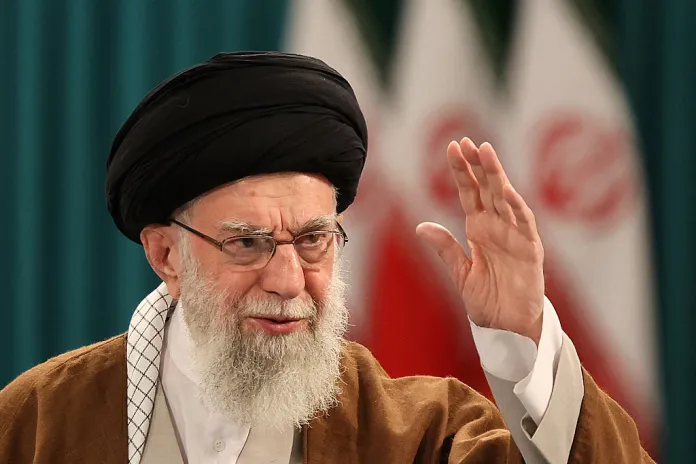
Like Stalin, who himself briefly attended a seminary school, Khamenei came from modest means but would go on to become what the late historian Robert Conquest called a “breaker of nations” — both his own as well as others.
As a young man, Khamenei liked to smoke and enjoyed writing poetry. One of his nephews, the exiled Mahmood Moradkhani, has said that the young Ali was “unremarkable” and “very ordinary.” But while Khamenei may have been an unprepossessing “grey blur,” as Trotsky famously called Stalin, there were certainly portents of the terror to come.
A fervent believer, Khamenei first became a cleric at the age of 11, reportedly even wearing religious garb when playing with other children on the street. Not yet 20, the young man went to Qom in 1958, where he began attending sermons given by the fiery cleric Khomeini.
Khamenei would take part in several protests against Iran’s ruling monarch, Shah Mohammad Reza Pahlavi, and would be imprisoned several times. At one point, the religious ideologue would even share a cell with a committed communist who was part of the then-relatively diverse opposition.
When the Shah exiled Khomeini in 1963, his most devoted followers joined him — including a young Khamenei. Fifteen years later, when Iran became engulfed in protests and chaos, and the Shah abdicated, Khamenei returned to Iran with the older cleric. Indeed, Khamenei would prove indispensable to securing Khomeini’s vision of the Islamic Republic.
Lenin, Johnson noted, always “regarded Stalin as his most reliable troubleshooter.” Ali Khamenei would play a similar role for the elderly cleric. Khamenei was one of a handful of loyalists who served on the Revolutionary Council, one of several entities vying for influence during Iran’s early Islamic Revolution.
As a sign of his emerging power, Khamenei was tasked with leading Friday prayers in Tehran. In June 1981, an opposition group placed a bomb inside a tape recorder given to Khamenei. The explosion severely injured him, taking away the use of his right arm and damaging his vocal cords and lungs. Regrettably, the assassination attempt only bolstered his influence.
Khamenei had previously served as a deputy defense minister and was one of a handful of regime insiders who helped set up the Islamic Revolutionary Guard Corps, an entity that would train and equip anti-Western and anti-Israel terrorist groups throughout the world.
As Khamenei recovered in a hospital bed, his name was put forward as one of four candidates for the then-new post of president. The “election,” of course, was hardly democratic. Iran’s Council of Guardians handpicked the four candidates, and Khamenei won.
In his inaugural address, Khamenei railed against “deviation, liberalism, and American-influenced leftists.” As the Iran analyst Karim Sadjadpour observed, this “set the general rhetorical tone of his presidency.” Khamenei would serve as President of the Islamic Republic for the next ten years, having been reelected in another sham “election” in 1985.
The 1980s were a formative time for the nascent dictatorship. Like the Soviet Union before it, the early years of the Islamic Republic were spent waging war against opponents, from foreign powers like Saddam Hussein’s Iraq to the myriad of domestic groups and individuals opposed to Khomeini’s Islamist rule. And like Lenin, Khomeini would use the threats, both real and imagined, of foreign powers to strengthen his grasp.
As president, Khamenei helped consolidate the regime’s depth and reach, loyally serving Khomeini while simultaneously expanding his own base of support. When the old cleric died in 1989, there were no clear successors. The crafty Speaker of the Islamic Consultative Assembly, Akbar Hashemi Rafsanjani, supported Khamenei for supreme leader, believing he could control him while taking his place as president. Rafsanjani, however, would be outwitted at every turn.
As supreme leader, Khamenei set the trajectory for the next three decades, a vastly longer period of rule than his predecessor. He inherited a country shattered by a devastating war and economically devastated, an international pariah. The state security apparatus and its revolutionary brigands already existed. Under Khamenei, their reach and power would only grow.
From its very founding, the Islamic Republic sought — often successfully, it must be said — to export its fervently anti-Western, Islamist ideology. Like the Soviet Union, it would be both a revolutionary and an imperialist power. As Supreme Leader, Khamenei exerted near-total control, a fact that he successfully obfuscated to an often-naive West. As Sadjadpour observed, “Khamenei has cunningly used Iran’s carefully controlled elected institutions to project the popular legitimacy of the Islamic Republic and deflect accountability away from himself.”
Indeed, “despite the exalted names of the regime’s various oversight institutions,” such as the Guardian Council, Assembly of Experts, Expediency Council and Judiciary, all are “led by individuals who are handpicked or obsequious to him.” Khamenei, Sadjadpour notes, took power from these institutions while simultaneously “heaping accountability on them.”
Put simply: They served him. He variously twisted, sharpened, and created institutions to serve his ends. As supreme leader, his word was final.
Iran has had several presidents since Khamenei took the helm. Hashemi Rafsanjani, Mohmmed Khatami, Mahmoud Ahmadinejad, Ebrahim Raisi, and Masoud Pezeshkian. Some, like Rafsanjani and Ahmadinejad, were formidable with their bases of support. All would be subordinated to Khamenei.
And everywhere that the Islamic Republic and its minions went, death followed.
Under Khamenei, Iran murdered more Americans than Khomeini could have dreamed of. United States troops in Iraq and Afghanistan were targeted by the Islamic Revolutionary Guard Corps and its tentacles. Thousands of Americans were killed and permanently maimed by Iranian-built improvised explosive devices.
Nor has the regime’s terror been confined to the Middle East. For decades, Iranian-backed terrorists have engaged in a multi-continental murder spree, plotting and perpetrating terror in Europe, Asia, Africa, and both American continents.
Khamenei’s greatest victims, however, have been the Iranian people themselves. Like Stalin, a Georgian-born revolutionary who displayed a particular hatred for ethnic minorities living under his rule, Khamenei has continued the regime’s targeting of minorities. Ordinary Iranians have suffered under the oppressive yoke that he built while enriching himself, his family, and his allies. Those who dared to raise their voice, including those dissidents who live outside Iran’s borders, have been systematically slaughtered by one of history’s great tyrants.
A DIFFERENT WAR IN THE MIDDLE EAST
The final tally of Khamenei’s victims may never be known. The misery that he inflicted is incalculable.
Stalin, the historian Johnson observed, “was one of the outstanding monsters that civilization has yet produced.” The same may be said for Khamenei. May the regime that he helped create soon share his fate.
Sean Durns (@SeanDurns) is the deputy commentary editor for the Washington Examiner.