As Iran closes the Strait of Hormuz and attacks oil tankers in the Persian Gulf, take a moment to look at this chart from the U.S. Energy Information Administration (EIA):
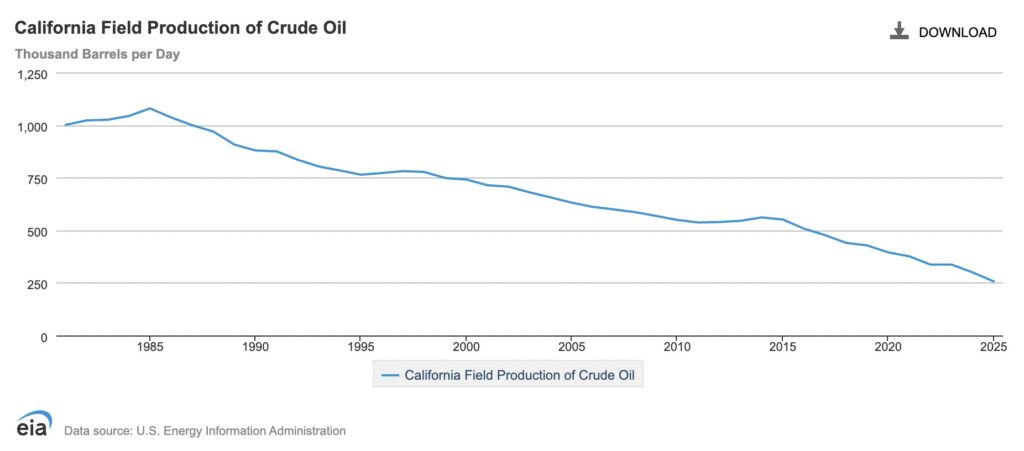
A series of policy choices in the U.S. has caused preventable energy insecurity that worsens the shock from foreign disruptions. The Biden administration temporarily restricted the sale of oil and gas leases on federal lands, implemented new regulations that made it harder to drill oil and refine gasoline, and then dishonestly “increased the pressure on them to boost refining capacity and bring down costs at the pump.”
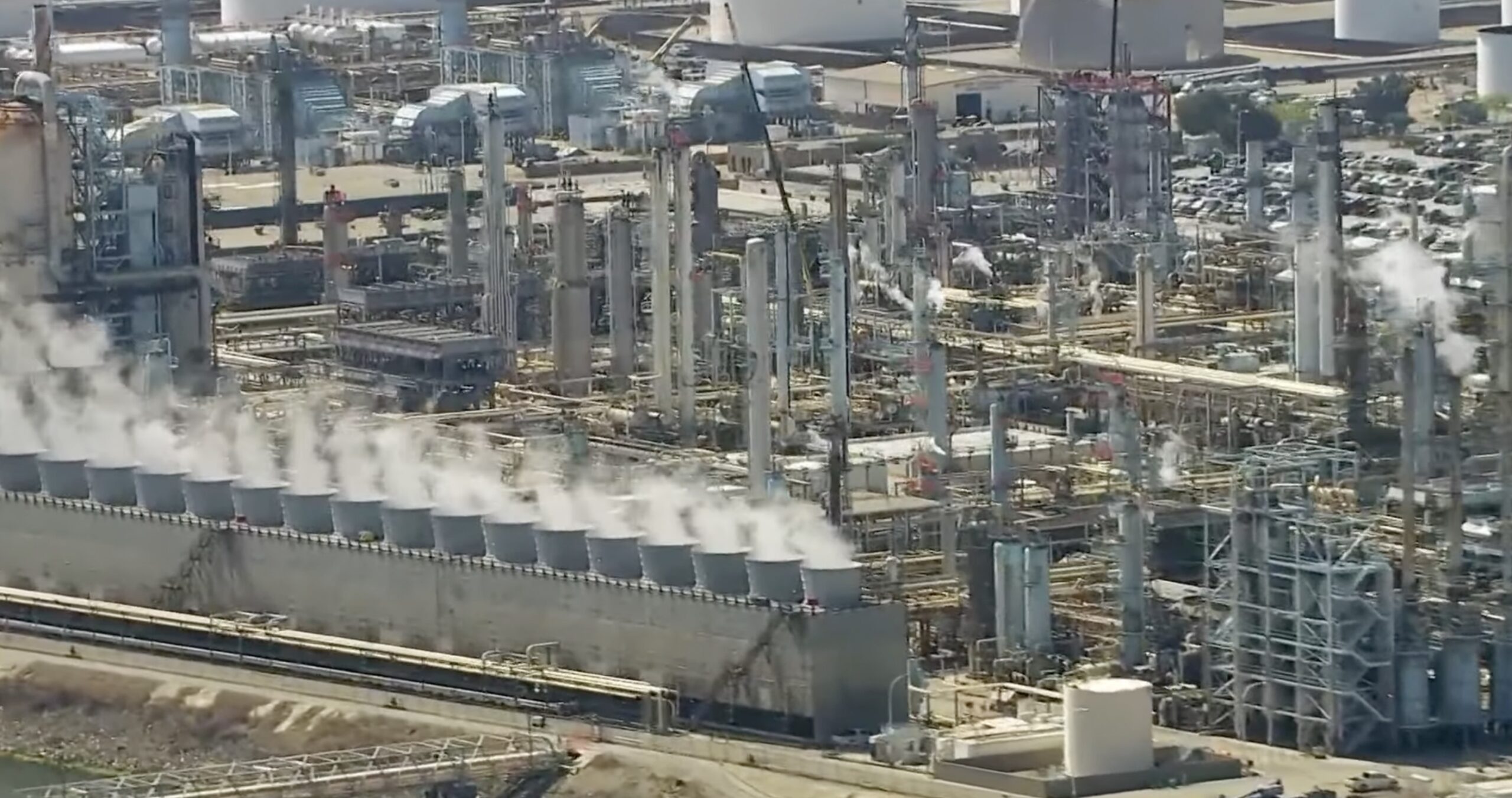
Meanwhile, California has been strangling its oil industry with a regulatory environment that has reduced oil production and driven refineries to close. Here’s a much-discussed current reality, summarized in a recent Bloomberg headline: “Gasoline-Starved California Is Turning to Fuel From the Bahamas.” On social media, a random user made the point with great clarity, despite posting under a handle calling himself a ham sandwich:
See that cluster of black on the California coast? The EIA says that California has about 1.5 billion barrels of proven reserves, though there are credible estimates that the state’s actual reserves are far higher. And most of it isn’t coming out of the ground, or about to.
In a letter to California officials, Chevron warned that new greenhouse gas regulations being considered by the California Air Resources Board would drive the last few refineries out of the state entirely. “The California energy industry’s economic, industrial, environmental, and national security benefits have been the foundation of a healthy, prosperous state and nation,” a Chevron official wrote. “Adversarial policies at local, regional and state levels have eroded that foundation. These proposed regulatory changes threaten to destroy it.”
The loss of more refineries in California would be a logistics threat to the state’s significant military bases, but it would also be devastating to Arizona and Nevada, which get much of their gasoline from their neighbor.
On social media, the US Oil and Gas Association (OGA) has ruthlessly mocked California’s failed governor for his recent attacks on the Trump administration over rising prices at the pump.
Appreciating anyone who makes fun of Gavin Newsom, I got in touch with them. The president of the OGA, Tim Stewart, views the war in Iran as a crisis that will pass, but the madness of California energy policy is a threat to the nation that keeps getting worse. The point, for now, is to see what the bottleneck in the Persian Gulf is teaching us about energy stability. “Smart economies learn from circumstances like this,” he said.
Early in Donald Trump’s second term, national energy policy took a hard turn away from the Biden years. Trump declared a national energy emergency on inauguration day, arguing for the the need to secure “a reliable, diversified, and affordable supply of energy.” Among the elements of the plan: more drilling, expedited regulatory approval for new oil infrastructure, and fewer regulations.
Stewart argues that more domestic oil and gas production isn’t primarily about cheap gas and consumer convenience. “If your energy supplies depend on a foreign choke point,” he said, “that’s a national security issue.”
But domestic production is only part of the solution. “The administration is working to build out a block in the Western Hemisphere that will provide that insurance in the future,” he said. “Between Alberta, Argentina, the U.S., Venezuela and depending on if Brazil and Mexico play nice – that is 40% of the global production today,” providing “a wide mix of heavy, light, sour and sweet crude.”
With that expanded and diversified supply, Stewart said, “the next time something bad happens across the globe, the Western Hemisphere will be truly insulated from price shocks elsewhere.”
The policy of “drill, baby, drill” isn’t going to settle the Iran War price shocks soon, Stewart said, because it’s a slow process to bring on significant new production. And refinery capacity is a bigger near-term problem. “Our refinery infrastructure is still outdated and designed to process the heavier sour crude we used to import from the Middle East, Canada and Venezuela,” he said. “They are slowly in the process of recalibrating to take the light sweet crude we produce here.”
And new refinery capacity should follow, incentivized by the Trump administration’s energy policies. In a positive sign from Texas, investors are planning to build the first new American refinery in fifty years.
Finally, as the administration releases emergency oil reserves, Stewart argues that the Strategic Petroleum Reserve isn’t our real source of energy security. The real safety net oil reserve, he says, is “the one underneath our feet.” We just need to be able to use it.