Iranian officials have rejected an initial proposal from the United States to end the war and have made a counteroffer, while the U.S. has dispatched more troops to the Middle East.
The 15-point proposal from the U.S. was delivered to Iran via Pakistani intermediaries, and Iranian state television said Tehran rejected it. The offer included aspects Iran had already rejected before the war, though this rejection could result in American escalation.
A summary of the U.S. proposal includes opening the Strait of Hormuz, limitations of Iran’s ballistic missile capacity and their range, stripping Iran of its nuclear capabilities and facilities, handing over its enriched uranium to the International Atomic Energy Agency, agreeing to total transparency and independent inspections, stop supporting proxy terrorist groups in the region, and the total decommissioning of the three nuclear facilities the U.S. bombed last year, according to Bloomberg News.
Trump administration officials have long maintained that their war objectives include eliminating Iran’s ballistic missile arsenal and ability to restock, its navy, and to ensure it can never have a nuclear weapon.
Iran has subsequently listed five demands, according to Axios, of the U.S. and Israel that need to be met for it to agree to a ceasefire and ending the war: complete halt of attacks and assassinations, the establishment of mechanisms to ensure the war does not restart, compensation for damages, halting Israeli and U.S. attacks on Hezbollah in Lebanon and pro-Iranian militias in Iraq, and receiving international recognition for Iran’s authority of the Strait of Hormuz.
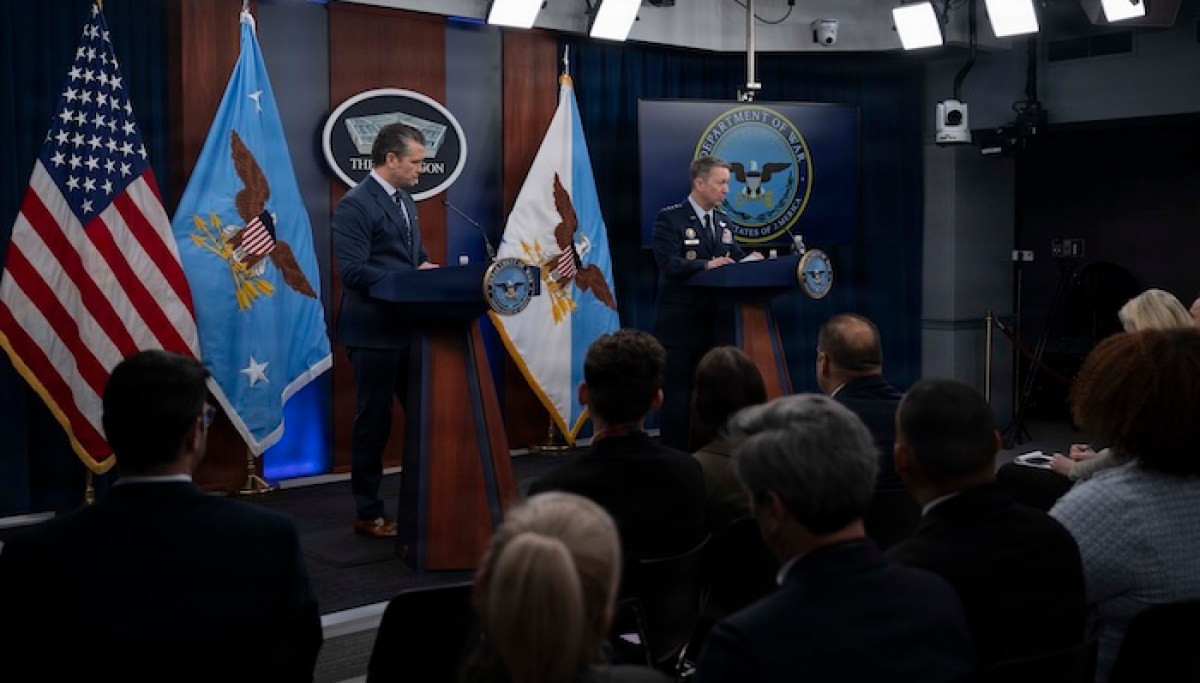
President Donald Trump and his administration have begun publicly discussing ending the war in recent days, though the Pentagon has simultaneously deployed thousands of additional Marines, sailors, and members of the Army’s 82nd Airborne Division to the region.
“We can confirm elements of the 82nd Airborne Division HQs, some division enablers and the 1st BCT will be deploying to the CENTCOM [area of responsibility],” a War Department official told the Washington Examiner on Wednesday.
It is unclear what mission exactly the president could authorize these additional troops for, but the options range from trying to forcibly reopen the Strait of Hormuz, seizing Iran’s strategic islands such as Kharg Island, or capturing the regime’s highly enriched uranium.
CIA Director John Ratcliffe told lawmakers last week that Iran possesses nearly 1,000 pounds of “highly enriched uranium at 60% weapons grade that would be capable of putting together 10 nuclear weapons,” while Director of National Intelligence Tulsi Gabbard said the intelligence community has “high confidence” it knows where the enriched uranium is located.
There are several possible obstacles to negotiations, including whether Israel would be on board with a deal that meets U.S. demands but not its own. Not only that, but Israeli officials have said additional members of Iran’s regime who have or will come to power due to battlefield losses will also be targets, which raises the question of whom they can negotiate with.
HOW DOES ISRAEL FIT IN THE US-IRAN TALKS?
Earlier this week, Trump said he did not want to share who the U.S. is negotiating with because he does not “want him to be killed,” but it is unclear if he meant that the person would be targeted by the Israelis or other Iranians trying to emerge from the power vacuum at the top.
While the U.S. and Israel have been at war with Iran, which has launched hundreds of ballistic missiles and thousands of drones at targets across the Middle East, the U.S. has simultaneously taken fire and fired against Iranian-backed militias in Iraq, while the Israelis have begun limited ground operations in southern Lebanon targeting Hezbollah.