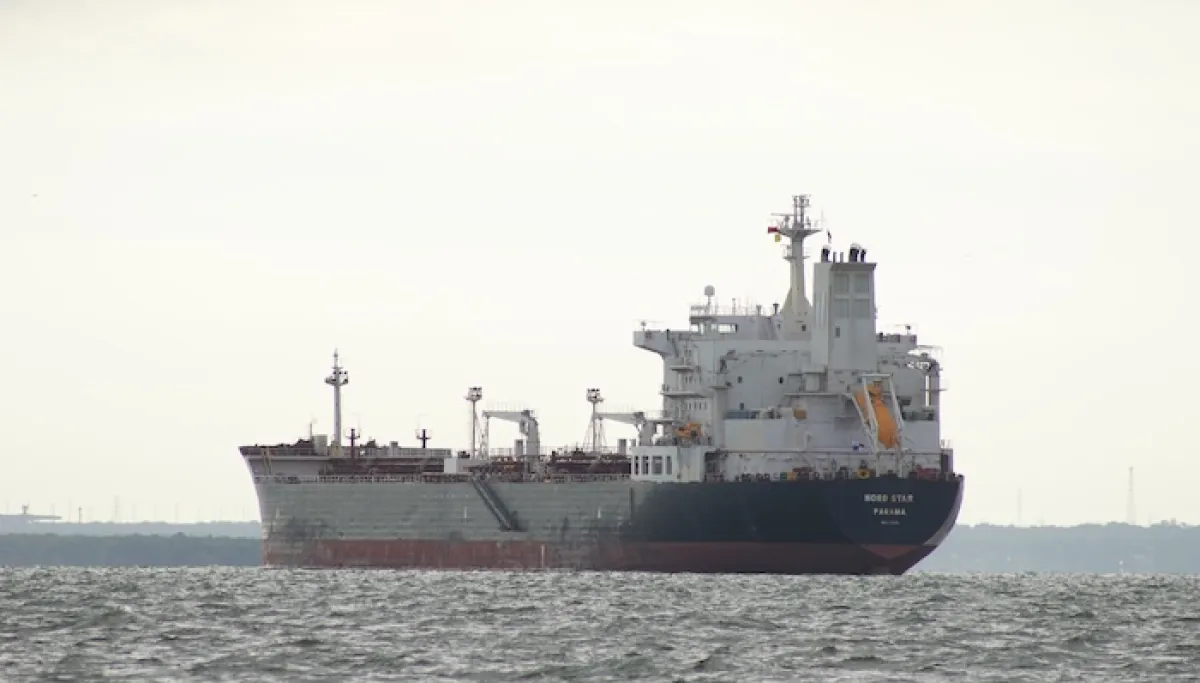
The United States intends to sell sanctioned Venezuelan oil, a senior administration official said on Wednesday morning, as news broke of two U.S. Coast Guard seizures of connected oil tankers.
Several administration officials have said in recent days the South American country’s oil was a defining part of their strategy, which culminated last weekend with the daring U.S. mission to capture former Venezuelan dictator Nicolas Maduro and his wife, Cilia Flores.
US SEIZES SANCTIONED OIL TANKER AFTER TWO-WEEK PURSUIT
“The United States continues to enforce the blockade against all dark fleet vessels illegally transporting Venezuelan oil to finance illicit activity, stealing from the Venezuelan people,” Secretary of War Pete Hegseth said on Wednesday. “Only legitimate and lawful energy commerce—as determined by the U.S.—will be permitted.”
U.S. European Command confirmed that it had successfully seized the Bella 1 oil tanker in the North Atlantic Ocean and U.S. Southern Command announced another seizure, this one of the M/T Sophia, in the Caribbean Sea. U.S. personnel sought to board and seize the Bella 1 tanker previously but it fled before the mission was completed.
The two seizures were the first since Maduro’s arrest, but not the first since the U.S. began turning up its pressure on his regime. President Donald Trump announced the blockade of sanctioned oil in December, and the administration has indicated it intends to use the leverage provided by the blockade to force the Maduro regime, sans Maduro, to comply with its demands.
KAI TRUMP WANTS DEMOCRATS AND REPUBLICANS TO ‘MEET IN THE MIDDLE’
Venezuela has “already felt the consequences of the quarantine that was imposed approximately four weeks ago,” Clayton Seigle, a senior fellow in the Energy Security and Climate Change Program at the Center for Strategic and International Studies (CSIS), told the Washington Examiner.
“It has a crushing effect on Venezuela’s economy and its social safety nets, as they were. So Venezuela needs the oil as its economic lifeblood, as so many oil producing countries do, and without it, even though it had been reduced to very small volumes recently, missing that 900,000- million barrels per day is of paramount importance to its economic process,” he added. “So it can’t be overstated how important resolving that slaughtering of their export flows is for Caracas and for the people of Venezuela.”
Only about 20% of Venezuela’s oil sales are through legal means, and it goes to Chevron, which is the largest private oil producer in Venezuela and is the only U.S. company to maintain a long-standing presence in the country despite the upheaval in recent years, Seigle said. The rest is sanctioned oil, which the regime had been sending to allies in contravention of relevant sanctions and international law.
Previously, Venezuela was among a group of countries, including Russia and Iran, trying to circumvent Western sanctions and regulations through its “shadow fleet,” which is the term given to their strategy of using outdated oil tankers to export oil in violation of Western sanctions, which are directed at them. There are hundreds of these tankers operating at any given time, owned and operated by shady businesses as they try to obfuscate their true intentions.
Both vessels seized by the U.S. on Wednesday were operating in violation of relevant law. The Bella 1 was sanctioned by the U.S. Treasury Department in 2024 for its involvement in the illegal shipment of Iranian oil, while the M/T Sophia was sanctioned last year for its participation in the “shadow fleet.”
Moving forward, the U.S. will effectively dictate sales of sanctioned Venezuelan oil to ensure what is transported to and from Venezuela “will be through legitimate and authorized channels consistent with U.S. law and national security,” the readout continued.
TRUMP FIRST YEAR REPORT CARD: A- PROMISE KEEPER OR ‘NIGHTMARE’ FAILURE
The president has indicated he could approve additional military or law enforcement operations if the Venezuelan government does not comply with the U.S. demands
Later on Wednesday, Secretary of State Marco Rubio acknowledged a three-step plan the U.S. intends to implement in relation to Venezuela. The first is stabilization and ensuring the country does not devolve into chaos, the second involves ensuring American and other Western countries have access to Venezuela, and the third and final step revolves around a “transition.”
The U.S. will take somewhere between 30 million and 50 million barrels of sanctioned Venezuelan oil to sell in the marketplace, President Trump said on Tuesday. The proceeds from the sales will go into U.S.-controlled accounts, and those “funds will be disbursed for the benefit of the American people and the Venezuelan people at the discretion of the U.S. government,” according to a Department of Energy release.
“Instead of the oil being blockaded, as it is right now, we’re gonna let the oil flow … to United States refineries and around the world to bring better oil supplies, but have those sales done by the U.S. government,” Energy Secretary Chris Wright said at Goldman Sachs’ Energy, CleanTech & Utilities Conference.
“We’re going to market the crude coming out of Venezuela, first this backed-up stored oil, and then indefinitely, going forward, we will sell the production that comes out of Venezuela into the marketplace,” Wright added.
US WILL SELL VENEZUELAN OIL ‘INDEFINITELY’ AND REMIT PROCEEDS, WRIGHT SAYS
The Trump administration prioritized the Western Hemisphere in its National Security Strategy and has matched it with its actions over its first year in office, which has included the largest buildup of military forces in the SOUTHCOM area of responsibility in multiple decades. Since the buildup began over the summer, the military has carried out more than two dozen strikes on purported drug smuggling vessels, some of which were linked to Venezuela.
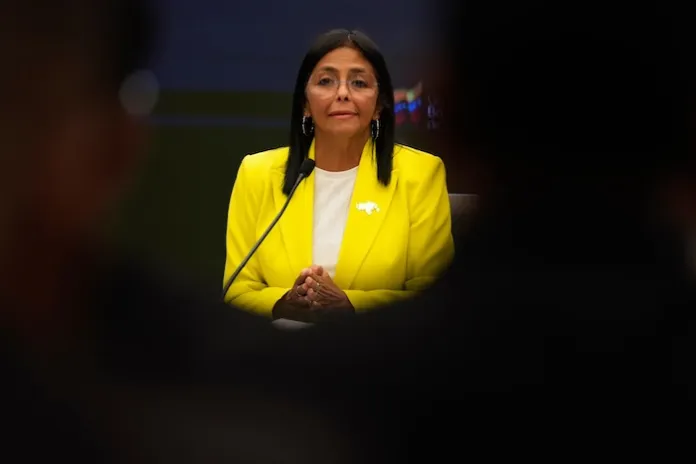
The administration wants to see governments in America’s backyard to be cooperating partners on issues like migration, counter-narcotics, and more. One of the primary impediments in the region was the Maduro regime, though it remains unclear whether his successor, Delcy Rodriguez, will comply with U.S. demands.