When President Donald Trump sent U.S. special forces into Venezuela to capture dictator Nicolás Maduro, it was immediately hailed by some as a brilliant act of international 4-D chess regarding oil/China/immigration and condemned just as quickly by others as a needless excursion into regime-change territory. In those first few hours, cooler heads acknowledged the awesomeness of the raid’s tactical execution, the United States’ supreme prerogative to do whatever it wants to protect its interests, and also the fact that it would take some time for the geopolitical ramifications of the move to play out. With all the hindsight of two months, it appears to have been a total success, although there are still lingering questions — like, how long are we going to “run” Venezuela and what exactly does that look like?
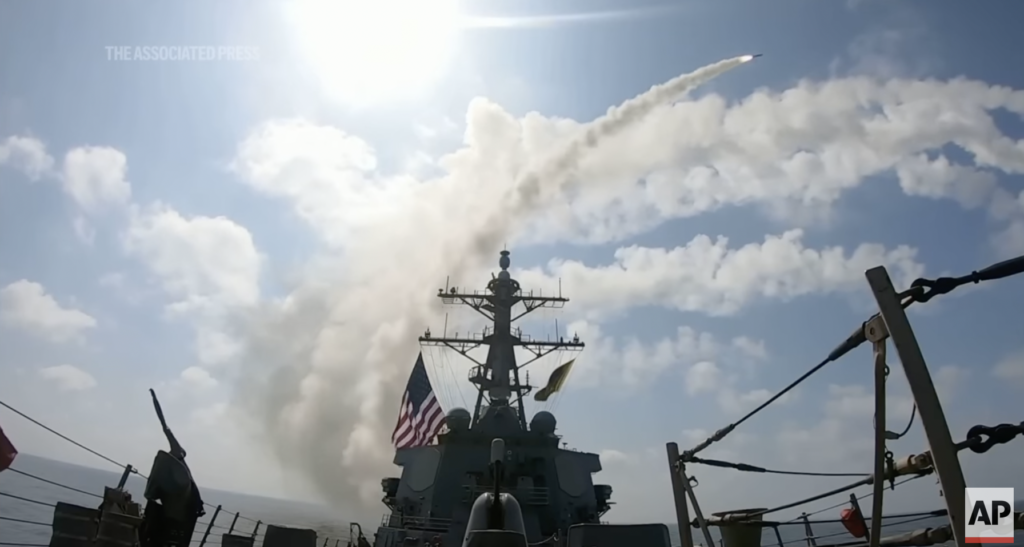
If cautious optimism was warranted then, it’s all the more appropriate now, a little more than 72 hours after the U.S. and Israel launched an air war against Iran. The results of a war with Iran — good or bad! — will almost certainly be more far-reaching than those of the Venezuela raid. The attack on Iran is far more multifaceted and at a much larger scale than the incredibly executed capture of Maduro. And it will take far longer to play out.
If you’re blackpilling, you should remember that Trump has done a lot to earn trust on foreign policy issues and that there are plenty of non-crazy reasons it might be in America’s interest to attack Iran. If you’re already planning the victory parade, you should consider thoughtful concerns about the risks and unpredictability of wars and their unforeseen consequences, especially as we’ve seen them play out in the Middle East before.
No matter who you are, you should pray for victory and protection for American troops, and be thankful that they are committed to protecting your interests at great personal risk.
You should also remember that most people on the internet don’t know what they’re talking about. The difference between a conspiracy theory and a fact may be a few months, but the difference between a good take and a bad one is often less than that.
Personally, I ascribe to the Chris Bray school of thought when it comes to Iran and complex geopolitical issues in general, which is to say, “I’m a week away from beginning to have an opinion.” I don’t know who needs to hear this — actually that’s not quite true, I could think of a handful — but you don’t have to have a fully formed opinion yet, and if you do, you don’t have to share it with the world.
It’s wise, even, to continue evaluating new information and incorporating it into your outlook, and doubly so if you can do it with honesty and humility. A great way to do that is by reading widely. Another is by having real conversations with real people, and the No. 1 rule of conversations — do more listening than talking — holds up. You can do all that and still celebrate the ayatollah getting his just deserts in the meantime.
It’s always hard to tell what information is true in the fog of war. That goes especially for a media environment in which the propagandists formerly known as “mainstream media” do not consider themselves beholden to truthfulness about anything. Videos online are often removed from their factual context or generated by AI. But besides general caution and thoughtfulness, there are some practical ways you can protect yourself from stupid while you monitor the situation.
Be very suspicious of anyone paraphrasing what someone else supposedly said, especially if that “someone else” is the president of the United States. Find the primary source in context and judge it there for yourself. If your media sources are eulogizing the ayatollah’s “easy smile,” you probably shouldn’t trust anything they have to say.
If American corporate media are willing to lie for political reasons, you should expect foreign media to do the same. (Remember the “Ghost of Kyiv”? Here’s looking at you, Kinzinger.) And if our own intelligence apparatus has shown itself capable of orchestrating mass hoaxes or spreading propaganda for self-interested ends, expect nothing better from foreign intel agencies.
Everyone, not just media and intel agencies, has an agenda. And many of those people will use the current thing to advance their agenda however possible. There are a lot of NeverTrumpers eager to see a foreign conflict fail and derail his presidency, the midterms, and the 2028 election. There are a lot of war hawks determined to feed the military industrial complex at any cost. And there are a lot of people who will say anything for clicks and for the payout that often comes with them.
Also remember that Washington, D.C. doesn’t represent the rest of the country. Average Americans are far less likely to be excited about war than the average person in D.C., where defense lobbying topped $190 million last year. They are also substantially less likely to care, in either direction.
Finally, keep in mind that it’s hard to determine the success or failure of a mission unless you know what its objective is. Is the objective to prevent Iran from building nukes? To free the Iranian people from oppression? To preempt strikes against Americans abroad? Some other national security interest that has yet to be enunciated, or some combination of all of the above? Be wary of anyone proclaiming total victory or abject failure before the administration’s objectives are even made clear. (While there are probably tactical reasons for being vague, the administration could help its case with the American people by clarifying what exactly those objectives are.)
It’s good to have frank and fruitful discussions — ideally in real life, on the internet if you must. The right approach is somewhere between a healthy skepticism of everyone and a healthy understanding that there are plenty of people who are smarter than you.
Elle Purnell is the assignment editor at The Federalist. She has appeared on Fox Business and Newsmax, and her work has been featured by RealClearPolitics, the Tampa Bay Times, and the Independent Women’s Forum. She received her B.A. in government with a minor in journalism. Follow her on Twitter @_ellepurnell.