The Trump administration has undertaken a surprising revival of the United States’s relationship with Pakistan, which could reap dividends in relation to each party’s wars in Iran and Afghanistan.
Pakistan declared a state of “open war” with Afghanistan just a week before Operation Epic Fury, beginning two of 2026’s largest wars just days apart. The scale of the wars and intertwined relations of the U.S., Pakistan, Iran, and Afghanistan has naturally led to a convergence in interests and could see some of the biggest payoffs of the Washington-Islamabad relationship so far.
Pakistan’s diplomatic stance was shaped by its genesis amid the chaotic post-World War II decolonization period, beginning with a war with neighboring India and one of the biggest refugee crises of the 20th century. Pakistan’s first Western-educated elite faced three existential issues: irredentist demands from India, irredentist demands from Afghanistan, and the looming specter of Soviet communism. The steps it took to secure itself against these threats have established the template of relationships it’s largely held to the present day.
Beginning with the most immediate threats to its territorial integrity, Pakistan established friendly relations with its non-hostile neighbors, Iran and China, to combat the hostile stances of its other neighbors, Afghanistan and India. Looking for superpower protection and ideological support against communism, Islamabad then fostered close relations with Washington.
The U.S. served as Pakistan’s closest ally for decades. The military support allowed the much smaller Pakistan to fight on near equal terms with neighboring India in several wars across the 20th century. Pakistan was central for U.S. plans to combat the Soviet Union, famously serving as the hub through which to smuggle weapons to the Afghan mujahideen in its struggle against the Soviet Red Army.
Ironically, this same dynamic caused a drastic decline in U.S.-Pakistan relations, as elements of the Pakistani military and intelligence services were believed to be critical backers of the Taliban, even during the U.S.-Afghan war. The U.S. withdrawal from Afghanistan in August 2021 marked the nadir of U.S.-Pakistan relations, with India being viewed as a more viable partner in the region.
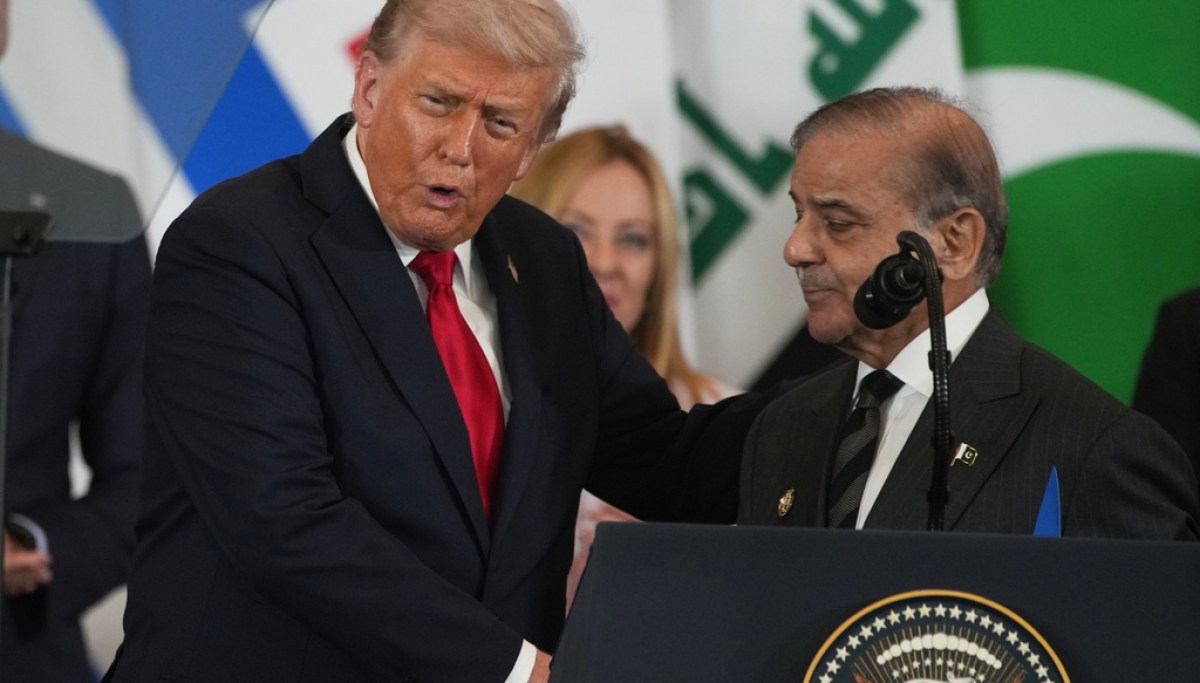
The recovery in the U.S.-Pakistan relationship came with President Donald Trump’s return to power in January 2025. While India sought to minimize the U.S.’s role in brokering peace to end the brief war with Pakistan on May 7-10, 2025, Pakistan won favor by heaping praise on the U.S., and Trump specifically, for that role. This was followed by a diplomatic blitz from Pakistan, including a nomination of Trump for his coveted Nobel Peace Prize and a June 2025 visit by a Pakistani parliamentary delegation to Washington.
During that same month, Pakistani Chief of Army Staff Field Marshal Syed Asim Munir dined with Trump in Washington, becoming the first head of Pakistan’s military to meet with a U.S. president. The meeting left an impact on Trump, who has hailed Munir as his “favorite field marshal” on several public occasions.
Dr. Amina Khan, the director for Afghanistan, Middle East, and Africa at the Institute of Strategic Studies in Islamabad, believes these unique relationships put Pakistan in a unique position to help negotiate an end to the Iran war.
“Pakistan is uniquely positioned to play a constructive mediating role due to its balanced and functional relationships with both Washington and Tehran. Its longstanding security and diplomatic engagement with the United States, combined with deep-rooted geographical, cultural, and religious linkages with Iran, provide Islamabad with rare access and credibility on both sides,” she told the Washington Examiner.
A close relationship with Iran
Iran has enjoyed a uniquely close, if somewhat transactional, relationship with Pakistan, with their mutual strategic interests overriding the ideological whiplash that characterized the 1979 Islamic Revolution in Iran. Part of these ties are religious — Pakistan has the largest number of Shiite Muslims outside of Iran, and hundreds of thousands of Shiite pilgrims cross the border from Pakistan every year to reach holy sites in Iran and Iraq.
The relationship has grown warmer in recent years, however, with Khan arguing that it has gone beyond transactionality.
“The trajectory reflects a relationship that is no longer merely transactional, but increasingly shaped by shared strategic concerns, diplomatic coordination, and a mutual preference for stability over confrontation,” she said of the two’s relationship.
By the time Operation Epic Fury began on Feb. 28, the relationship between Tehran and Islamabad was described by Khan as “cautiously cooperative, politically aligned on key regional issues, and increasingly convergent.”
“While historical irritants, particularly border security concerns, have not entirely disappeared, both countries have demonstrated a clear willingness to move toward pragmatic engagement and coordination,” she said.
Khan identifies the Taliban takeover of Afghanistan in August 2021 as the period when ties began to steadily and substantially improve. The period since the takeover has been “marked by enhanced cooperation in border management, trade, and shared regional priorities such as stability in Afghanistan and de-escalation in the Gulf,” she said.
Though Pakistan has been a mediator in the part of the war between the U.S. and Iran, this hasn’t extended to the other half — the war between Israel and Iran. The view of Israel within Pakistan is particularly negative currently due to the war in Gaza.
“Pakistan has consistently condemned Israeli aggression against Iran, terming such actions a violation of sovereignty and international law, and has expressed solidarity with the Iranian people,” Khan explained.
In fact, within Pakistan, the responsibility for the war is largely laid on Israel, with Khan noting a “strong sentiment” within Pakistani society believing that U.S. foreign policy is “compromised” by Israel. The predominant view is that Israel “dragged Washington” into the war. The war itself is viewed as “deeply destabilizing and undesirable.”
Pakistan pursues little direct trade with Iran due to sanctions from Islamabad’s most important ally, but reaps a tremendous amount from covert trade. Pakistan receives an astonishing 40% of its gasoline from Iran through this black market, with Iran’s struggling economy receiving desperately needed goods and funds in return.
Another big impetus has been the deepening ties between each country’s arch-nemesis: Israel for the U.S. and India for Pakistan.
All of these factors put Pakistan in a unique position to mediate between the U.S. and Iran and make it possibly the only notable country with the ability to do so. Khan noted that Pakistanis view their role with pride and embrace Islamabad’s attempts at peacemaking.
“Efforts aimed at reducing tensions, facilitating dialogue, and preventing a wider regional war are generally seen as responsible and necessary,” she said. “Pakistanis take a degree of pride in their country’s ability to engage multiple stakeholders and push for peaceful solutions, viewing mediation not as neutrality, but as proactive conflict prevention in a highly volatile region.”
Islamabad is already familiar with the role, with the U.S. having long severed diplomatic relations with Iran; since 1992, the Pakistani Embassy has managed Tehran’s affairs in Washington.
Notably, one of Ali Larijani’s last foreign visits before his death was to Islamabad in November 2025.
The war with Afghanistan
In return for its help with Iran, Pakistan could receive vital U.S. support in its war with Afghanistan.
The U.S. is already firmly in Islamabad’s camp in the war, with no love lost for the Taliban, given its belligerence during the longest war in U.S. history. The Pakistani military has bombarded Afghanistan with its arsenal of U.S. weapons and hardware, and benefited from the Taliban’s diplomatic isolation due to threats from the U.S.
Grumbling in Islamabad remains, however, with many Pakistanis believing the U.S. hasn’t done enough to support it in its war with Afghanistan.
Khan said the U.S. has “acknowledged Pakistan’s legitimate security concerns regarding the Tehrik-i-Taliban Pakistan (TTP),” and supported its strikes against Afghanistan.
“However, its role in meaningfully addressing the drivers of Pakistan’s tensions with Afghanistan remains limited and requires greater consistency and strategic focus,” she added.
The U.S. has many more cards to play with Afghanistan. It has the ability to control aid flows to Kabul, flows desperately needed in a country gripped by poverty and hunger since the Taliban takeover. The country has faced a humanitarian disaster since the Taliban retook control in August 2021, with international isolation and mismanagement rife. Roughly one-third of the population, 17 million people, face acute food shortages, according to the United Nations World Food Program.
The U.S. could link this aid flow to an acquiescence to Pakistan’s demands as part of a peace treaty. Before that treaty is reached, the U.S.’s long-lasting presence in Afghanistan almost certainly gives it large swathes of intelligence it could share with Islamabad, if it isn’t already.
Among the methods the U.S. could use to hold the Taliban more accountable, Khan argued, “includes linking diplomatic engagement and any form of economic or political concessions to verifiable counterterrorism action, enhancing intelligence cooperation with regional stakeholders, and supporting mechanisms that ensure border security and monitoring of militant activity.”
TALIBAN RELEASES AMERICAN HELD CAPTIVE FOR OVER A YEAR TO EASE TENSIONS WITH US
The Taliban has already shown recently that it values the American position. The leader of Afghanistan, Sheik Haibatullah Akhundzada, personally ordered the release of one of the last U.S. hostages after over a year in captivity, hoping to improve relations with Washington. A convergence in the demands of Washington and Islamabad could push for Kabul to reach a peace settlement and uphold its part of the bargain.
Khan argued that unless credible enforcement of the Taliban’s obligations in the recent Doha agreement is carried out, “the gap between commitments and realities on the ground will persist—undermining both regional stability and the long-term viability of any peace framework.”