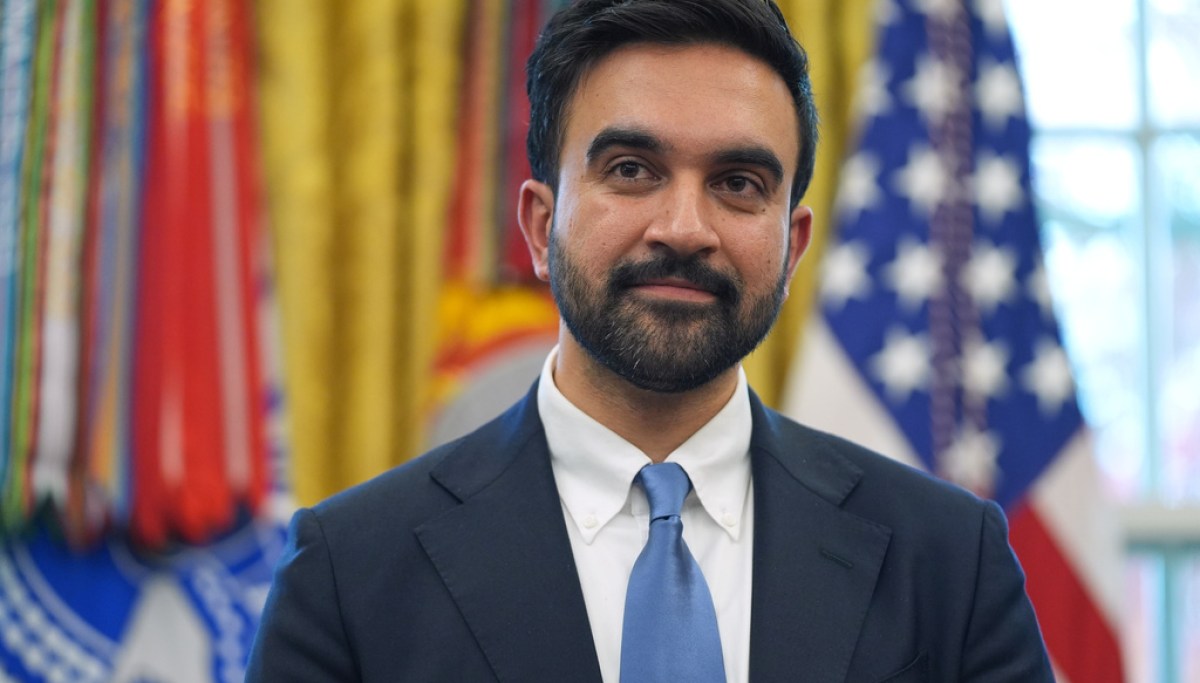
New York Mayor-elect Zohran Mamdani is set to move into public housing, New York City’s Gracie Mansion, next Thursday, when he assumes power on New Year’s Day. This is good for him and his wife, Rama Duwaji, as he is about to make owning private property in the Big Apple a riskier proposition.
Mamdani’s flagship housing policy has been to completely freeze rents on all rent-stabilized housing, which already limits how much landlords can raise rents.
Other aspects of his designs on private property have been taking shape for some time. While it looks like he may not have his commissars expropriate landlords by force, he will use regulation to achieve the same outcome.
Three weeks after being elected, Mamdani appointed Cea Weaver to his housing transition committee. An organizer, Weaver works for Housing Justice for All, a left-leaning organization also known as the Upstate-Downstate Housing Alliance. She also heads the New York State Tenant Bloc.
“Tenants are half the state and a majority in every major city. United, we have the power to reclaim our homes from the stranglehold of the real estate industry,” she said when she founded the bloc earlier this year.
Two months ago, Weaver wrote an essay calling for “policy interventions” to solve “New York’s housing crisis,” which she characterized as “sky-high rents, extraordinary waitlists for affordable housing, and low-quality housing stock.”
Weaver made a good point when she wrote that the city’s housing policies “are defined by acute competition” between two Goliaths. One is “a robust tenant movement that has secured the strongest rent stabilization laws and public-housing tools in the United States,” and the other is “the country’s most powerful real estate lobby, accustomed to shaping our city in its image.”
New York City is indeed known by the most famed skyline in the world, and by its strong-willed real estate developers (one of whom sits in the White House), but also for an aggressive, Marxist tenant movement, which has pushed for rent-control laws that have ironically given Gotham rents that are as high as the city’s skyscrapers.
How do you resolve this tension? Weaver wants to do it by putting regulations and taxes on steroids; then, when landlords cry “no mas” and are “no longer interested in ownership,” the city will step in, buy out their properties, and presto, Gotham becomes the city’s biggest landlord. What’s not to like?
This is how it works: Weaver recognized that the rent freeze could have adverse consequences. She’s not dumb.
“It is true that a rent freeze, without additional intervention, risks deepening the crises within the market,” she wrote in her essay. “Owners of rent-stabilized buildings may choose not to invest in their properties.” That would make an already deteriorating housing stock worse, and Mayor Mamdani would get the blame.
Effective code-enforcement programs would help, and make Mamdani appear to care, especially with the help of a sympathetic media.
“But investment in enforcement is not in itself enough,” Weaver wrote. The city, as the New York Post aptly put it in an editorial, can then pass “laws that cause real-estate values to collapse.”
In Weaver’s world, the city’s “lack of a profit motive” is actually an advantage, not a hindrance to making decisions that make economic sense. Mamdani could then combine that ability to ignore profit and loss with the city’s awesome “taxing power,” and have the Big Apple “intervene” and “acquire rent stabilized housing as a market actor.”
“With its multibillion-dollar capital budget, the city has the capacity to act as a non-speculative market actor: purchasing buildings where the landlord is no longer interested in ownership,” she wrote.
But first, you must pass laws that crush people who own property, precipitate a housing crisis, have prices plunge, and then force these property owners to sell to Big Brother.
“We need to combine the power to enforce housing standards and the power to finance and acquire rental housing — two capacities the city already has,” Weaver wrote.
Of course, none of this will touch the truly rich. Just as Trump decamped to Florida and resides in the District of Columbia, the rich can (and will) abandon New York City. Even if they stay, the city will never buy the buildings where they live.
No, it will be middle-class property owners who will be squeezed until they can no longer make ends meet, and have to sell to the city at bottom prices.
Add to this that part of Mamdani’s housing plan is already to have the city construct 200,000 new, “publicly-subsidized, affordable, union-built, rent-stabilized homes” over the next 10 years.
How will he pay for it? Tax and spend, of course.
“Zohran will allocate $70 billion new capital dollars in the city’s Ten-Year Capital Plan to create new affordable housing, raised on the municipal bond market. This is on top of the about $30 billion the city is already planning to spend,” says the plan. Crush owners with regulation and citizens with taxes.
WHY IS ZOHRAN MAMDANI SURROUNDED BY ANTI-SEMITES
The history of the Soviet Union, Eastern Europe, China, Cuba, etc., tells you that governments make for really bad owners, precisely because they lack the profit motive. Block after block of ugly, decaying buildings was always the legacy of communism.
This means that we might all want to visit Gotham soon if we want to catch one last glimpse of its great skyline. Mamdani becomes mayor next week.