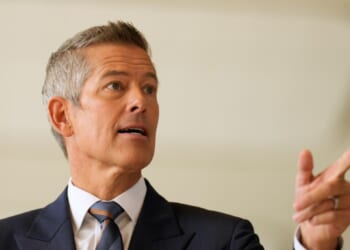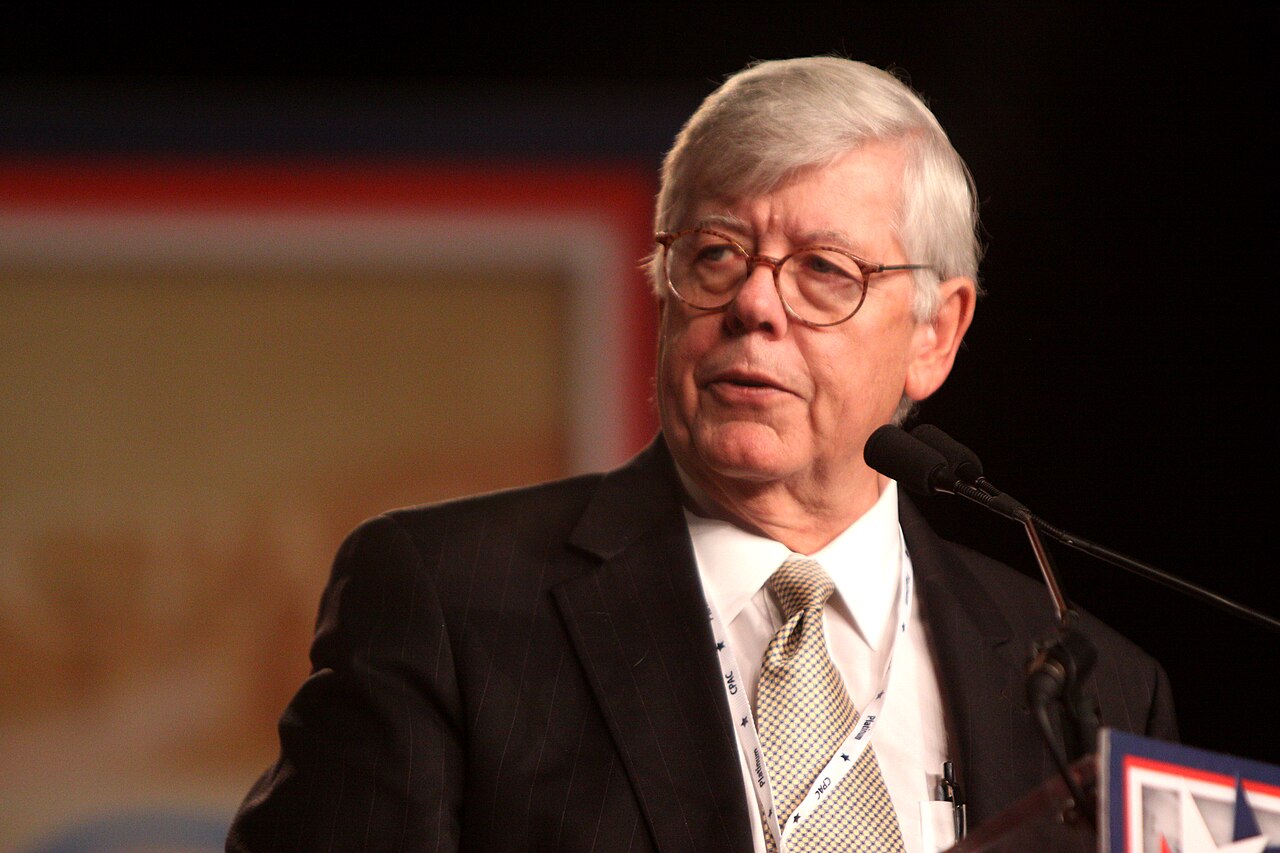
When I first met him, sometime in early 1963, he was lying underneath a Model A Ford, covered with grease and struggling with a cantankerous bolt that didn’t want to let go.
I had just been named Wisconsin state chairman of Young Americans for Freedom (YAF) and was looking for a few able bodies to help me sell conservatism to students in the Badger State when the national office forwarded a letter from one David Keene, a freshman at the University of Wisconsin, saying he’d like to get involved and wondered what YAF had to offer.
I tracked him down in Fort Atkinson, not far from where I was at college, and drove over for a visit. He emerged from the underside of the Model A, we had a long chat, and I collected his $1 dues and signed him up for YAF — and what would turn out to be 60 years in one leadership position after another in the conservative movement.
The emerging Goldwater phenomenon was the hot-ticket item among young conservatives at the time, and I hired Dave during the summer of 1964 to go to all 72 county fairs in Wisconsin to set up booths, pass out Goldwater buttons and campaign literature, and cut his teeth in electoral politics. Compensation, as I recall, would be the grand sum of $50 a week, expenses included. Dave’s capacity for easily making friends served him well that summer and was probably actually enhanced, as kindred souls he’d meet at the fairgrounds would bring him home for dinner, a bed or couch, and breakfast the next morning before he headed off to the next county fair. Some became his friends for life, and several of them would help in his unsuccessful run for the Wisconsin Senate a few years later.
As the 1960s wore on, the Vietnam War intensified, world Communism dominated the news, and its threat to the world became more apparent. Dave and I decided to get an uncensored birds-eye view of the beast and embarked on an extended road trip to the Soviet Bloc. In an attempt to gain badly needed Western currency, the Soviet Union had instituted a policy of granting American tourists visas in return for expenses paid up front in dollars. We bought a car in Germany, crossed the border just as the Prague spring was unfolding, and, armed with the Soviet-issued vouchers for hotels and food, cartons of Marlboros, boxes of Bic pens, and the conviction that nothing could go wrong typical of young men in their 20s, proceeded to drive across Czechoslovakia, Poland, the USSR, Ukraine, and Hungary, winding up in Vienna six weeks and 5,000 miles later.
David’s ability to quickly make friends was on display throughout the trip. A stop in a dreary Soviet restaurant or gas station (they were few and far between), an encounter on a street corner, or even a conversation with an unsuspecting Intourist guide allowed Keene to make another friend and suggest a lunch or dinner, which usually developed into a protracted conversation about America — a favorite topic — life behind the Iron Curtain, or the state of the world, and often lasting well into the night. As we concluded that trip, we complimented each other for not winding up in the Gulag, no doubt at least partially the result of liberally disbursing the Marlboros and Bic pens.
Dave always had a great degree of common sense and political reality, which served him well as he spent his life advising presidential candidates — Reagan, Dole, Bush I and II, Romney — too many senators and congressmen to mention, and cabinet members, and of course navigating the controversies surrounding the organizations he led, including National Young Americans for Freedom, the American Conservative Union, CPAC, and the National Rifle Association.
He succeeded at least in part because of his uncanny sense of political acuity and reality, and his ability to look at complex political problems, unraveling them and coming up with solutions that defied most of the rest of us. He was a dedicated conservative, never an ideologue, was willing to listen and respect opposing views, and sometimes even agreed with the arguments of his adversaries.
The conservative movement was fortunate to have had David Keene as one of its leaders and is better for it. We will miss him greatly.
Alfred Regnery is president and publisher of Republic Book Publishers. He spent nearly 20 years leading Regnery Publishing, publishing 23 New York Times bestsellers. An attorney, he has also served on the U.S. Senate staff and at the Reagan-Meese Justice Department, and he is recognized as a national leader in the conservative movement.