If you thought Hollywood was done trying to corrupt and destroy the legacy of J.R.R. Tolkien, think again.
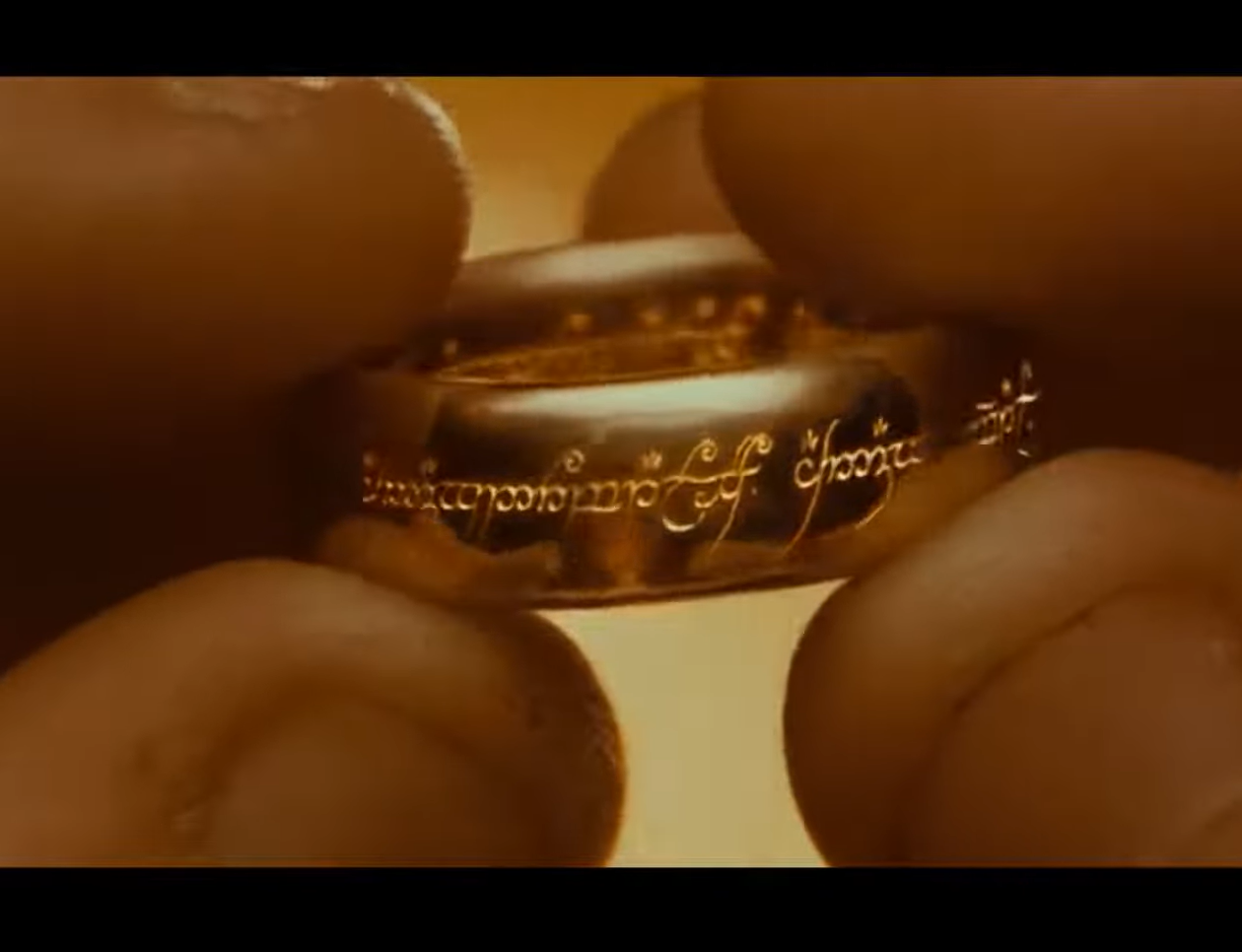
This week Variety reported that Warner Brothers announced yet another Lord Of The Rings spinoff film is in development — and that Stephen Colbert and his son are writing it. Colbert is apparently a “vocal Tolkien fanatic,” and is working on a script derived from the early chapters of The Fellowship of the Ring that didn’t make it into Peter Jackson’s acclaimed trilogy.
In a recent video announcement by Jackson updating fans on the progress of the next film in the franchise, Andy Serkis’ The Hunt for Gollum, Jackson brought in Colbert to talk about this new film, whose working title is, The Lord of the Rings: Shadow of the Past. Colbert said he pitched Jackson on the idea of a film “that could be its own story that could fit into the larger story. Could we make something that was completely faithful to the books while also being completely faithful to the movies that you guys had already made?”
Based on the synopsis of Colbert’s script, the answer is clearly no. What Colbert and his son, screenwriter Peter McGee, have come up with is at best a profound misrepresentation of Tolkien’s work and at worst a deliberate distortion of it.
Here’s the synopsis: “Fourteen years after the passing of Frodo — Sam, Merry, and Pippin set out to retrace the first steps of their adventure. Meanwhile, Sam’s daughter, Elanor, has discovered a long-buried secret and is determined to uncover why the War of the Ring was very nearly lost before it even began.”
Colbert might be a self-proclaimed Tolkien “fanatic,” but any true fan or student of Tolkien will immediately see the problems with this plot. First off, Frodo had no “passing.” He never died. As the ringbearer, he was allowed to depart from the Grey Havens for Valinor, the Undying Lands in the West, with Bilbo and Gandalf and the Elves. One of the last scenes of The Return of The King is Sam and Merry and Pippin riding with Frodo to the Grey Havens, to say farewell to Bilbo and Gandalf. When Sam realizes that Frodo will also be boarding the ship and leaving Middle-Earth forever, he says with tears in his eyes, “I thought you were going to enjoy the Shire, too, for years and years, after all you have done.”
Frodo’s answer speaks to Tolkien’s profound moral vision — and specifically to what Frodo and Sam endured for the sake of their beloved Shire. “So I thought too, once,” Frodo says. “But I have been too deeply hurt, Sam. I tried to save the Shire, and it has been saved, but not for me. It must often be so, Sam, when things are in danger: some one has to give them up, lose them, so that others may keep them.”
Here we see how Frodo is one of the Christ figures in The Lord of the Rings, sacrificing both his old life and also his future life in the Shire, which he had first set out to protect. He succeeded, but not for himself, it turned out, for his family and friends, indeed his entire people. Sam, he says, is now his heir: “all that I had and might have had I leave to you.”
By this Frodo means more than just Bag End, his ancestral home. To Sam is given the good life of family and children and domestic bliss, of peace and plenty — all that Sauron opposed and that the Ring would have destroyed if not for Frodo’s sacrifice. All of that is now Sam’s to enjoy, but also to shepherd and protect. Above all, Sam now has a vocation as a husband and a father. Says Frodo, “And also you have Rose, and Elanor; and Frodo-lad will come, and Rosie-lass, and Merry, and Goldilocks, and Pippin; and perhaps more that I cannot see. Your hands and your wits will be needed everywhere.” Among Sam’s tasks now, says Frodo, is to “keep alive the memory of the age that is gone, so that people will remember the Great Danger and so love their beloved land all the more.”
All of this helps explain the second glaring error in Colbert’s plot, which concerns Elanor, Sam’s daughter. She is the fruit of Frodo and Sam’s victory and sacrifice, the peace and bliss that cost the ringbearers so much. The life she gets to live, as we learn at the end of The Return of the King, is also the fruit of that victory. She is a court maiden of Arwen, Queen of Gondor, and the daughter of Sam, one of the most famous and revered figures in all of Middle-Earth (and, for a time, Mayor of the Shire).
Every detail about Elanor testifies to this. She is named after elanor, the little golden flower the hobbits saw growing in the grass of the Elven kingdom of Lothlorien. She is Sam and Rose’s first child, born on the twenty-fifth of March — an auspicious date both in Tolkien’s legendarium and in his Catholic faith. March 25 is the date in Tolkien’s tale that the Ring is destroyed. Tolkien, a devout Catholic, picked it because it’s the date of the Feast of Annunciation, when the Angel Gabriel appeared to the Virgin Mary. In Catholic tradition, it’s also the date of creation of Adam, Abraham’s sacrifice, and the crucifixion of Christ.
Elanor, we’re told, belonged to the first generation of hobbits to be born after the War of the Ring, and after Sam had planted the Mallorn tree from the seed he was given by Galadriel in Lothlorien. The Mallorn grew swiftly and blossomed with golden leaves, and Elanor and all the hobbit children born in that first year — a year of record harvest and plentitude in the Shire — were golden-haired, a clear reference to their special status as a blessing brought to their people through the sacrifices of Frodo and Sam.
The idea, then, that Elanor would become some intrepid swashbuckling protagonist — like the ridiculous portrayal of Galadriel in Amazon’s Rings of Power — is unthinkable for anyone who understands what The Lord of the Rings is really about. Indeed, placing Elanor at the center of a new Middle-Earth adventure involving the discovery of a “long-buried secret” about the history of the One Ring is not only totally at odds with the plain facts of The Lord of the Rings, it betrays a deep misunderstanding (deliberate or otherwise) of what Frodo and Sam accomplished by destroying the Ring.
More than that, it shows an incomprehension of the deeply moral vision that anchors Tolkien’s work — a vision informed and given shape by his Catholic faith. For Tolkien, who lost almost every good friend he had in World War I, there are some sacrifices and sufferings that can only be ameliorated by divine grace and the Beatific Vision, which is what the Undying Lands of Valinor represent.
Indeed, later in Sam’s life, after the death of his wife Rose, he also departs for the Undying Lands. As one of the ringbearers (albeit briefly) he too was permitted to leave Middle-Earth and join Frodo in Valinor. This was his reward and his rest, having sacrificed so much to save the Shire and all of Middle-Earth.
Anyone who doesn’t understand these basic themes has no business writing a Lord of the Rings film that will, under the pen of someone like Colbert, almost certainly corrupt Tolkien’s work and reduce it to nothing more than pop culture slop.